Case study
BRDRS
Live on iOS and AndroidA travel and money app for Africans and the diaspora: discover, book, pay, get data and ask a local-minded AI, in Worlds built for Africa, the Caribbean and the world's big events.
The scripted part of this conversation carries the verified facts. Live answers only use what's on this site.
Hi, this is BRDRS, a travel and money app I led the design of, from the first concept to the last screen. It's live on iOS and Android. Ask about anything, or just scroll.
What is BRDRS?
Thought for 2s
A travel and money app for Africans and the diaspora. In one place you discover where to go, book it, pay for it in the right currency, get mobile data with an eSIM, and ask an AI concierge what to do when you land. It's built around Worlds: Detty for Africa, Mash Up for the Caribbean, and Events for the world's big moments. It's live on iOS and Android.
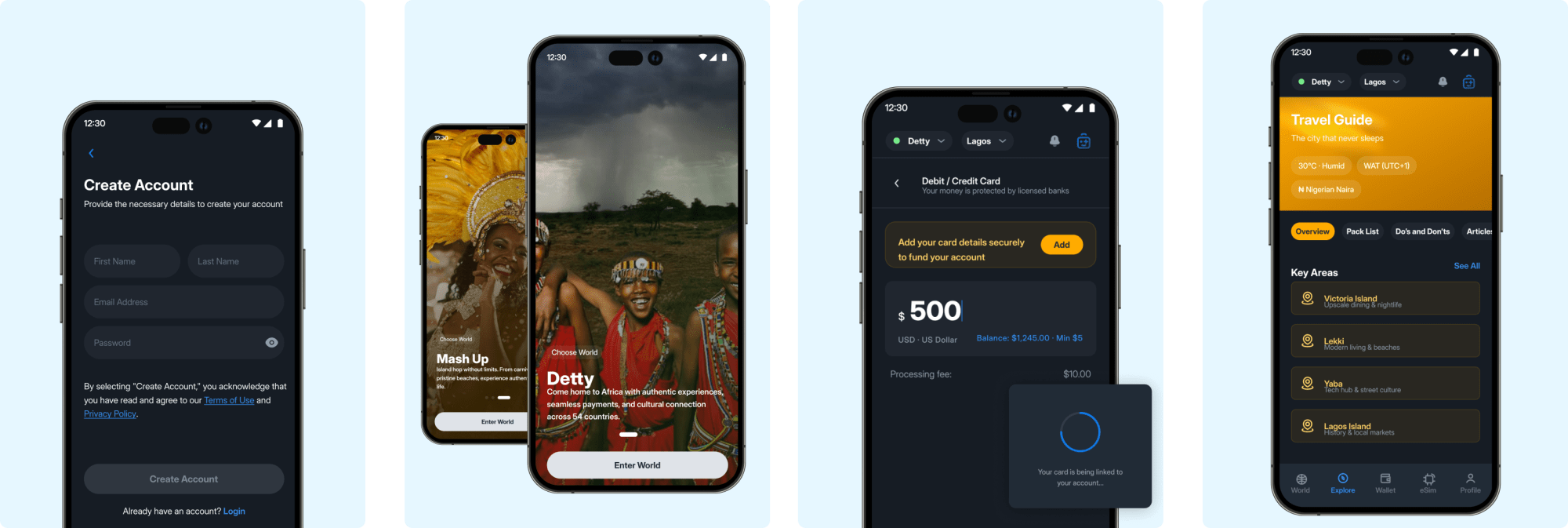
- app screens, each in light and dark
- 154app screens, each in light and dark
- flows, from sign-up to card setup
- 16flows, from sign-up to card setup
- Worlds: Detty, Mash Up and Events
- 3Worlds: Detty, Mash Up and Events
What did you do on it?
Thought for 3s
I was product lead for interaction and visual design, through Studio Doresh. I owned the product design end to end: the core concept and the information architecture, every flow and screen in light and dark, the visual system and its components, and the design of the marketing website, which the development team built. That covers the World system, the booking flow, the Wallet and cards, eSIM, the AI concierge and Explore.
What problem does it solve?
Thought for 4s
African and Caribbean travellers were stitching together five or more apps to do one trip: one for stays, maps for discovery, a payments app, a separate eSIM app, and WhatsApp to ask friends where to go. None of them talk to each other, and none of them understand what the trip means to someone going home for December or flying back for carnival. That gap was the brief: build the app that feels like it was made by someone who knows these places.
Then · Before
A booking site for stays, maps for discovery, a payments app, an eSIM app and group chats for recommendations. Five logins, three currencies, no shared context.
Now · With BRDRS
Discover, book, pay, connect and ask, in one app, in the World you're travelling in.
Why Worlds instead of one app with a country filter?
Thought for 2s
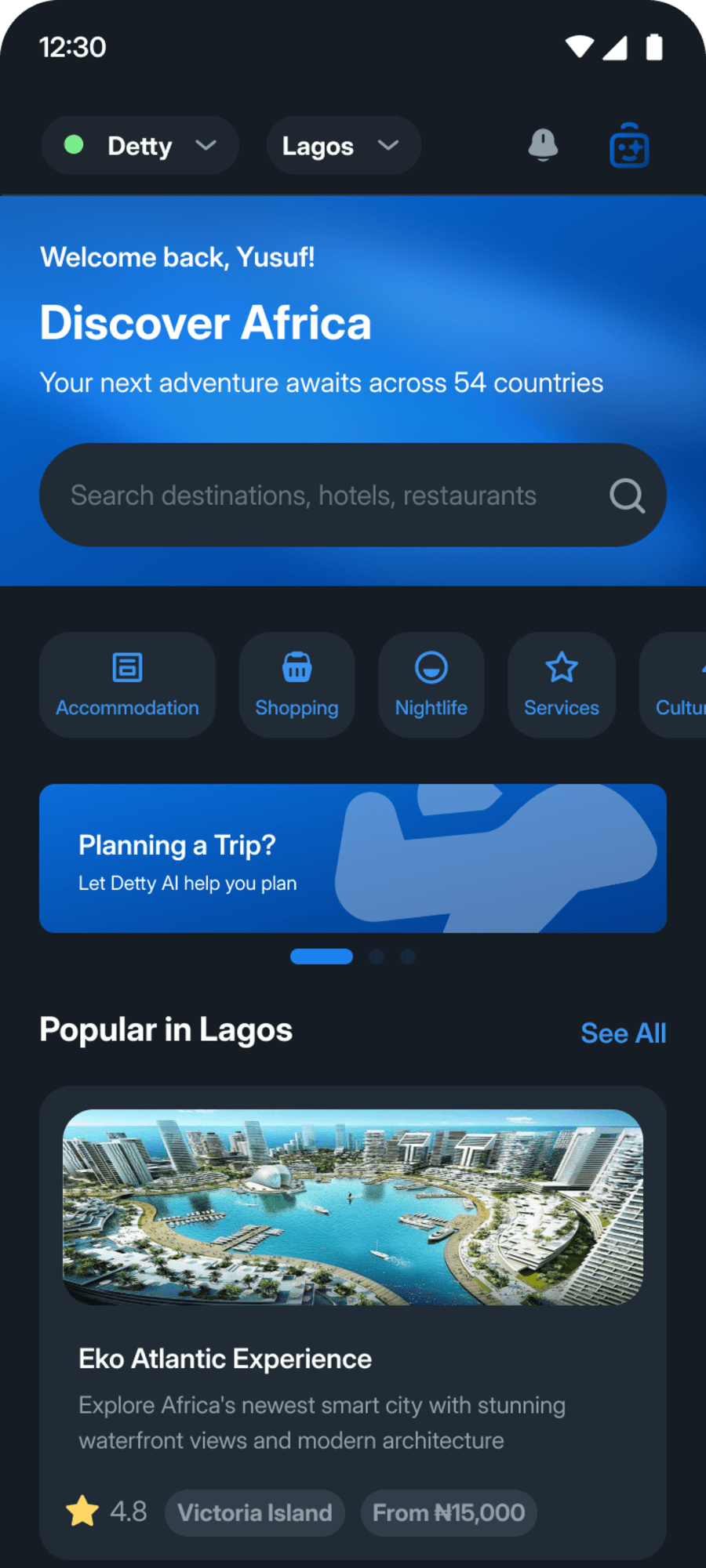
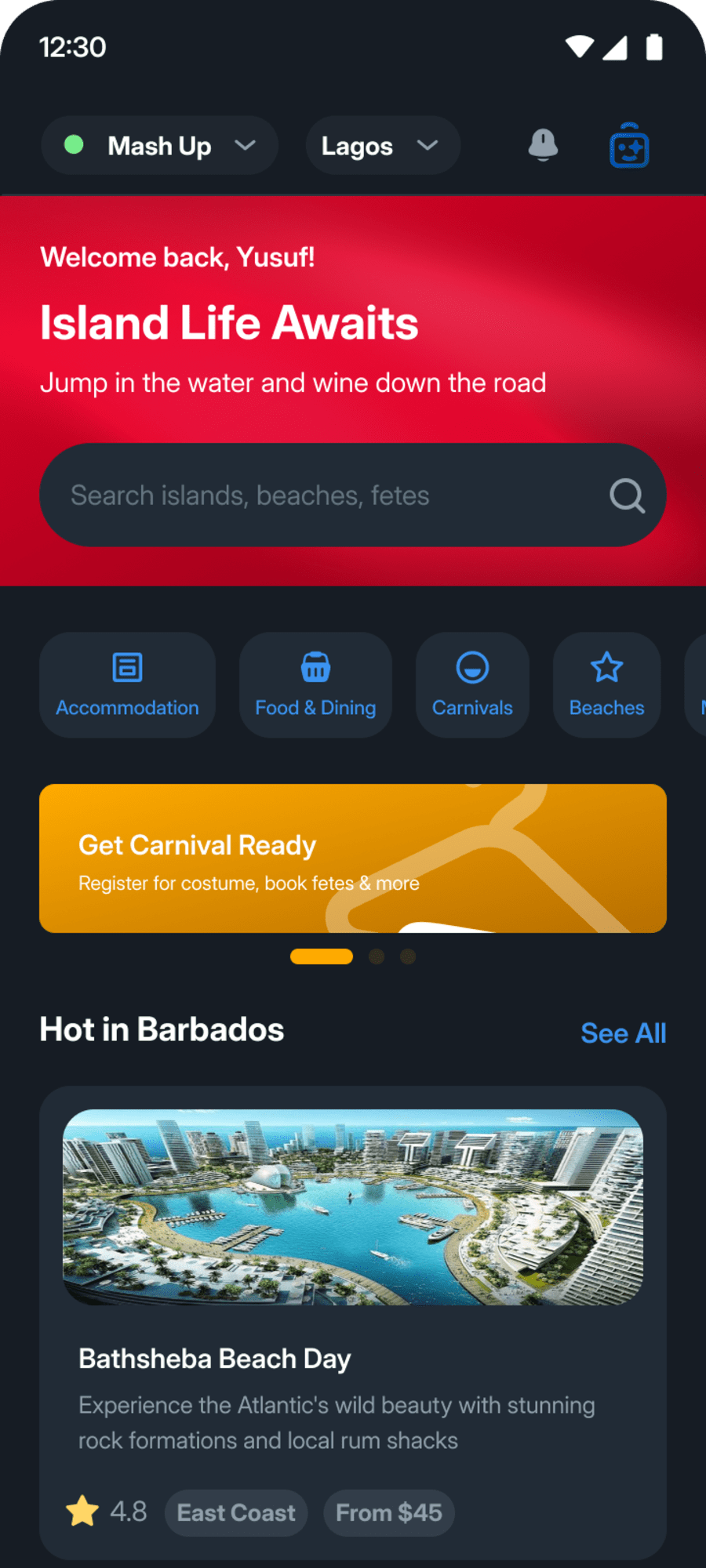
Because a December night out and a Caribbean carnival are different trips, with different events, foods, currencies and things people care about. A filter would treat them as one user with a different setting. So I designed Worlds: each has its own identity, its own content and its own language. You pick one when you start, and the whole app changes around you. Detty covers 54 African countries, Mash Up the Caribbean, and Events the world's big moments.
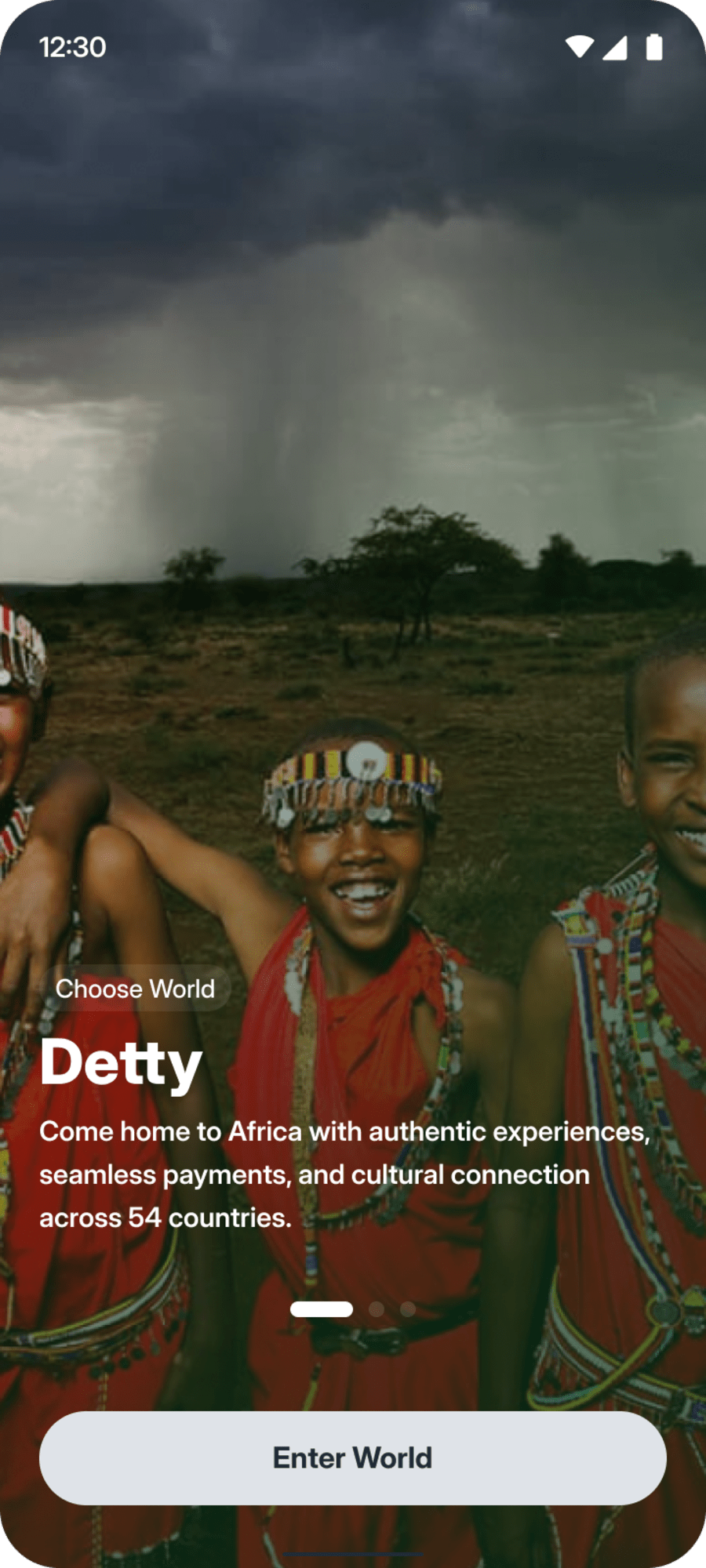
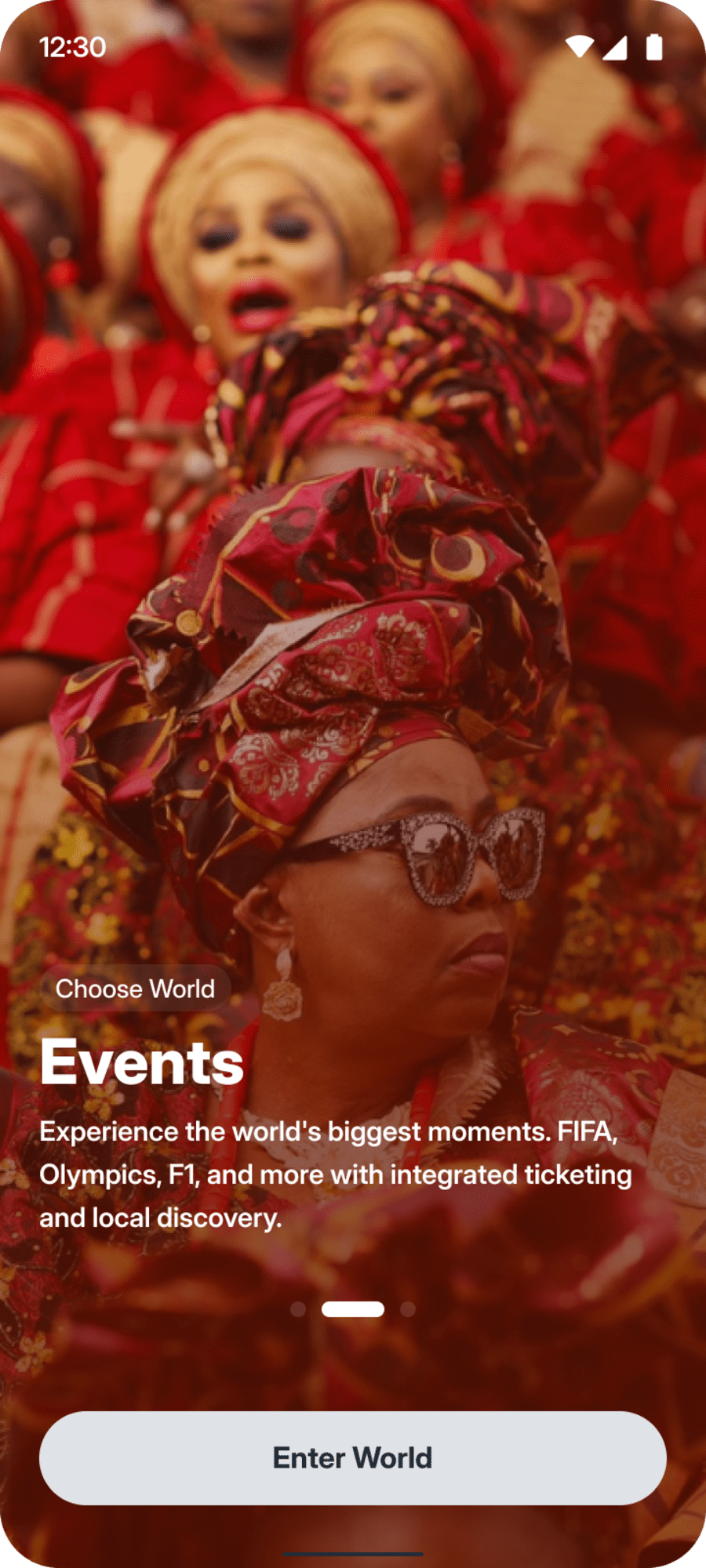
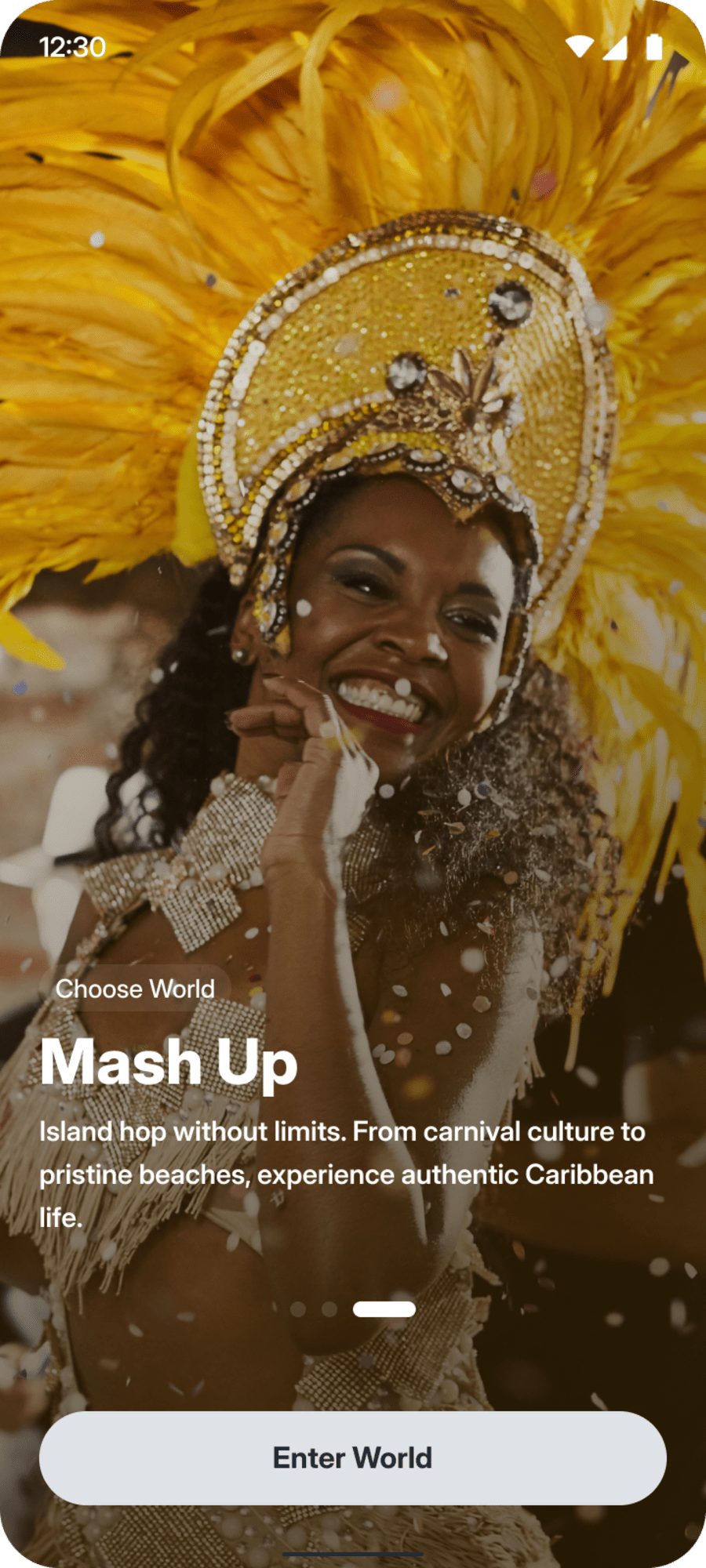
Doesn't that mean designing the app several times?
Thought for 3s
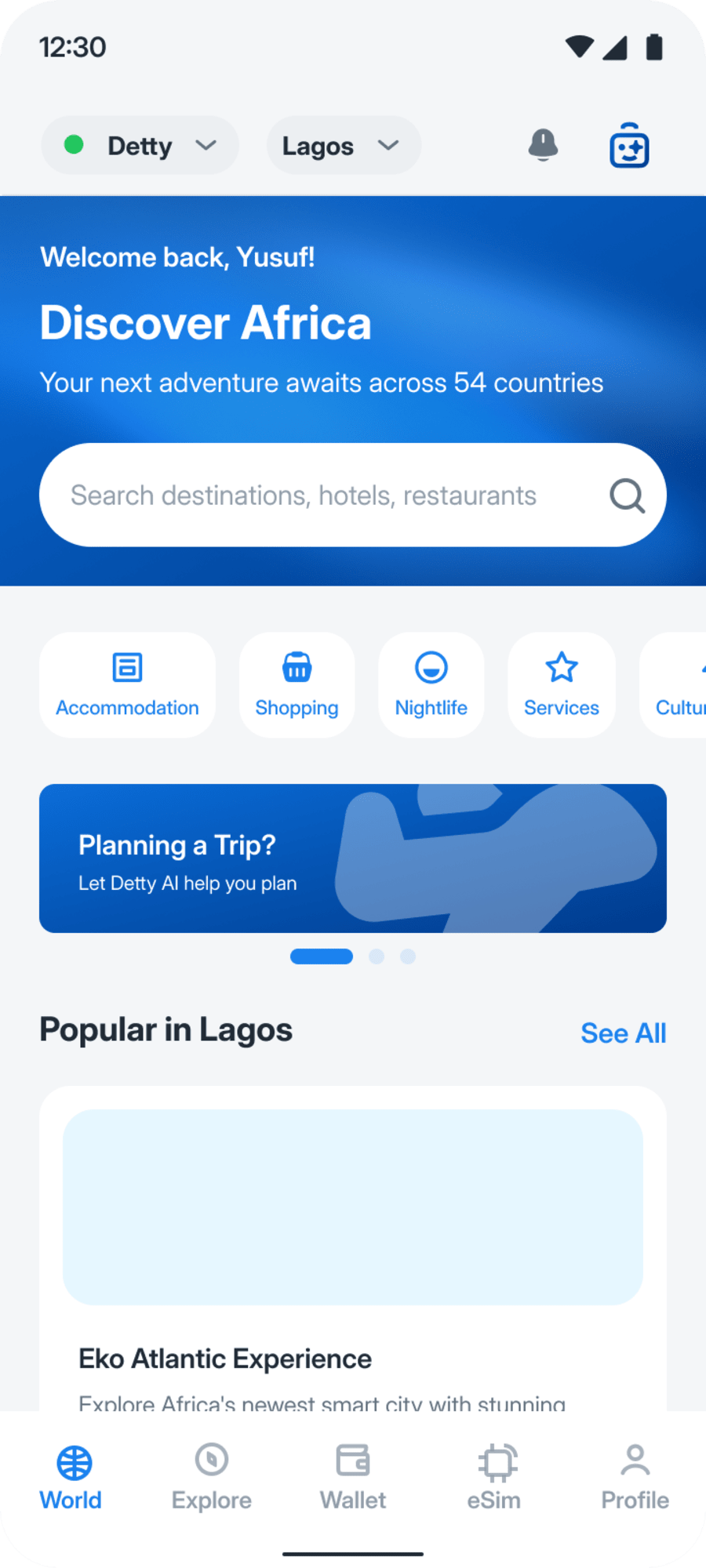
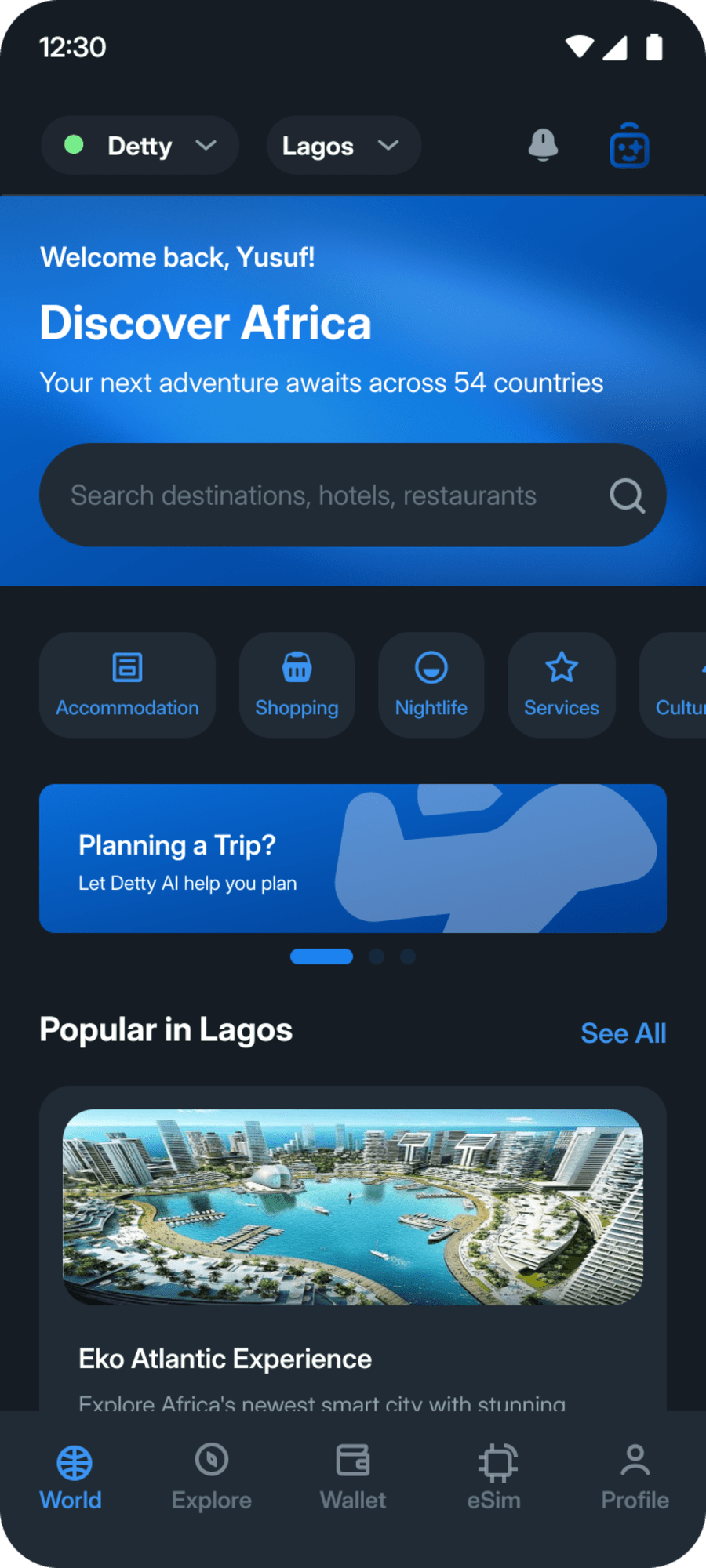
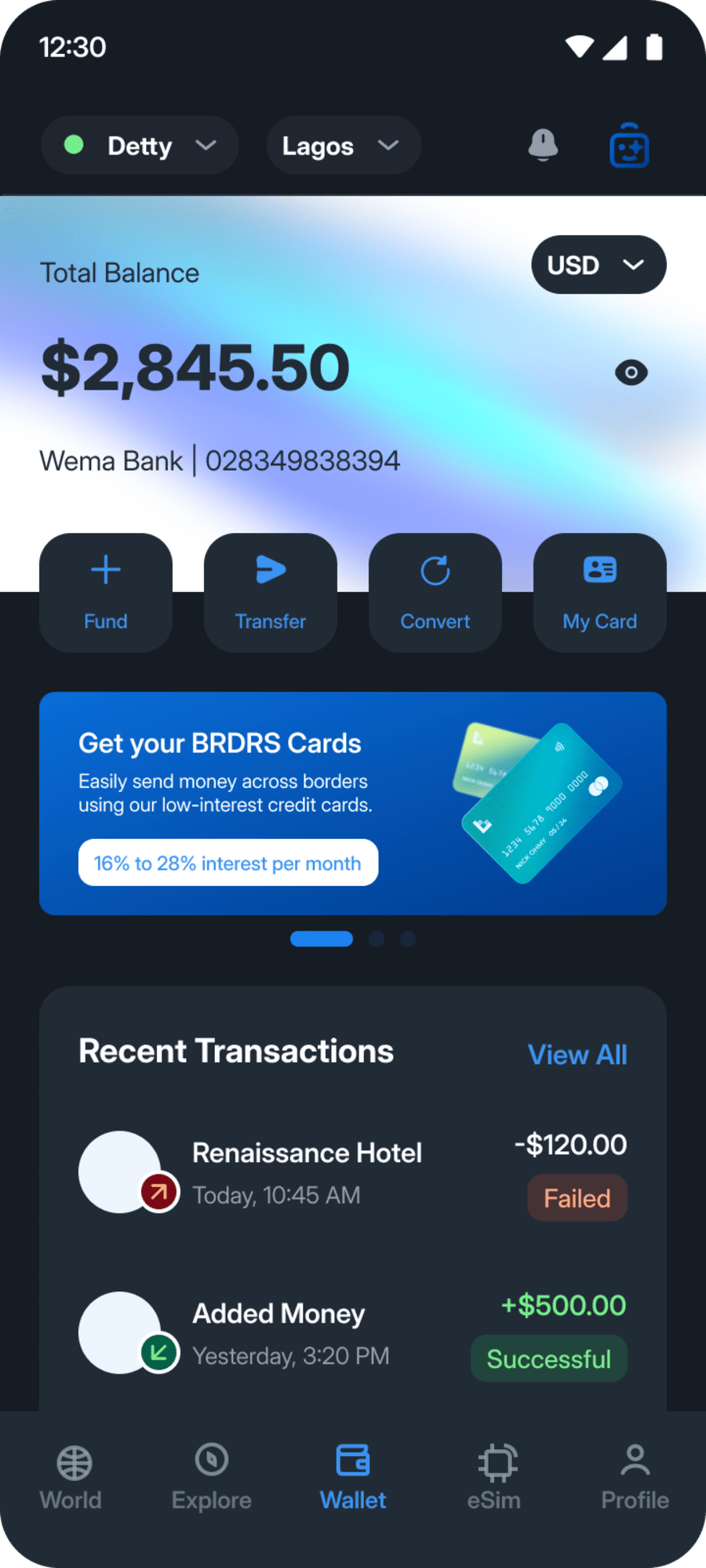
No, and that was the hardest constraint I set. Every World runs on the same components: the same cards, the same booking flow, the same navigation. Colour is the only visual variable, so Detty runs blue (#1565C0) and Mash Up runs red (#E53935). That forced every decision to work in more than one context, and it means a new World is content and a colour, not a new app. The same discipline carried the whole product into a complete dark mode, screen for screen.
Welcome back
Discover Africa
Your next adventure awaits across 54 countries
Search destinations, hotels, restaurants
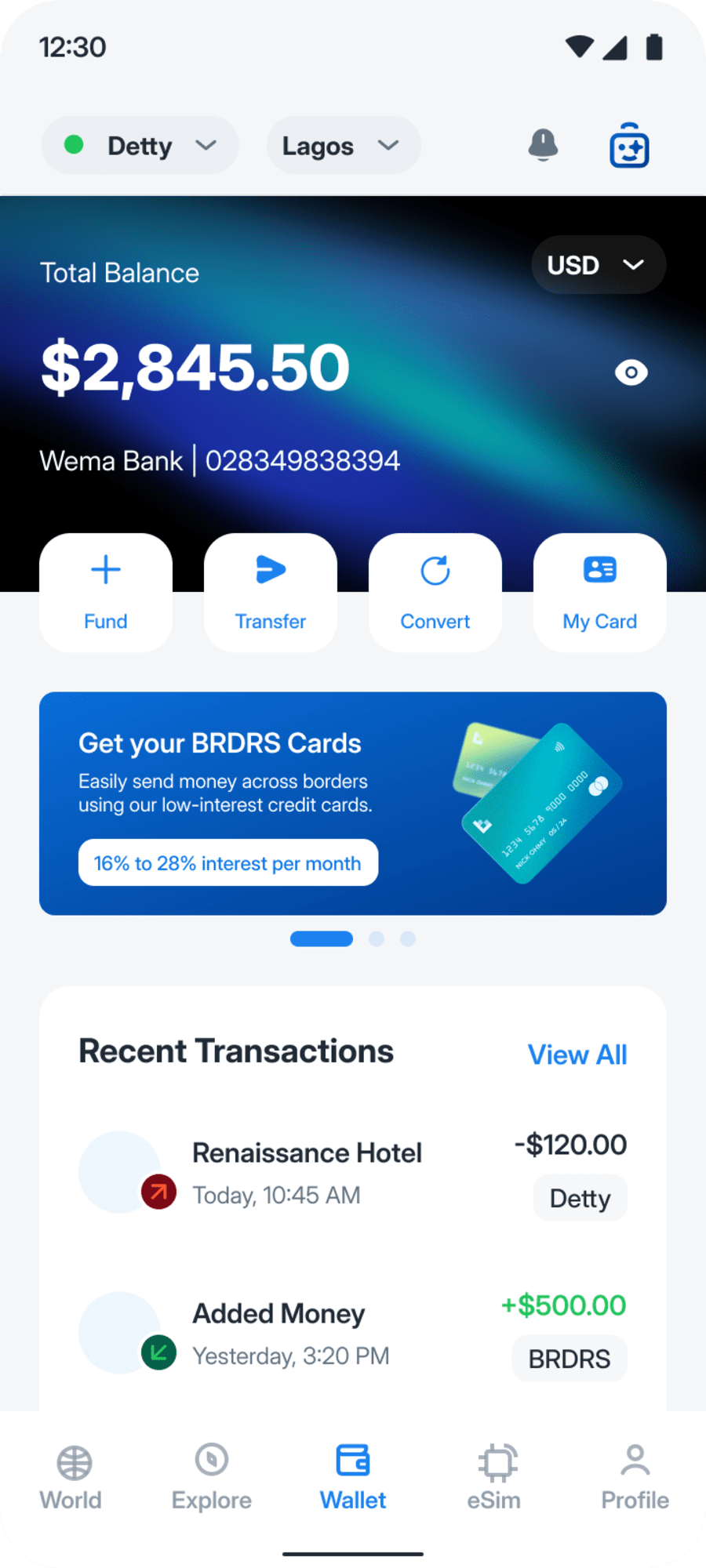
The header, search, category row, listing card and the booking flow behind it are one set of components. A World only swaps what it says and the colour it says it in.
How does booking work?
Thought for 4s
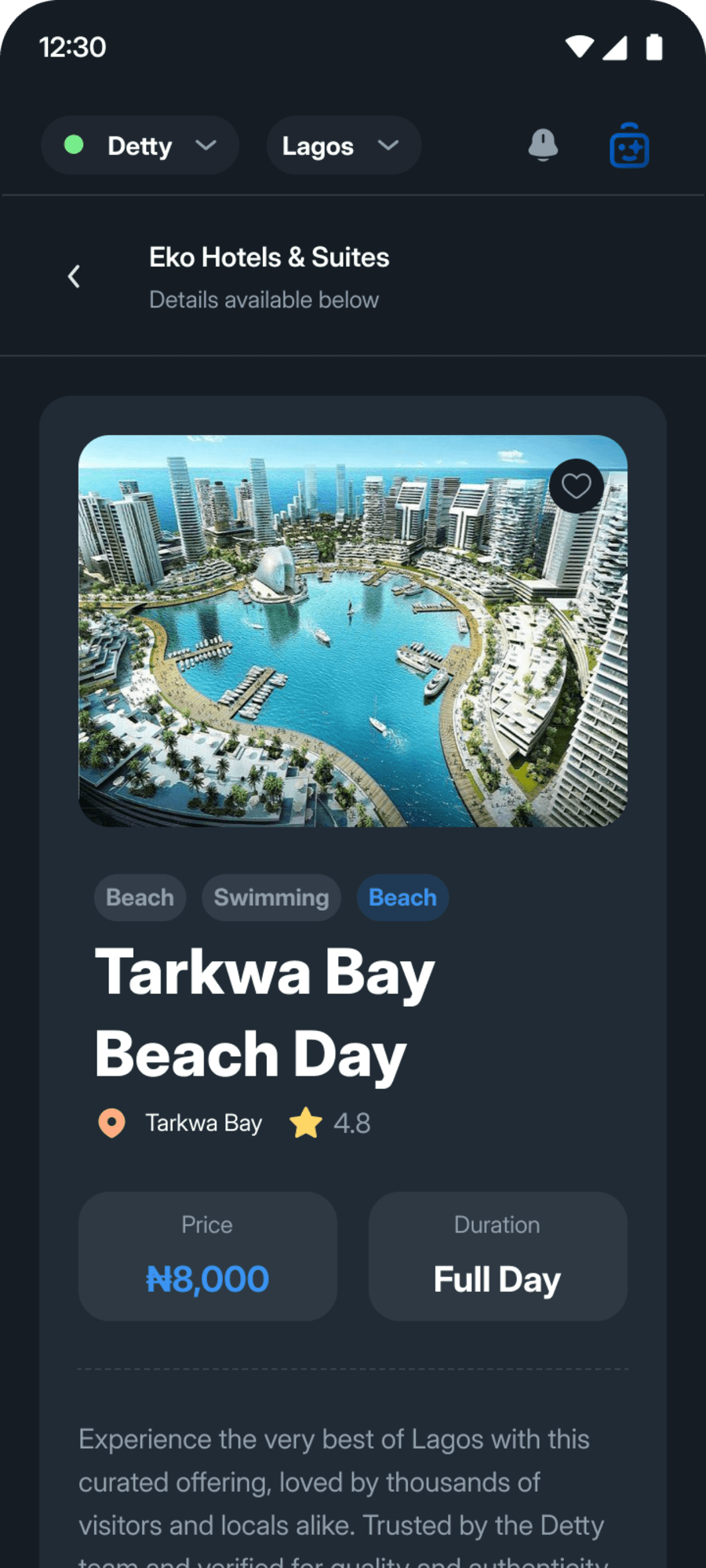
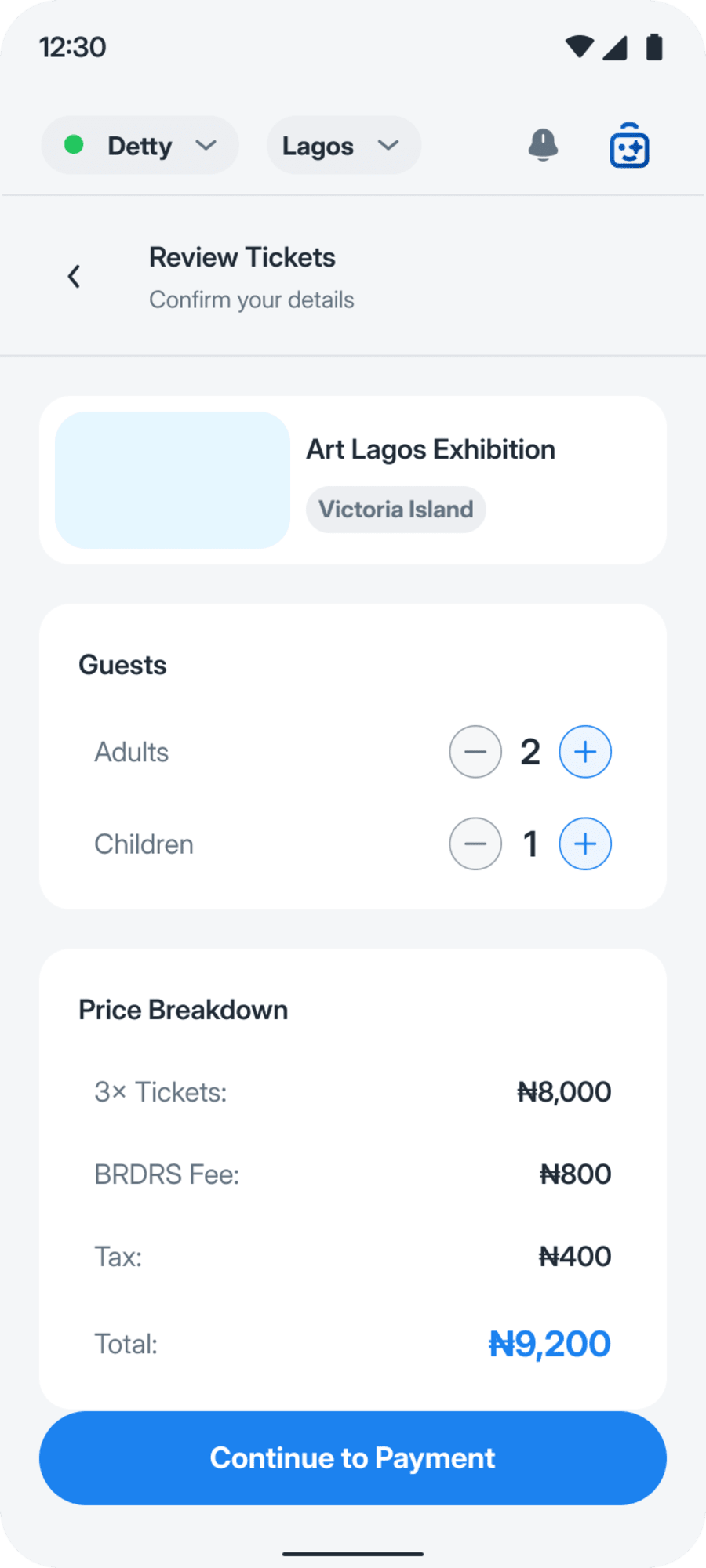
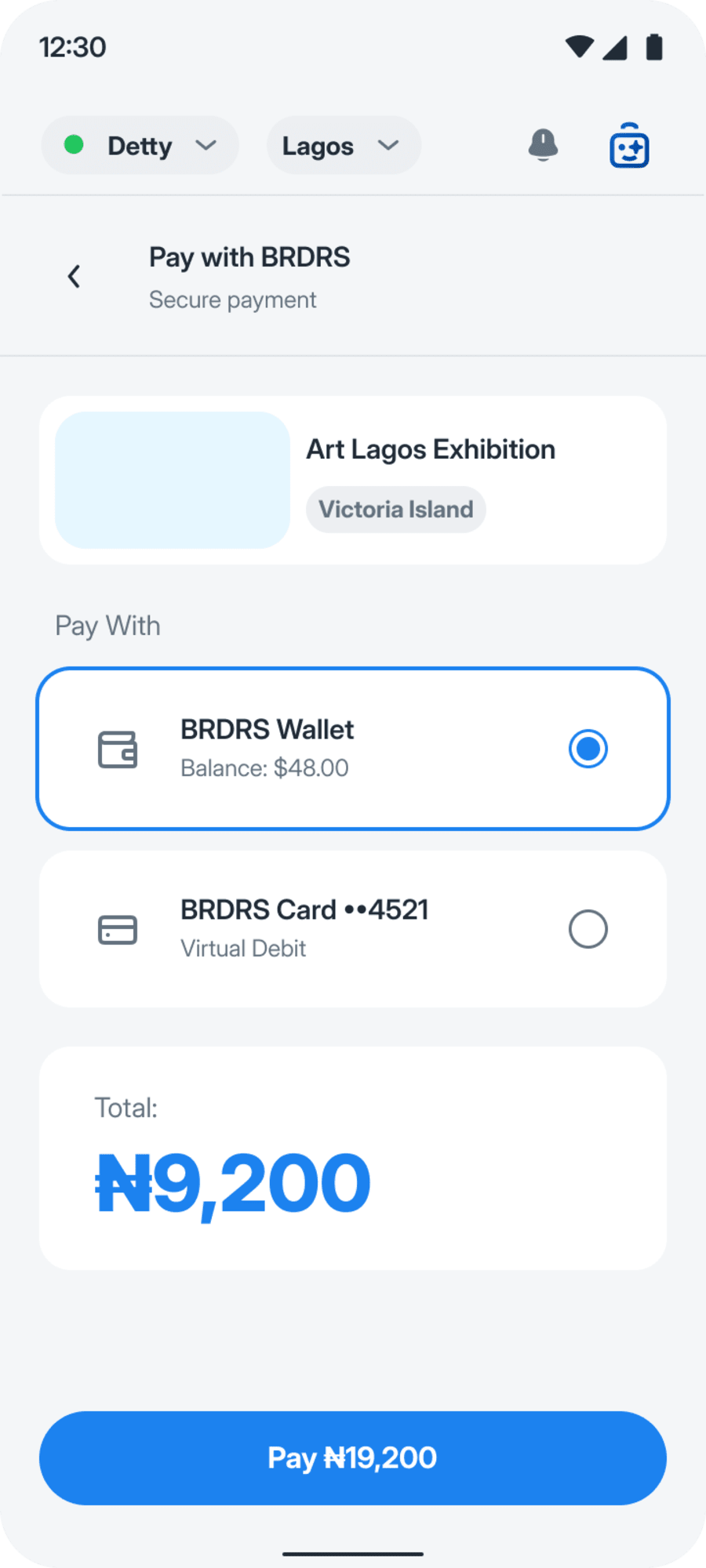
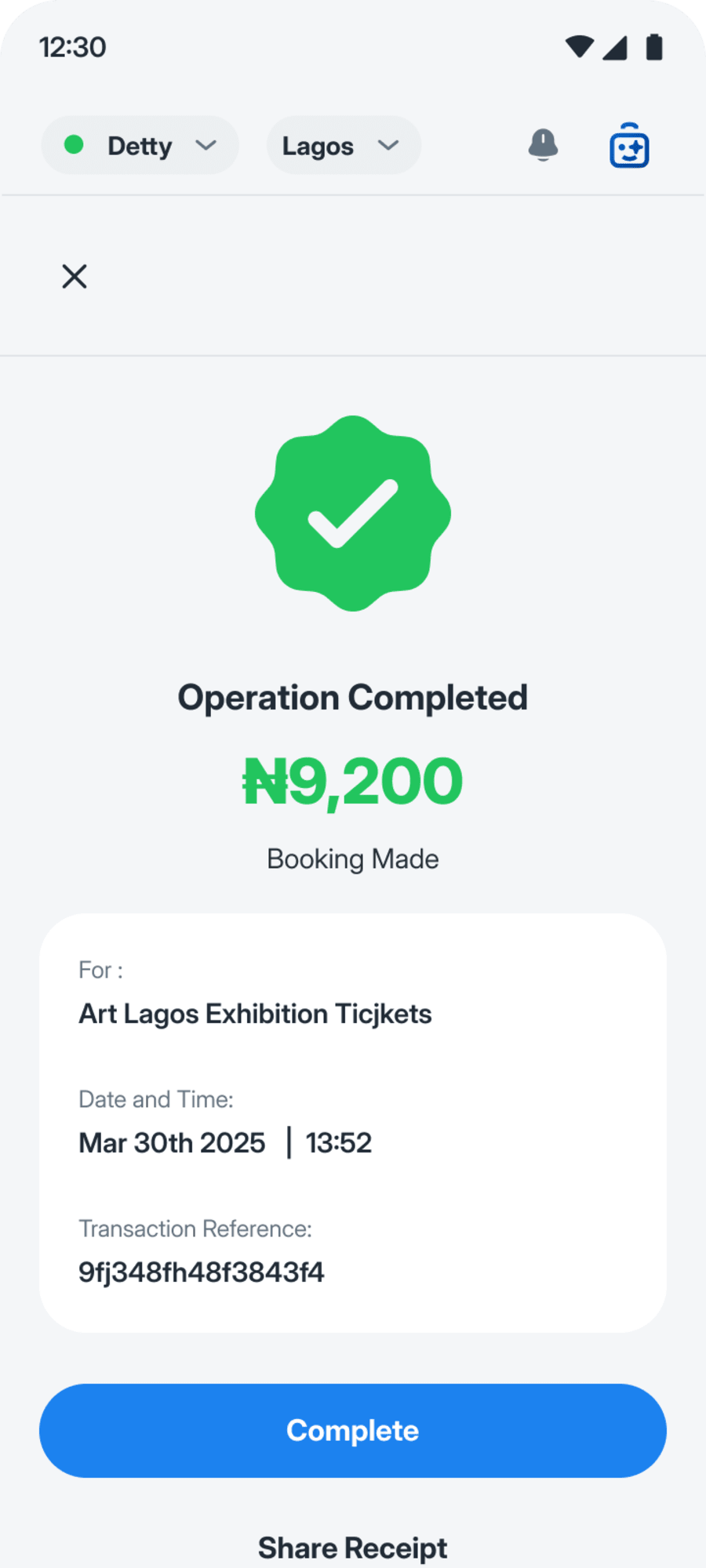
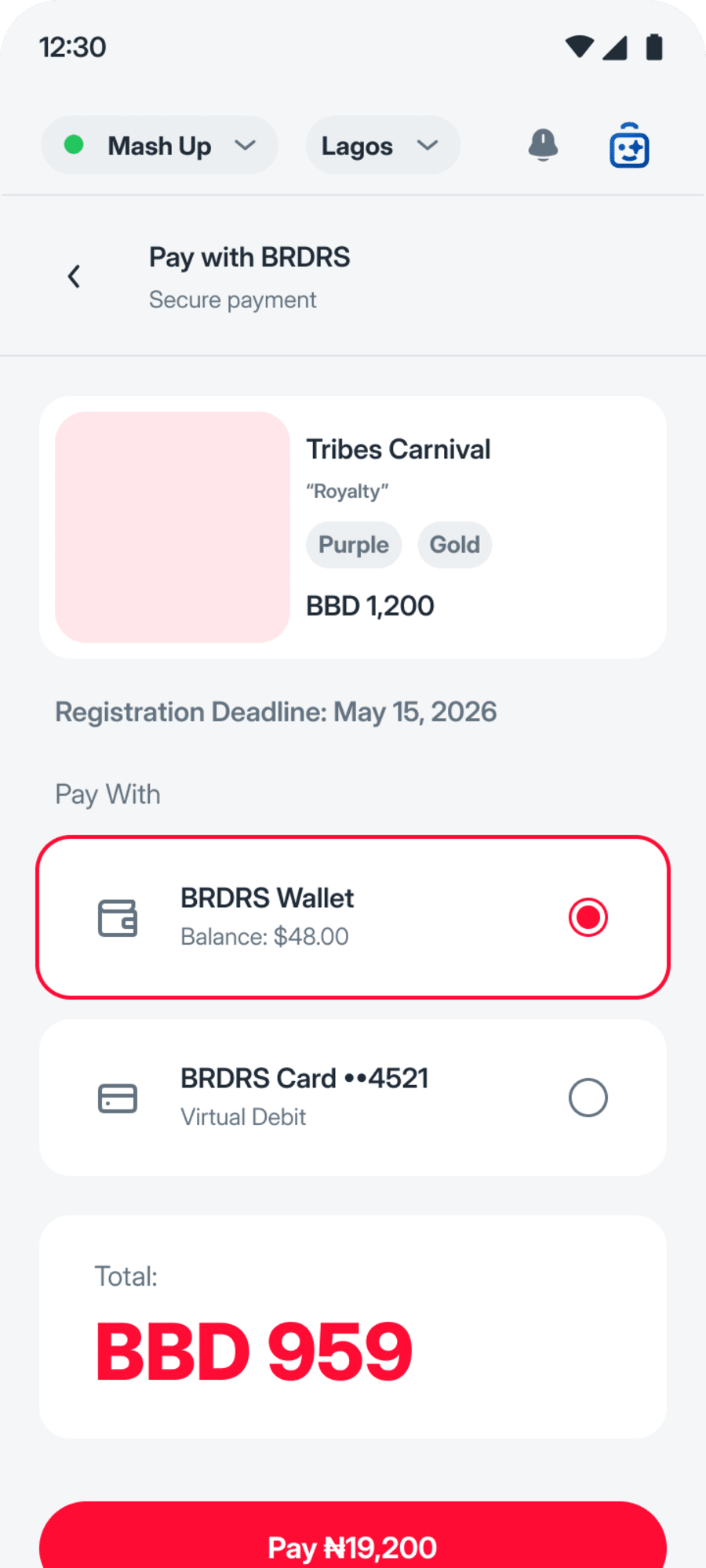
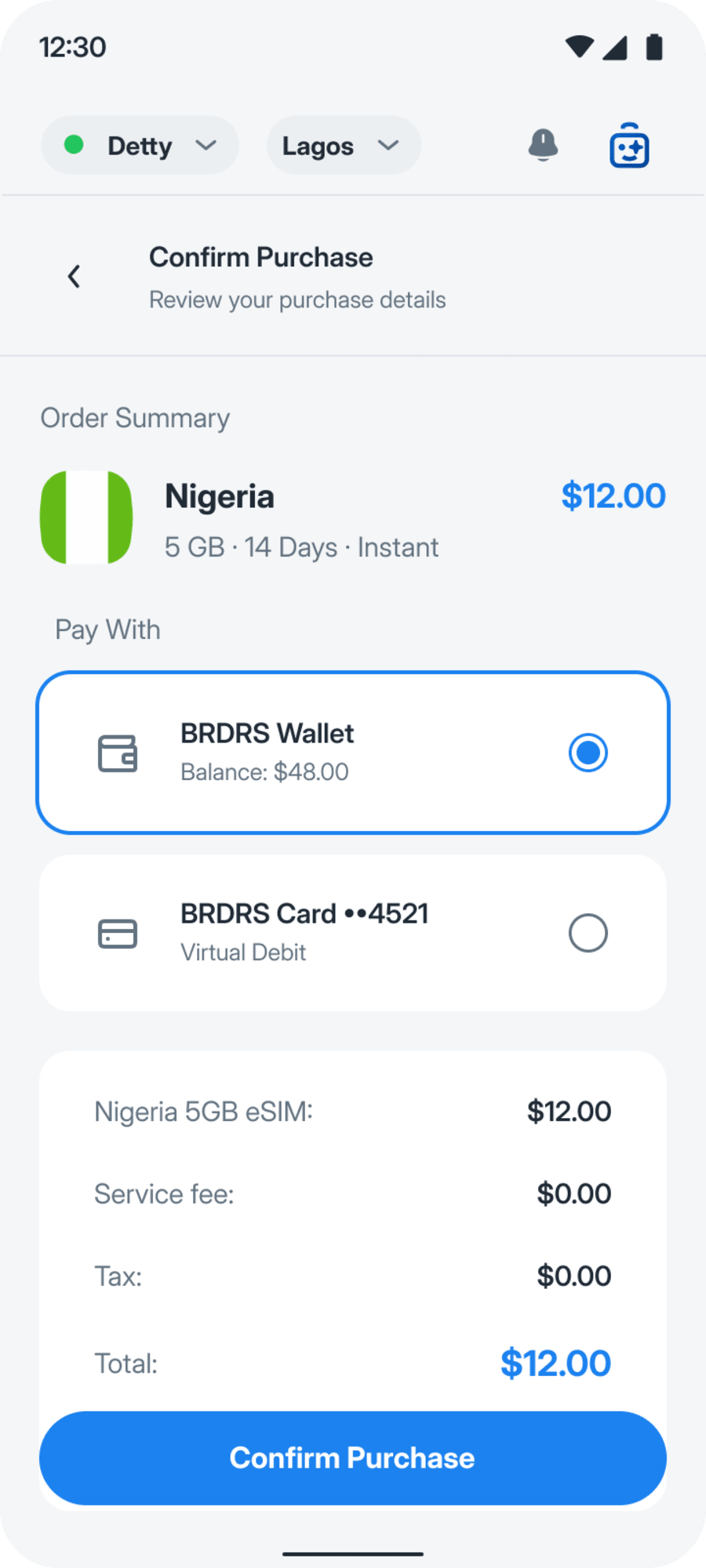
Food, stays, experiences and events all book through one flow: browse a list, open the details, review, pay, and get a receipt. Learn it once and it works everywhere, in every World. Payment always offers the BRDRS Wallet or the BRDRS card, so the money side is never a detour to another app.
A list for the category: events, food, stays or experiences, with filters at the top.
["A list for the category: events, food, stays or experiences, with filters at the top.","Photos, price, date and time, and why it's worth it.","Guests or tickets, and a price breakdown with every fee shown.","From the BRDRS Wallet or card, in the right currency.","A confirmation with a reference and a receipt to share."]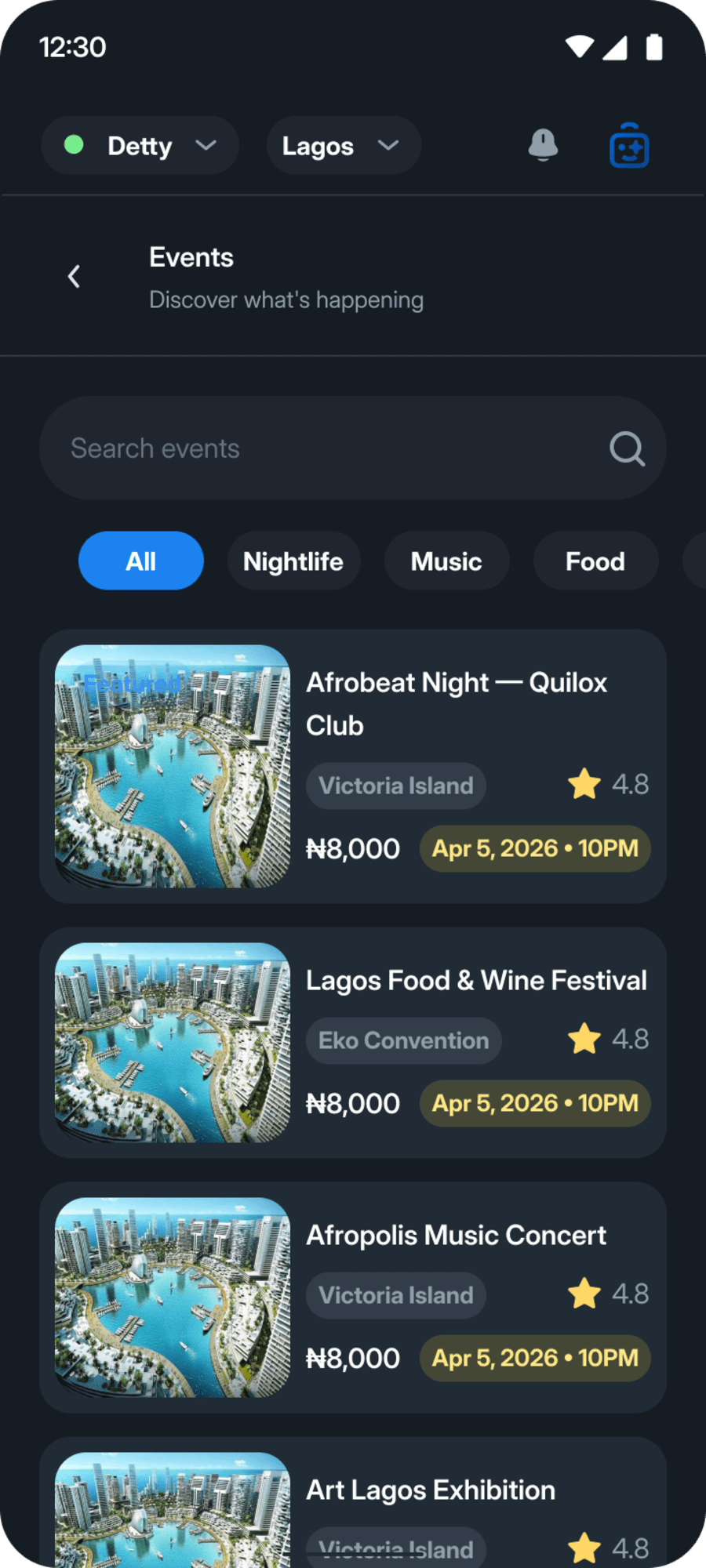
What does a World add that the others don't?
Thought for 2s
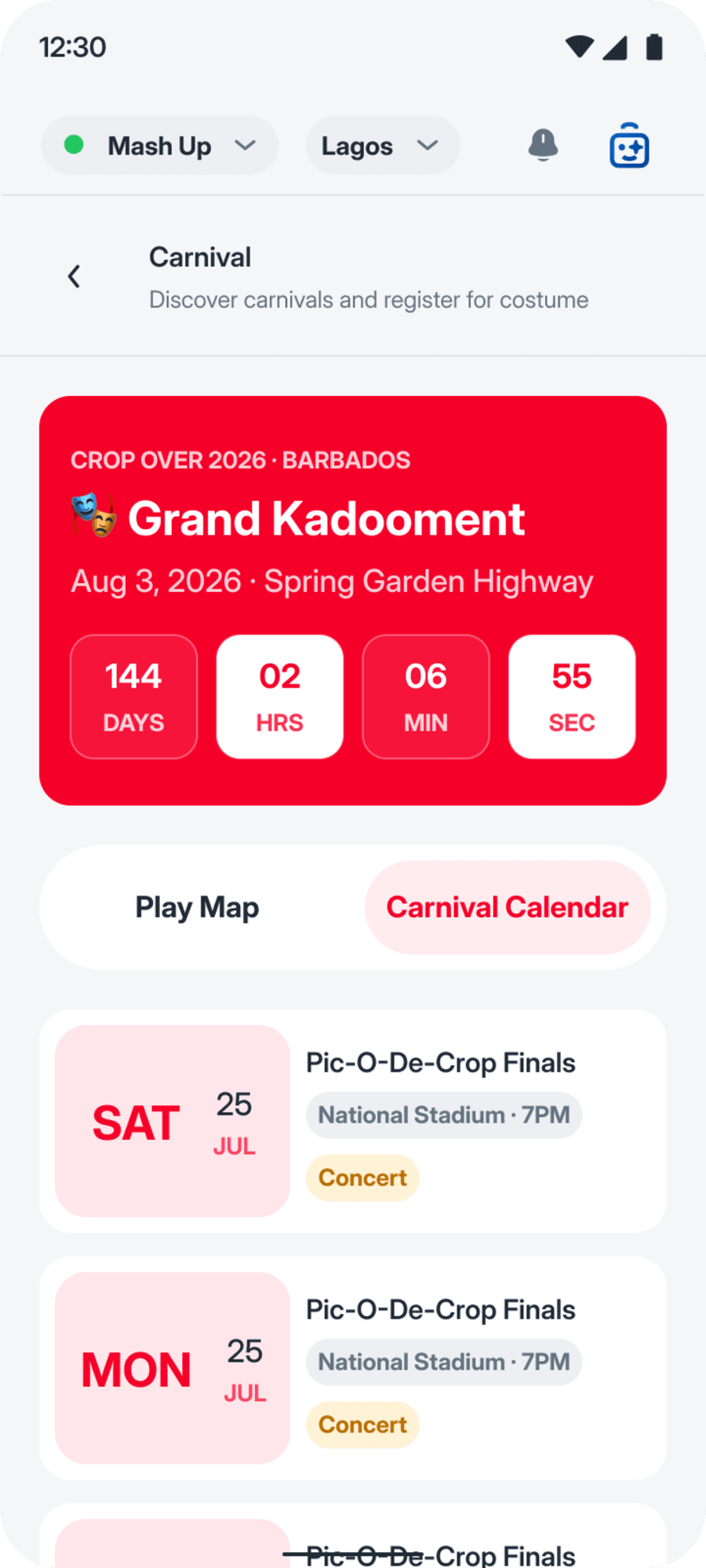
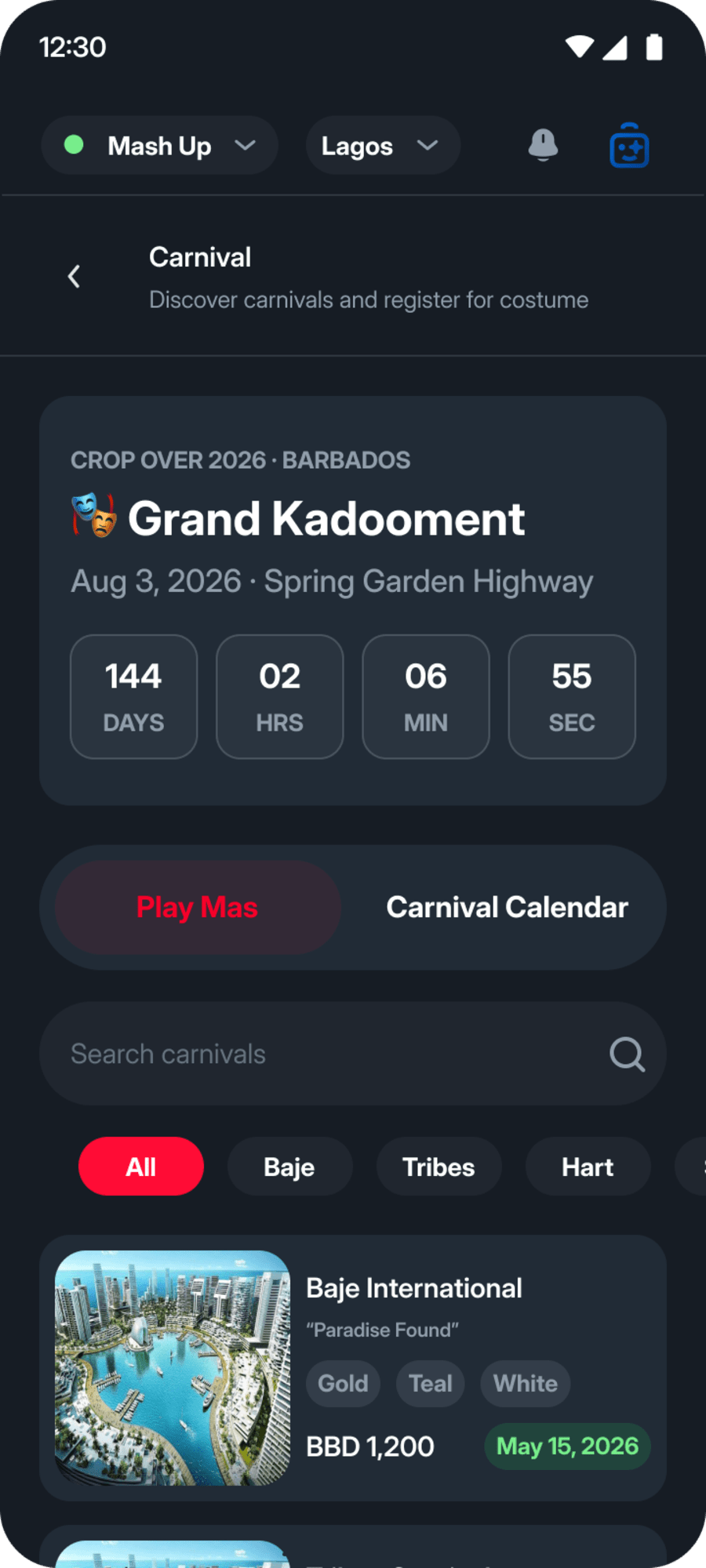
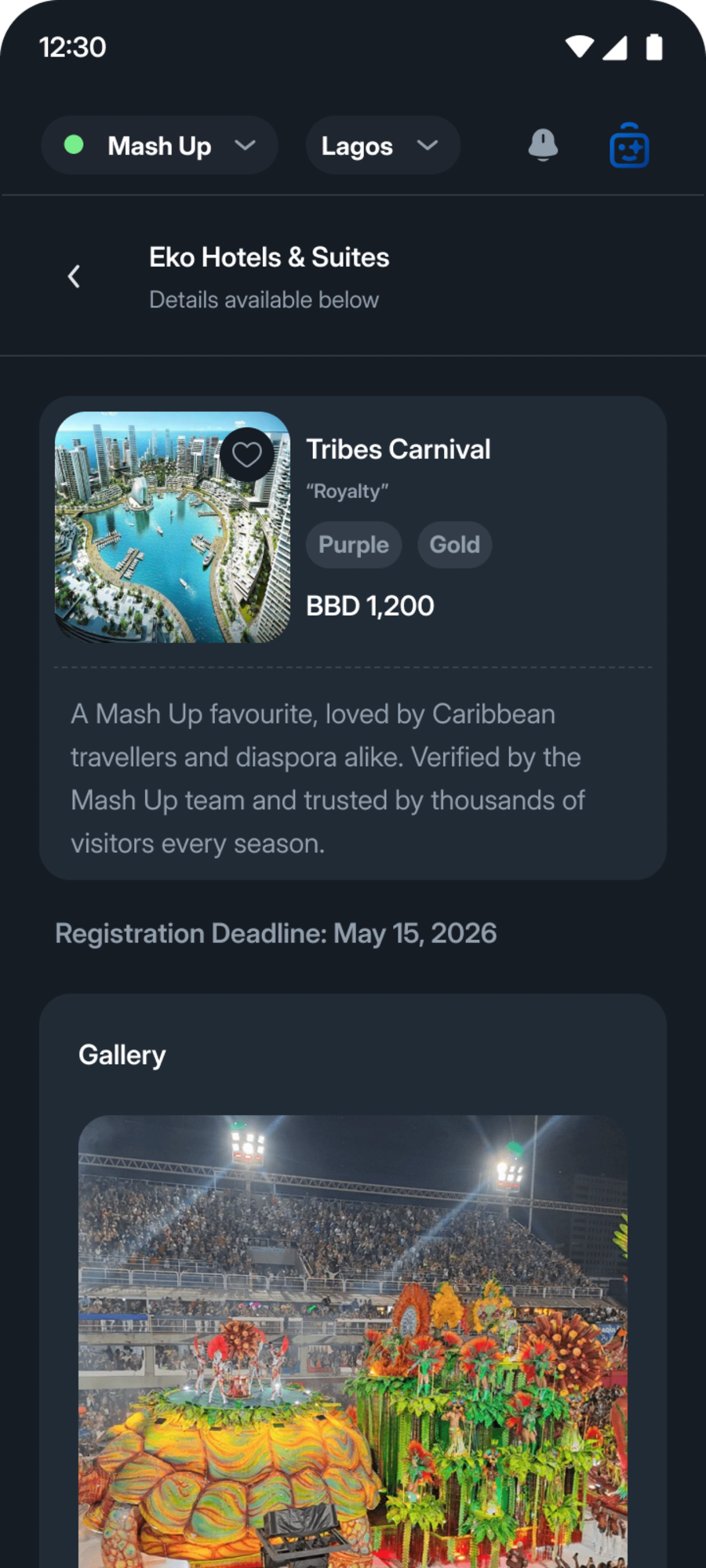
Mash Up is where that shows most. It brings things only the Caribbean has: a carnival calendar counting down to the big day, costume bands to browse, and a registration flow where you pick your band and your size, add upgrades like a headpiece or boots, and pay in Barbados dollars in one session. The components are the same ones Detty uses; the content is entirely its own.
How does the money side work?
Thought for 3s
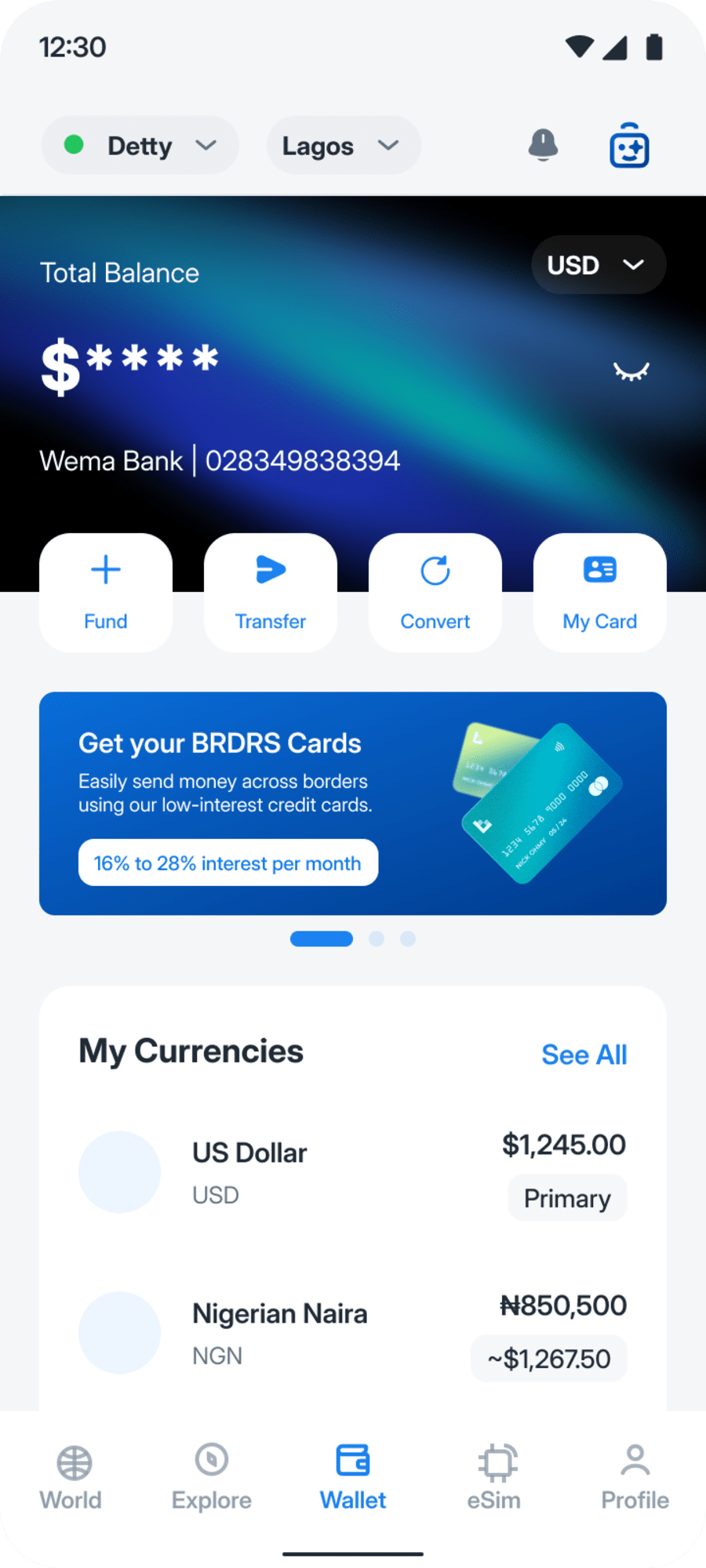
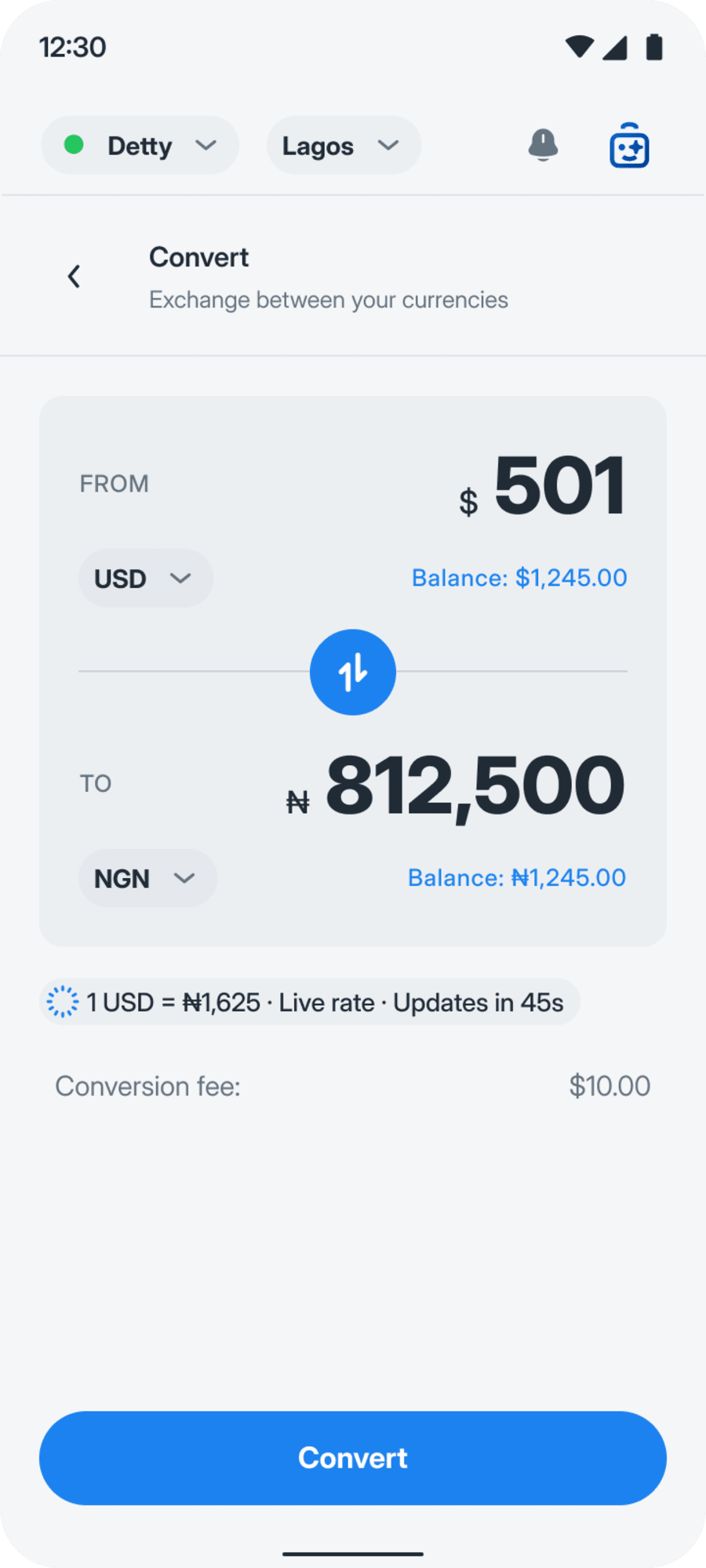
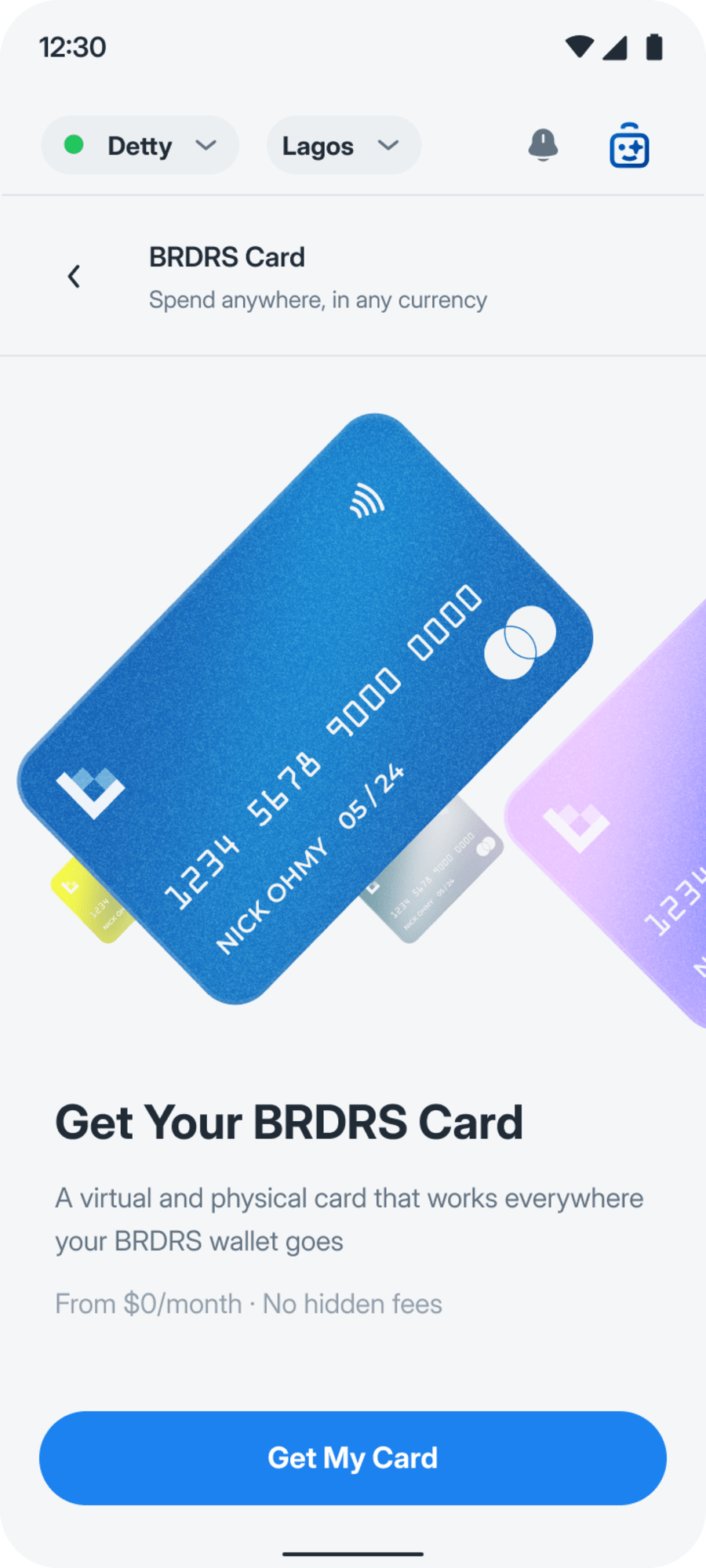
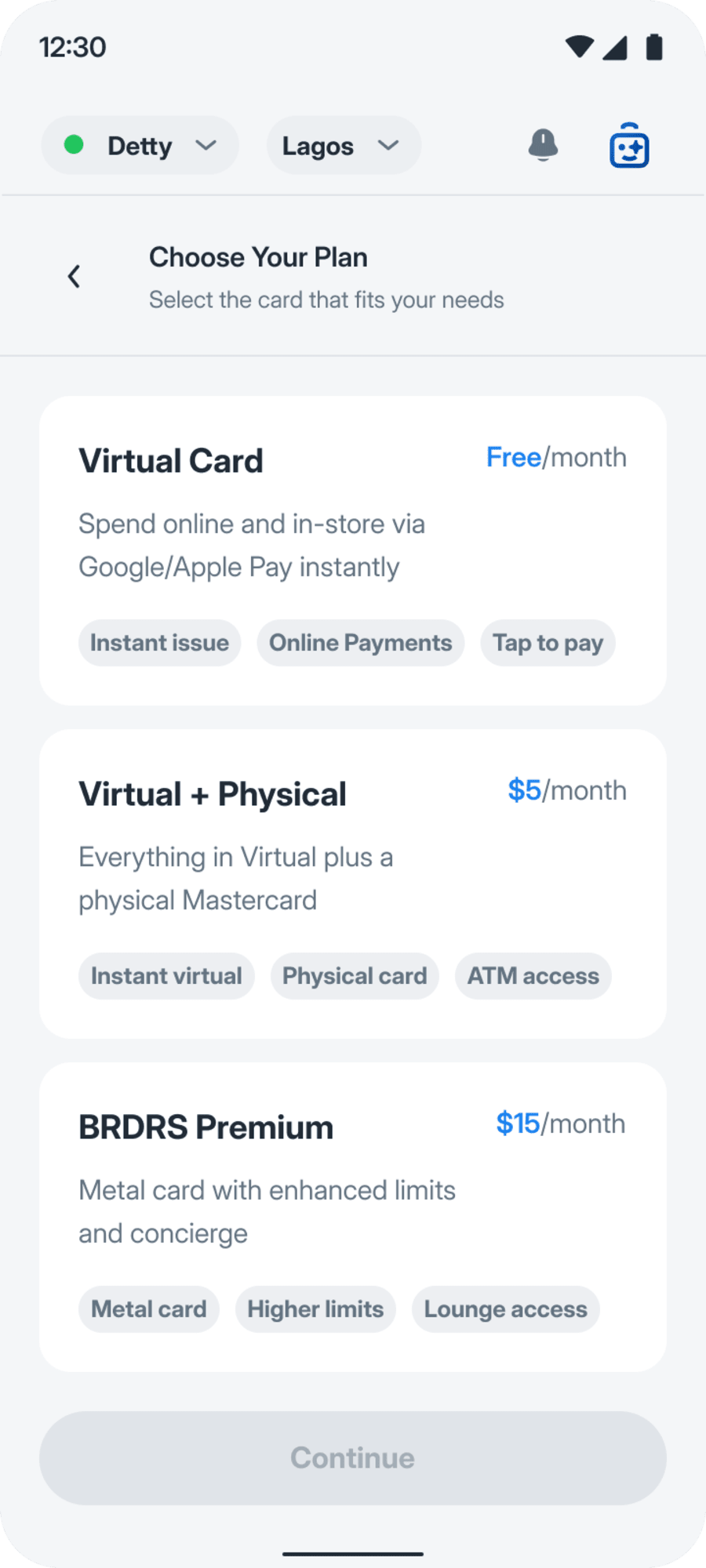
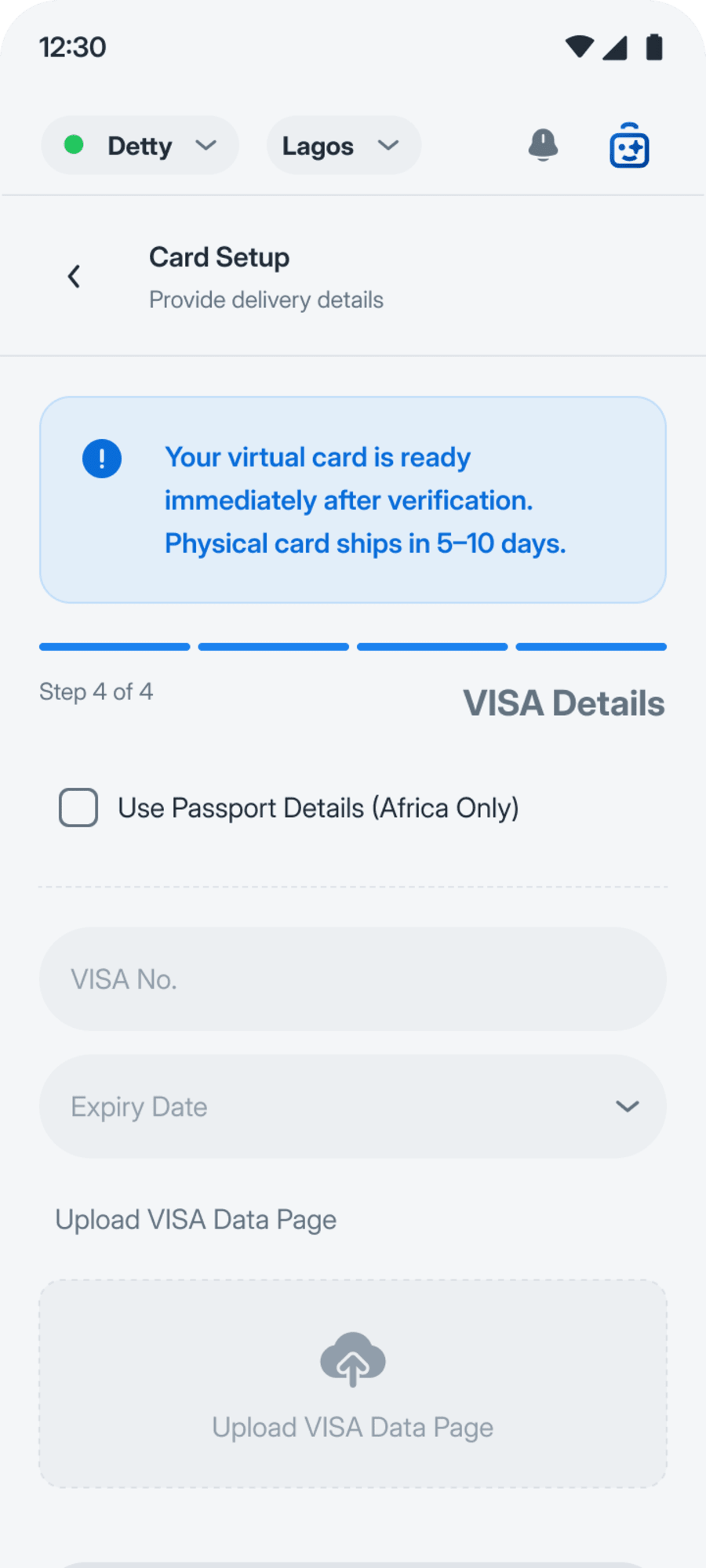
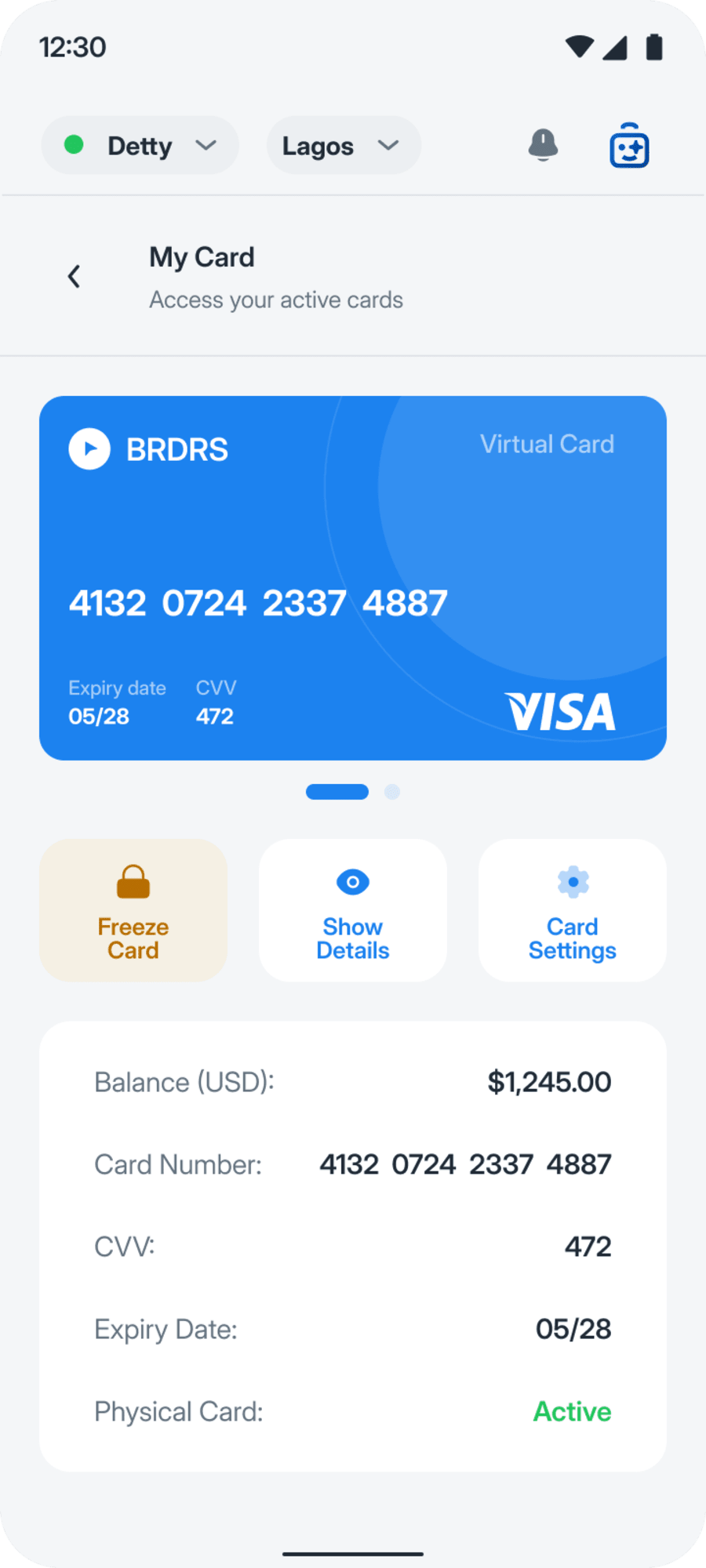
The Wallet is built for people who live in more than one currency. You hold balances in dollars, naira and more, then fund, transfer or convert between them, with the live rate and the fee shown before you commit. On top sits the BRDRS card in three tiers: virtual, virtual plus physical, and premium metal. Getting one means KYC, so I split it into four short steps (your details, delivery address, passport, visa) instead of one long form, without skipping any of it.
Why put mobile data in a travel app?
Thought for 4s
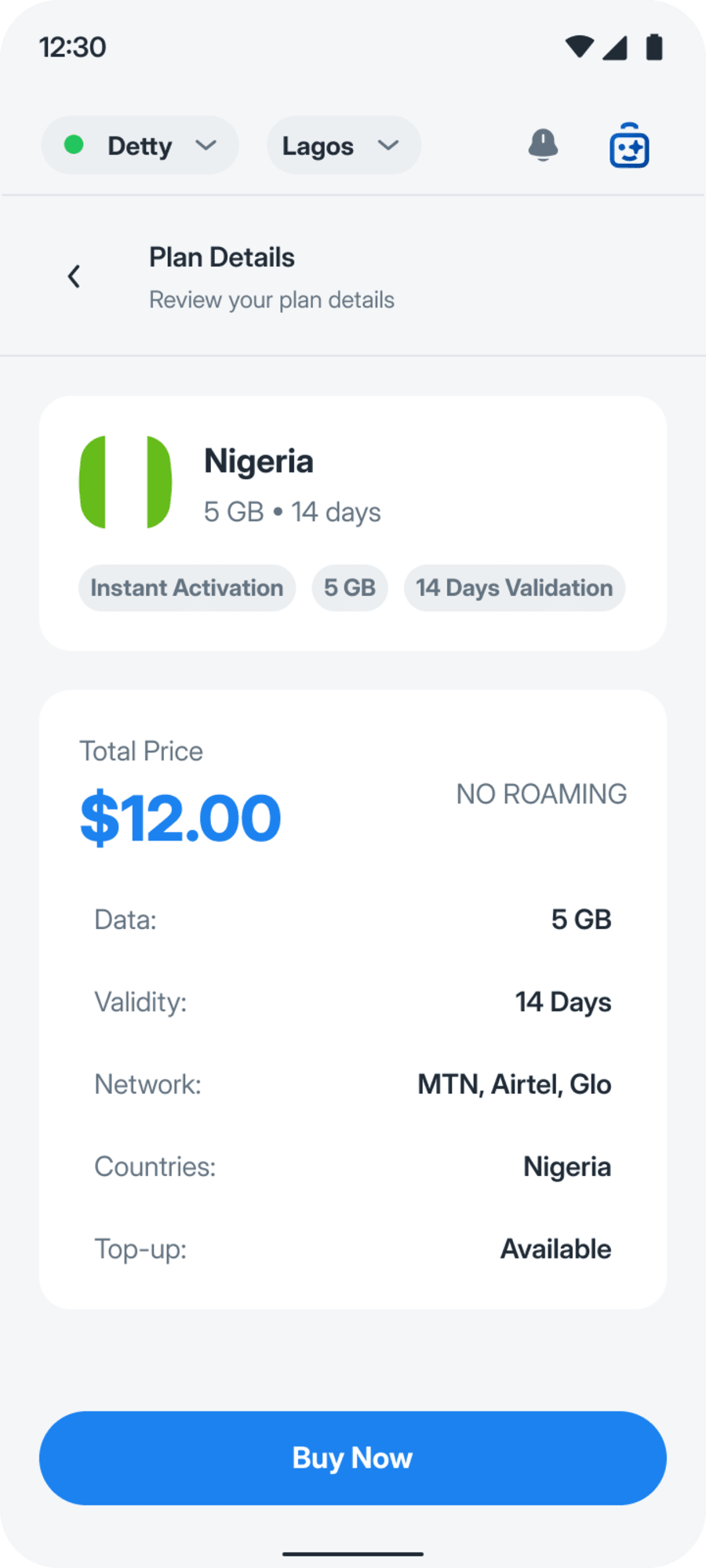
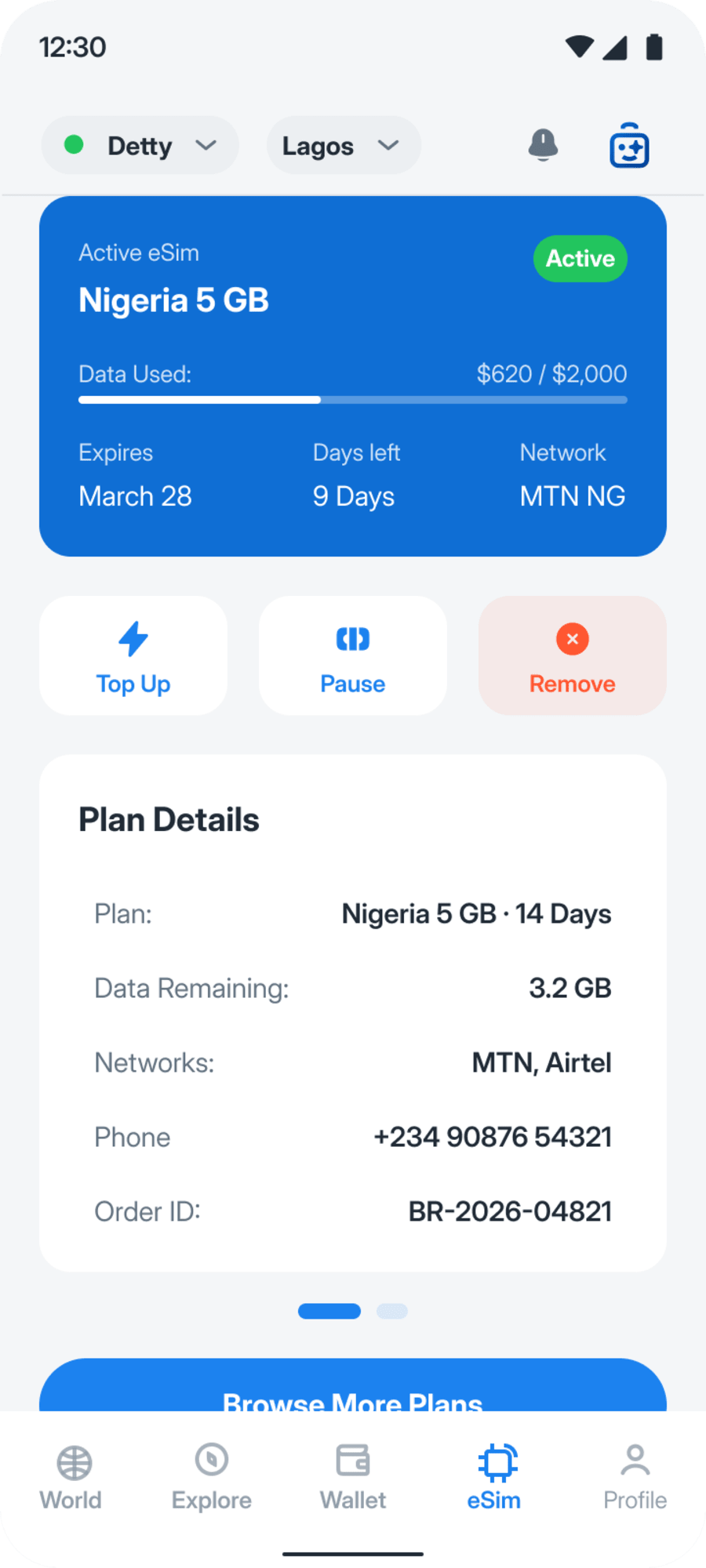
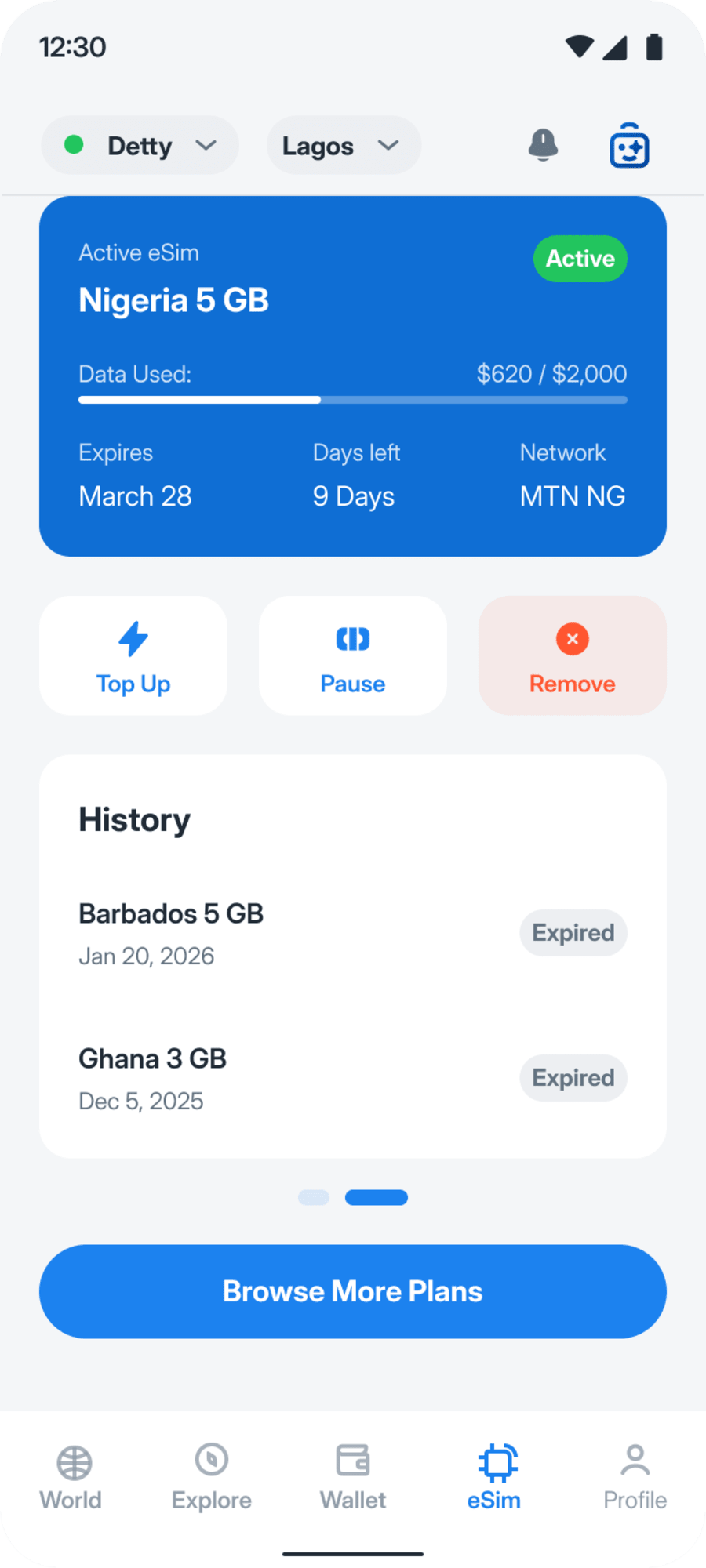
Because getting data is one of the first problems you hit when you land. BRDRS sells eSIM plans by country, showing data, validity and the networks it works on before you buy, paid from the same Wallet. Afterwards you can top up, pause or remove a plan, and see the plans from past trips.
What happens once you've landed?
Thought for 2s
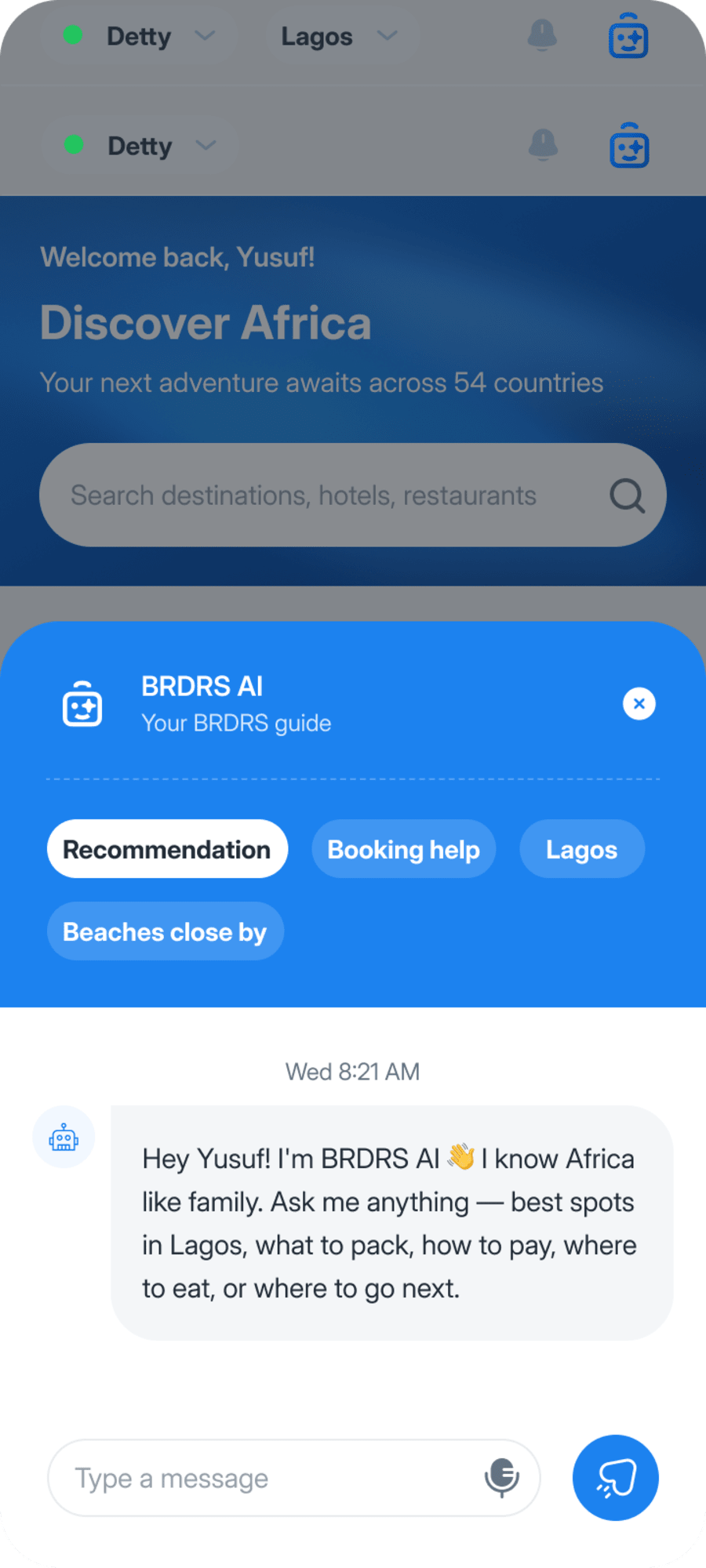
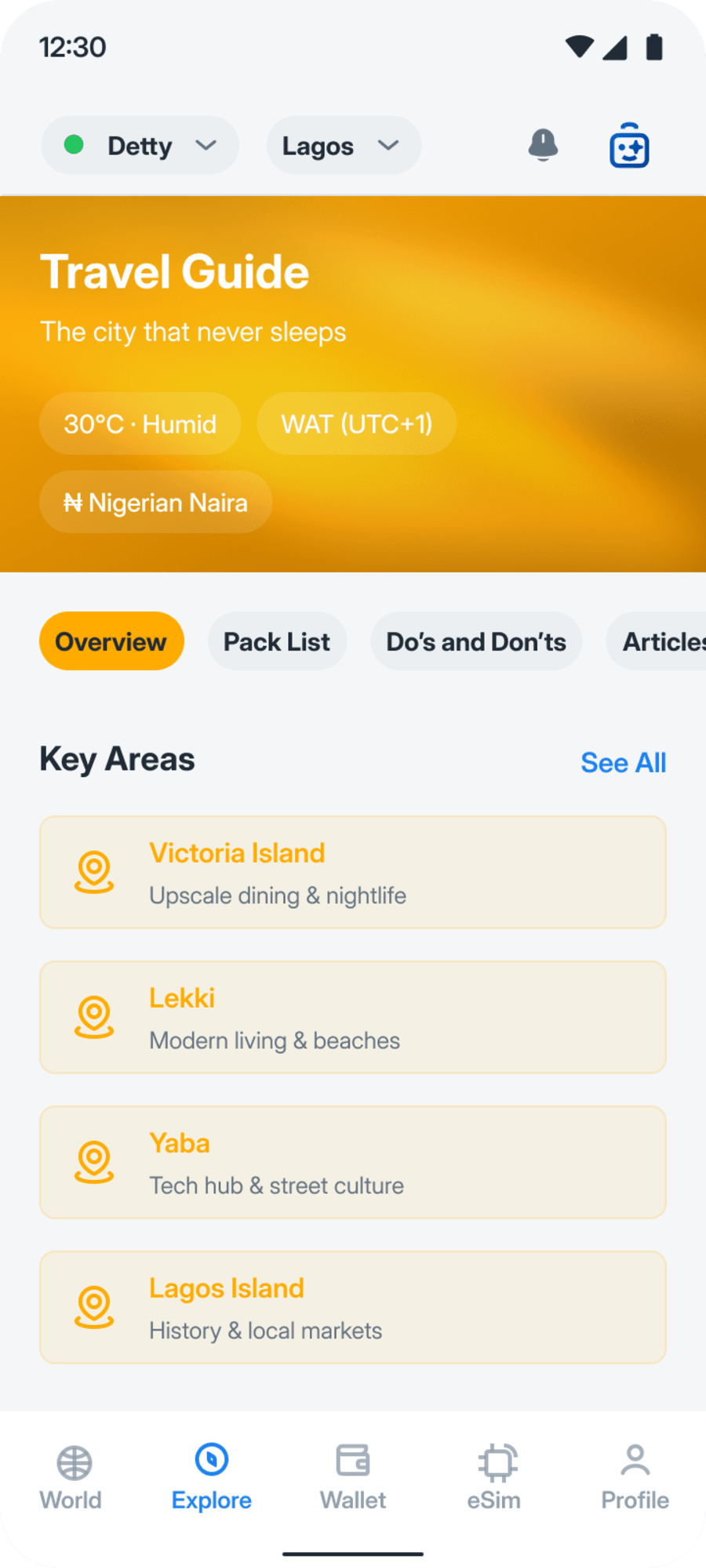
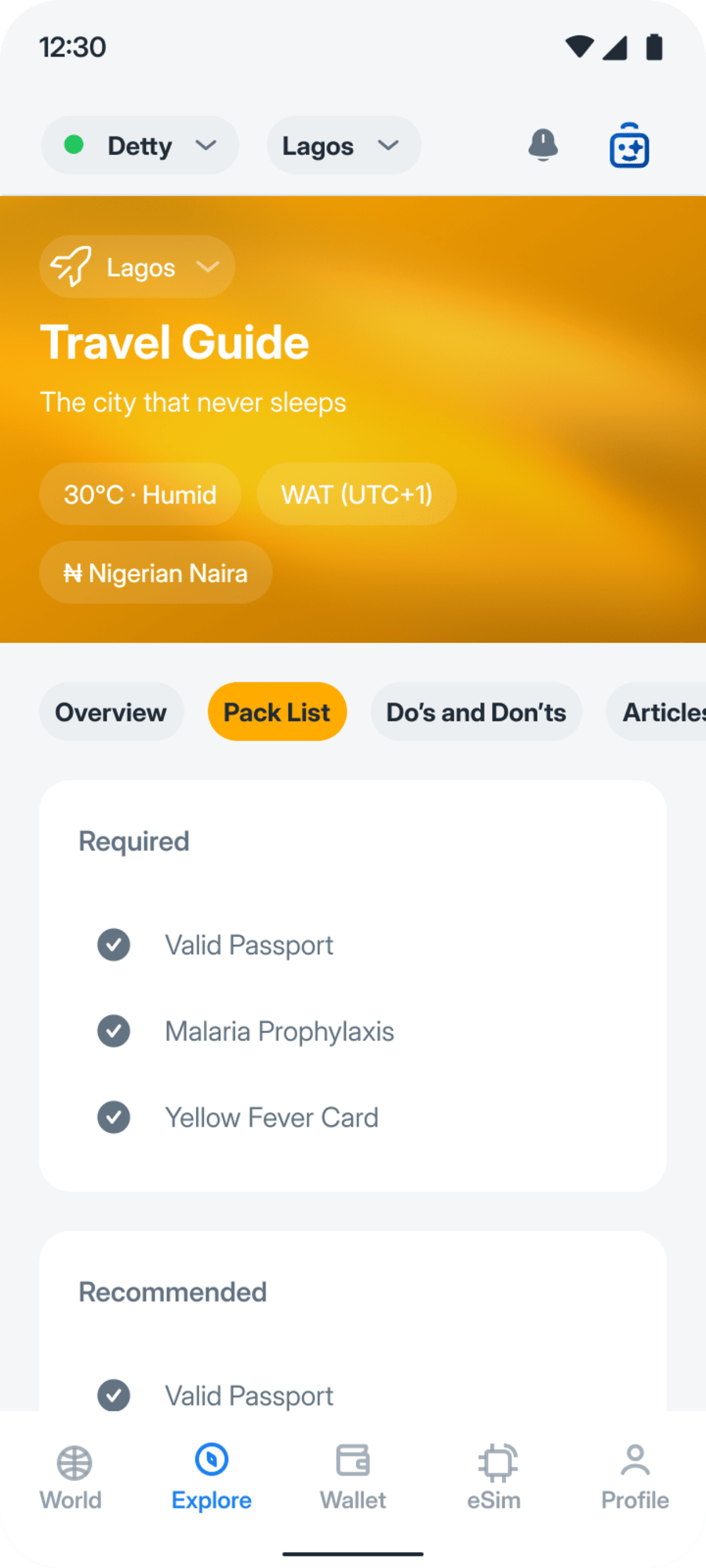
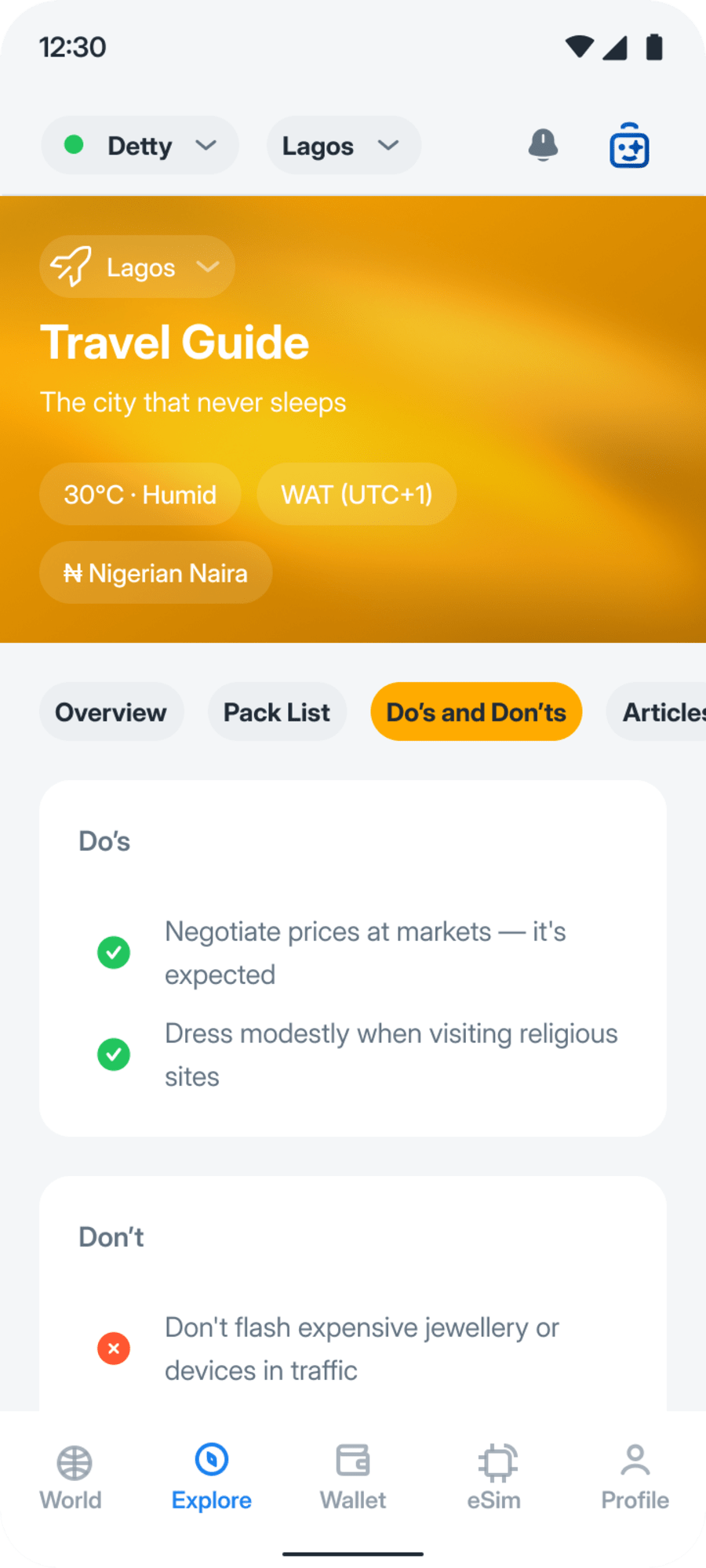
Two things help. BRDRS AI is a concierge that knows the World you're in, so it answers about that place, not travel in general. It opens with quick-start chips (recommendations, booking help, beaches close by) so nobody faces a blank prompt, and it takes voice, for when you're walking through a market or an airport. Explore is the travel guide: key areas, a pack list, do's and don'ts, and articles.
How do you get people to trust an app with their money and their trips?
Thought for 3s
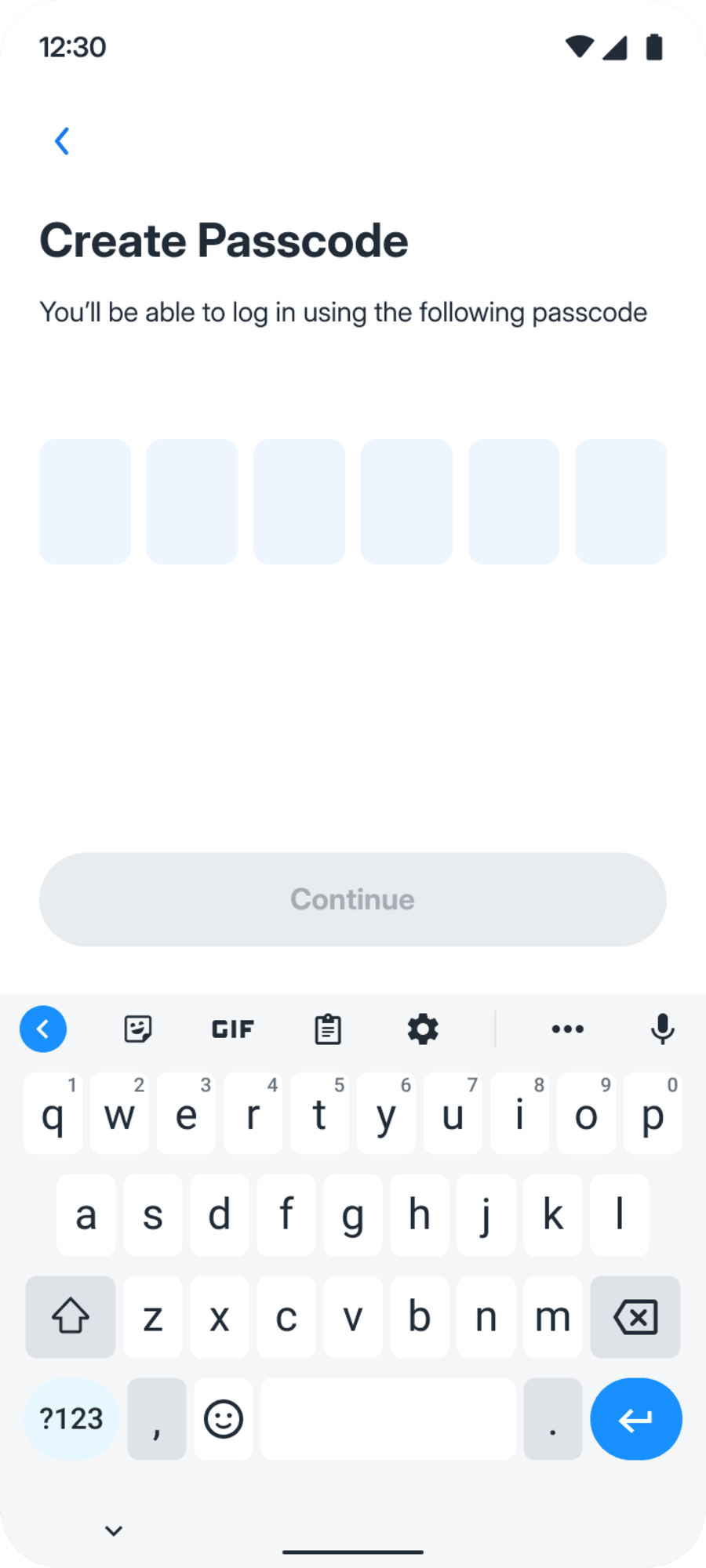
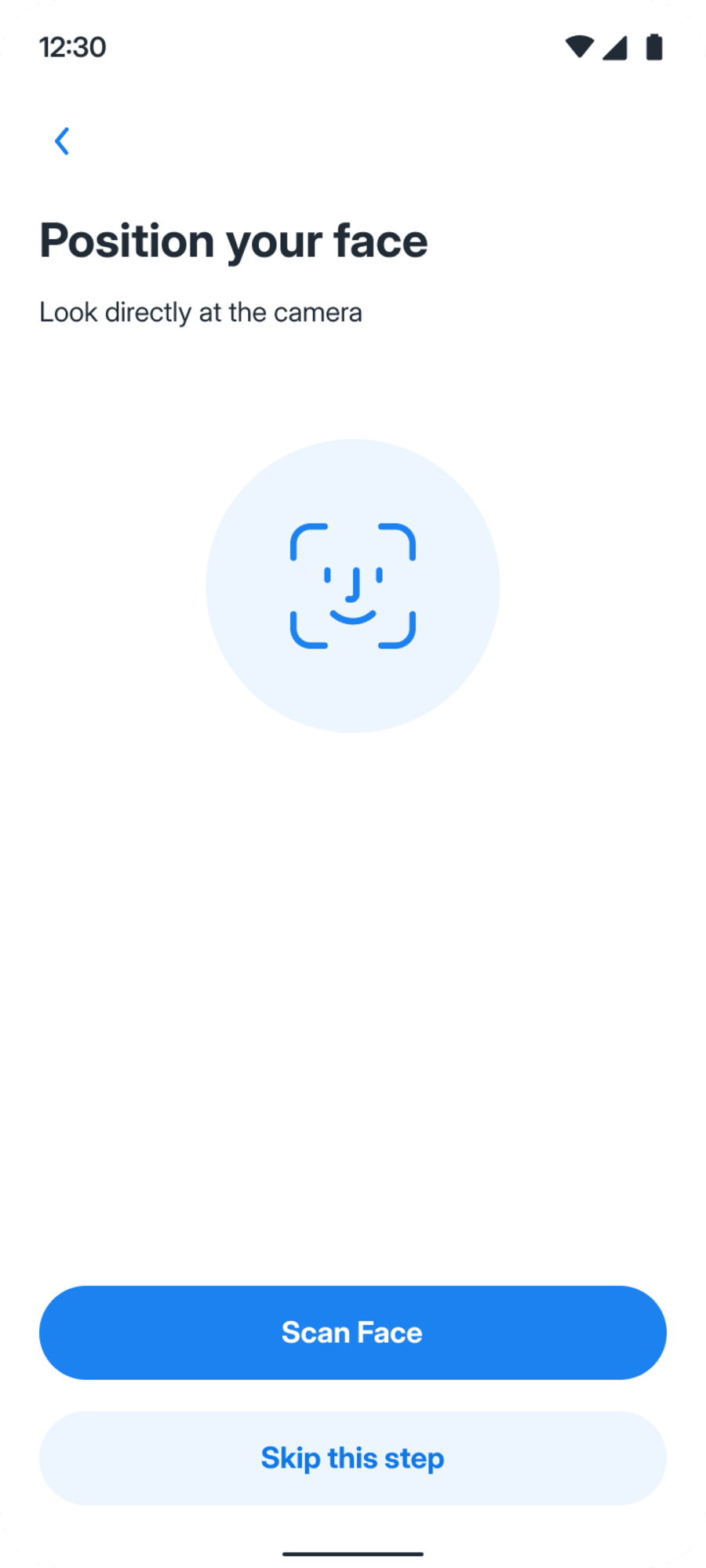
By letting them in before asking for anything. Every welcome screen offers Continue as Guest: you can explore first, and the account comes when you try to book or pay, when you already want it. Security arrives in layers during onboarding: a password at sign-up, a passcode after verifying your email, then Face ID or fingerprint as an optional last step. Each one is explained by what it saves you, not in compliance language. On listings, a BRDRS Certified badge does the job brand recognition does in a market where you have no reference points.
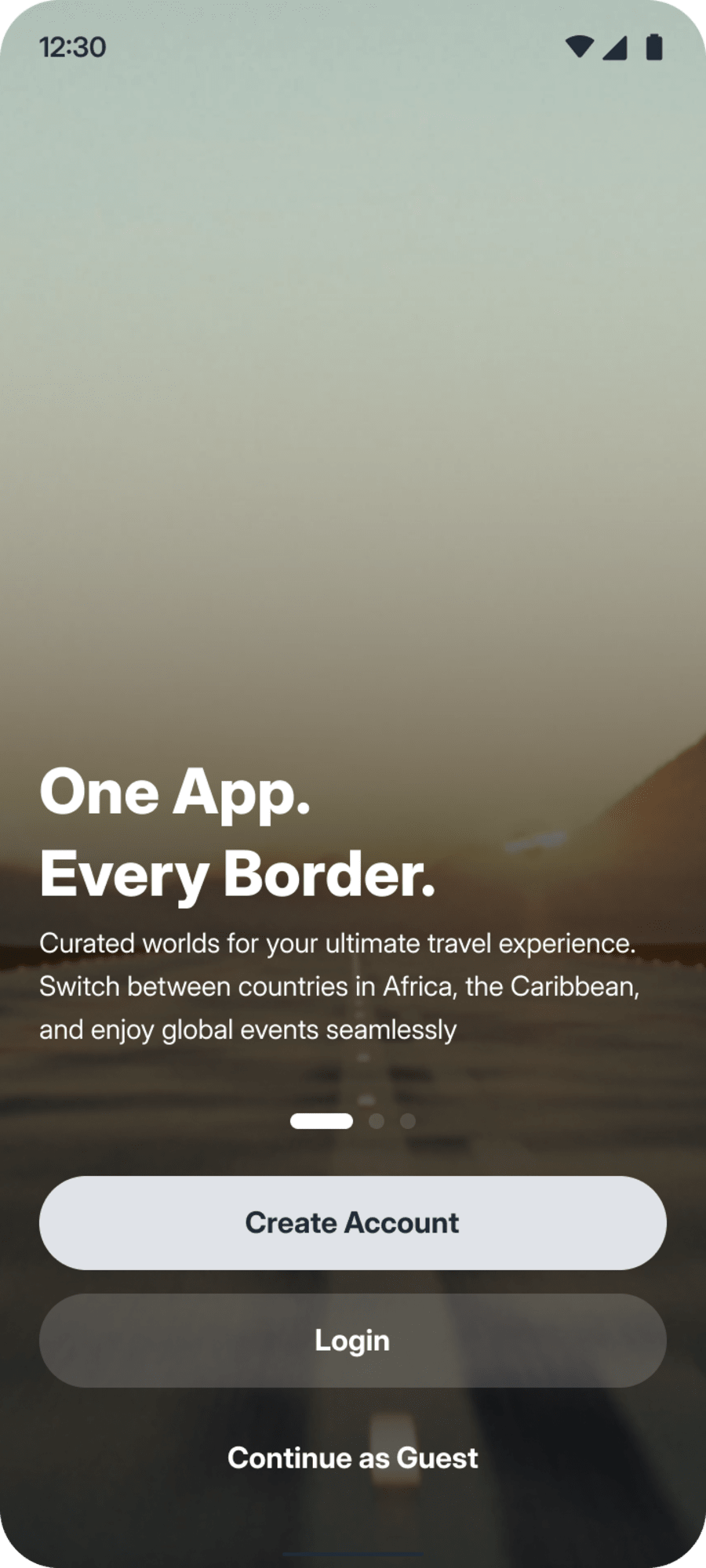
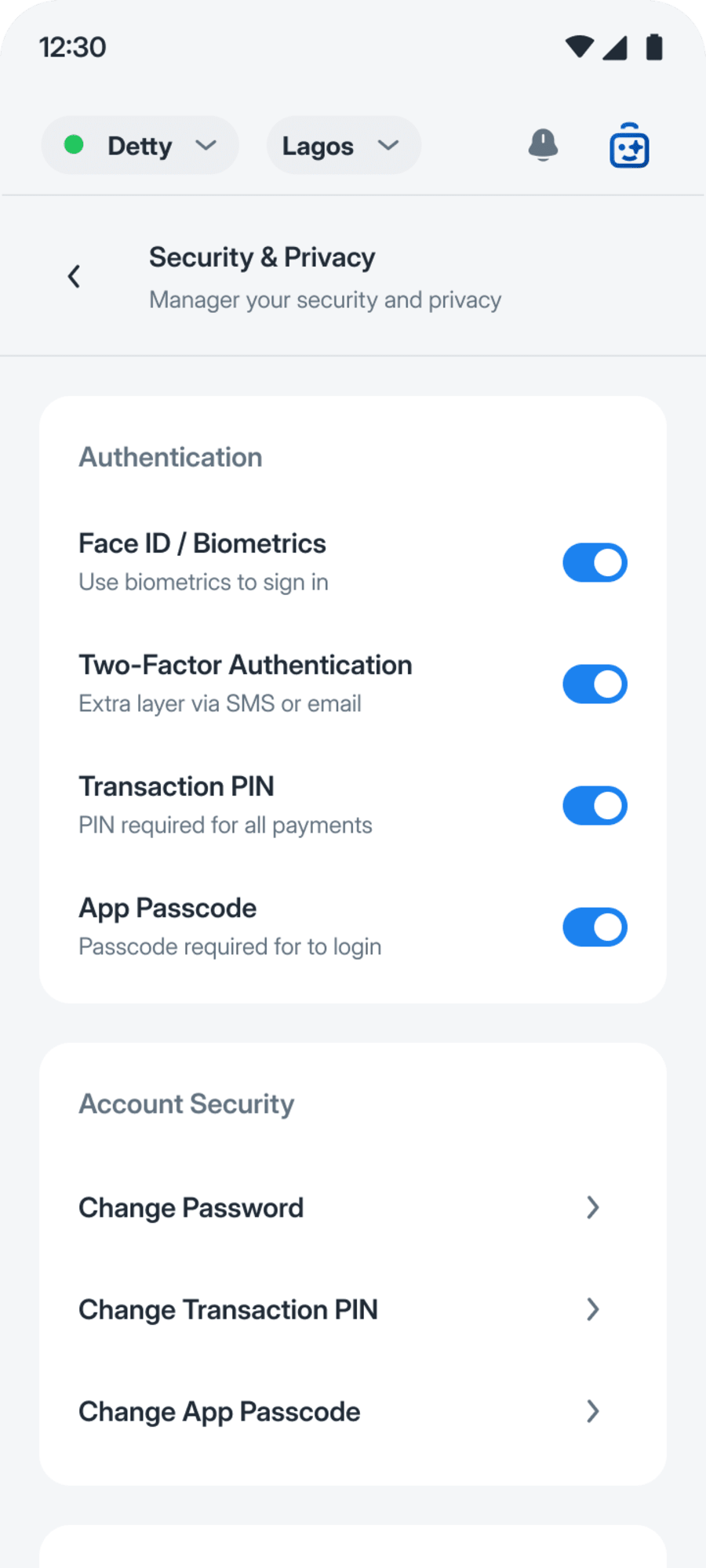
- Guest firstSee the product before you're asked to sign up.
- Security in layersPassword, passcode, then biometrics, each introduced when it makes sense.
- Certified listingsA badge that stands in for brand recognition in unfamiliar places.
Did you design the website too?
Thought for 4s
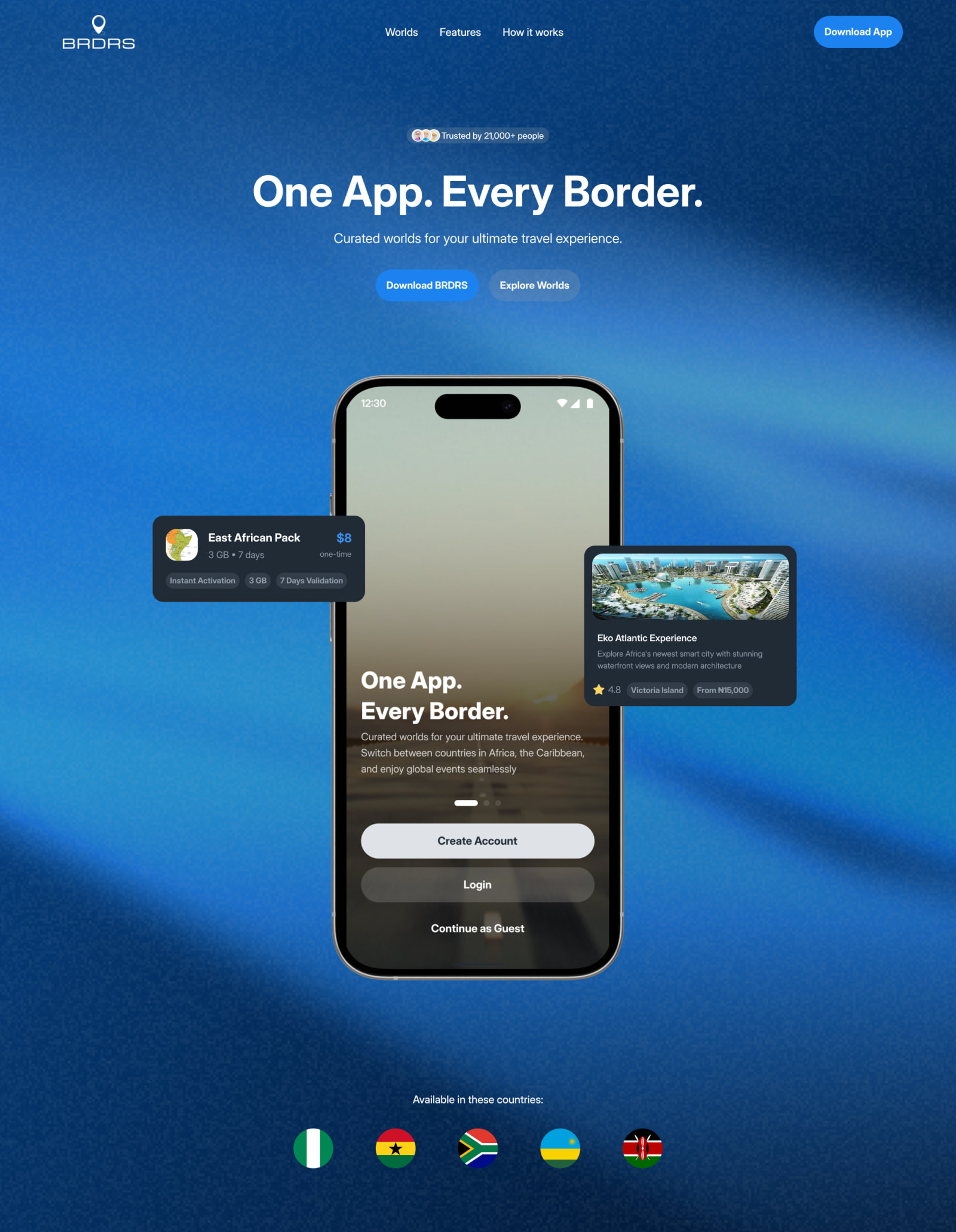
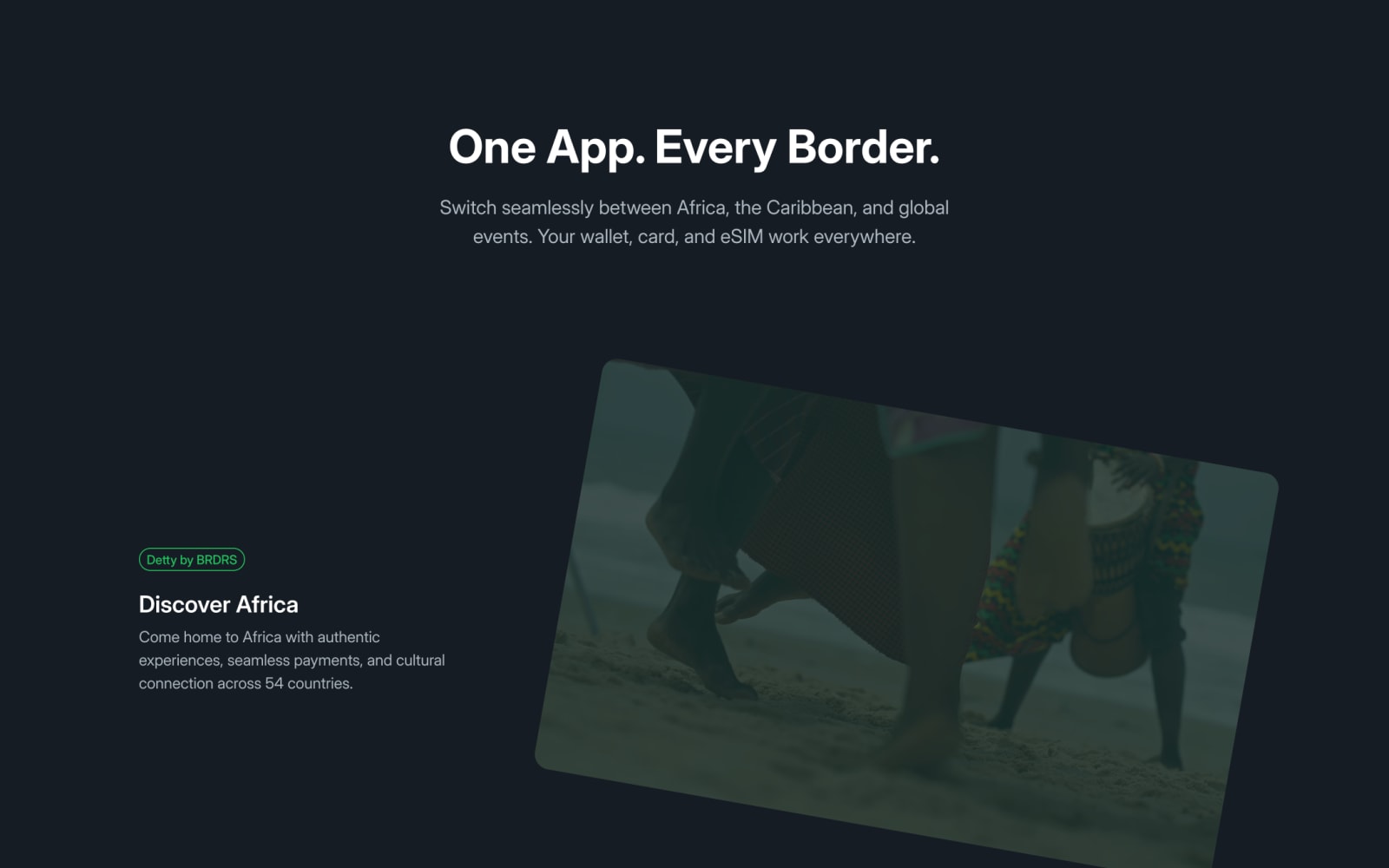
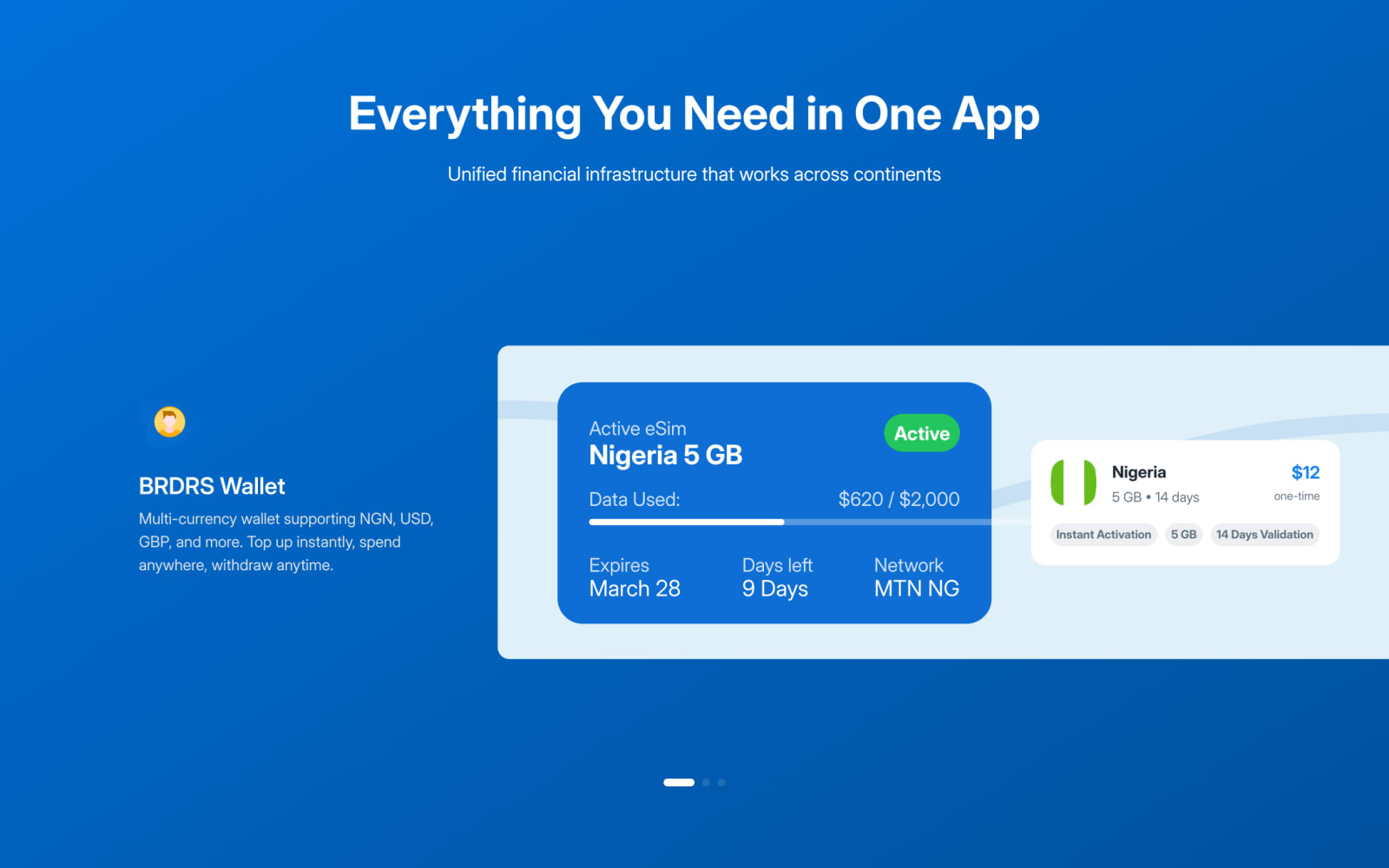
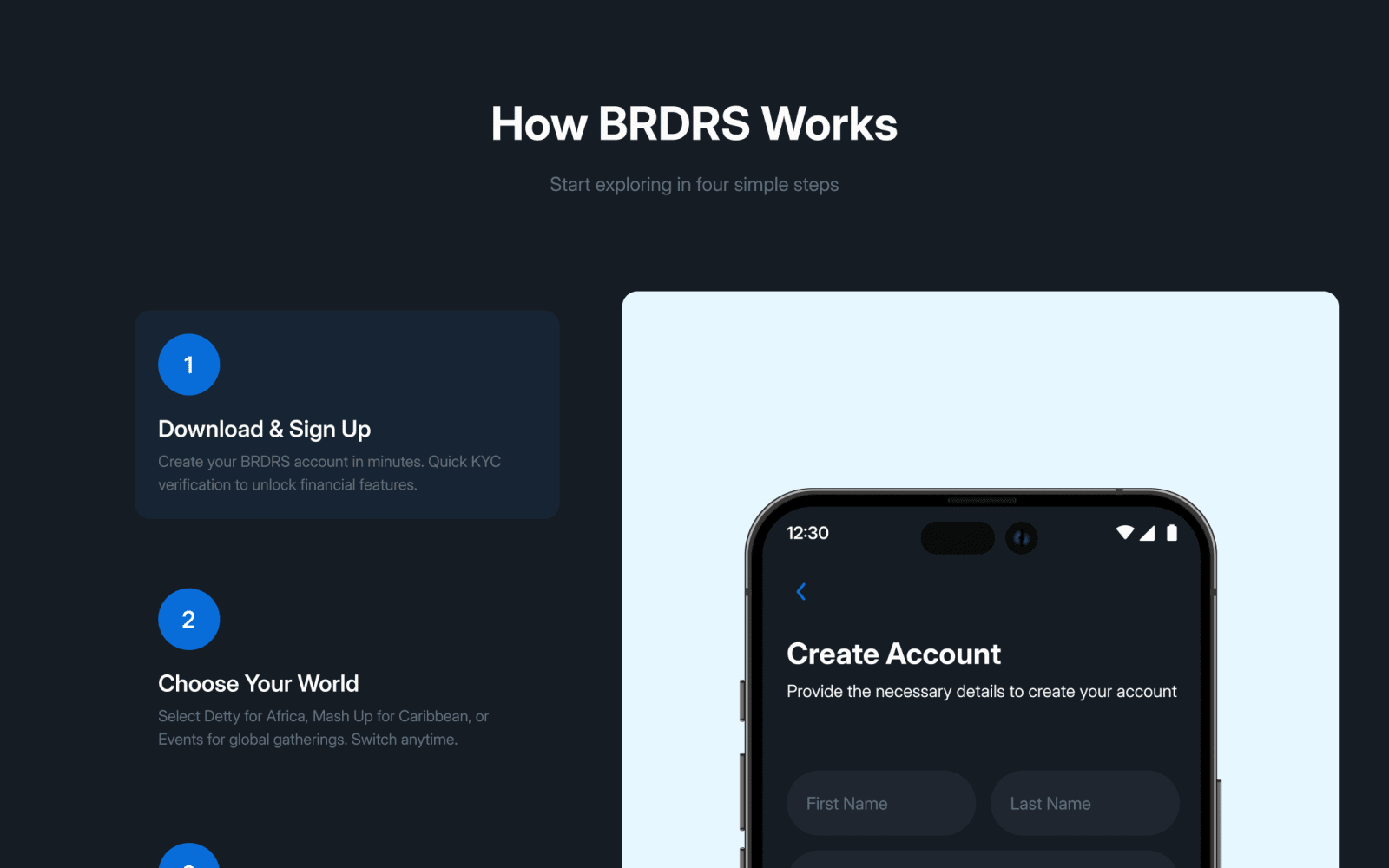
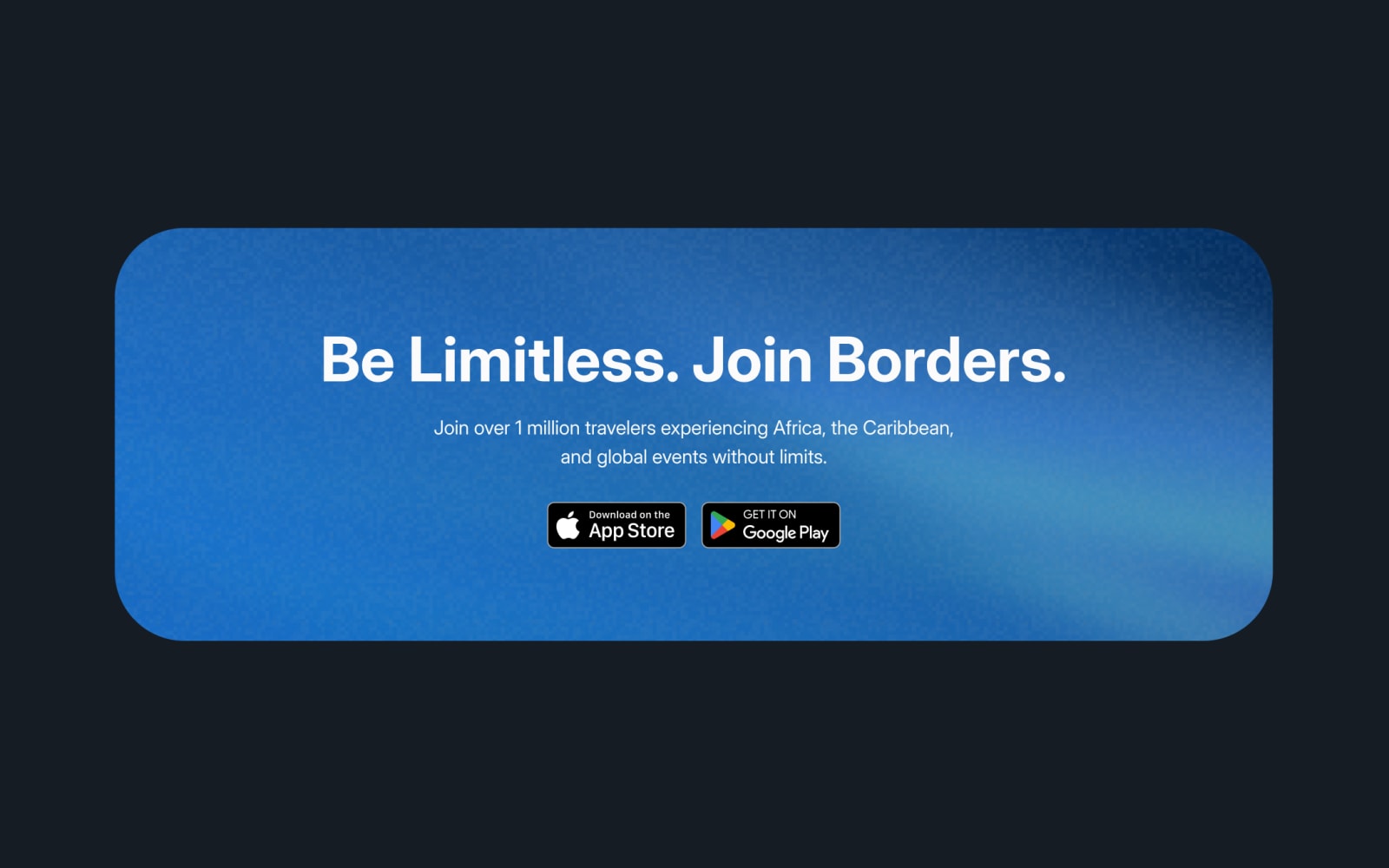
I designed it; the development team built it. The site carries the same promise as the app, One App. Every Border., and shows the product rather than describing it: the Worlds with real photography, the Wallet and eSIM cards as they appear in the app, and how it works in four steps, ending at the App Store and Google Play.
The hero: the app's own welcome screen, with the eSIM and an experience floating beside it.
What would you take into the next product?
Thought for 2s
That the best constraint was one component system for every World: it made each decision harder and the whole product more coherent. That cultural specificity is a feature: a carnival-goer and a December traveller are different users, not one user with a filter. That scope has to be ruthless: BRDRS could do a hundred things, and choosing five pillars kept it whole. And that trust is designed, as much as any feature.
- Constrain the systemOne set of components, colour as the only variable.
- Design for the trip, not the touristDifferent Worlds for different journeys home.
- Five pillars, no moreDiscover, book, pay, connect and ask.
- Make the utility believableGuest mode, layered security and certified listings.
Thinking
The scripted part of this conversation carries the verified facts. Live answers only use what's on this site.