Case study
Trace
Design-complete for development handoffA B2B operating system for cross-border commodity trades: KYB, inventory, listings, versioned negotiation, payment milestones, shipment tracking and miner-level traceability.
The scripted part of this conversation carries the verified facts. Live answers only use what's on this site.
- 01What it is
- 02My role
- 03The problem
- 04The trust chain
- 05KYB first
- 06Inventory
- 07Quality checks
- 08Listing wizard
- 09Request for quote
- 10Negotiations
- 11Two perspectives
- 12Trade execution
- 13Trade flows
- 14Documents and incidents
- 15Wallet and credit
- 16Miners and farmers
- 17Running the platform
- 18Where it stands
- 19What I learned
Hi, this is Trace, a B2B commodity trading platform I designed at Sabi Africa. It gives buyers and sellers one system for listing, negotiating, paying, tracking and tracing materials, instead of WhatsApp threads and spreadsheet contracts. Ask away, or just scroll.
What is Trace?
Thought for 2s
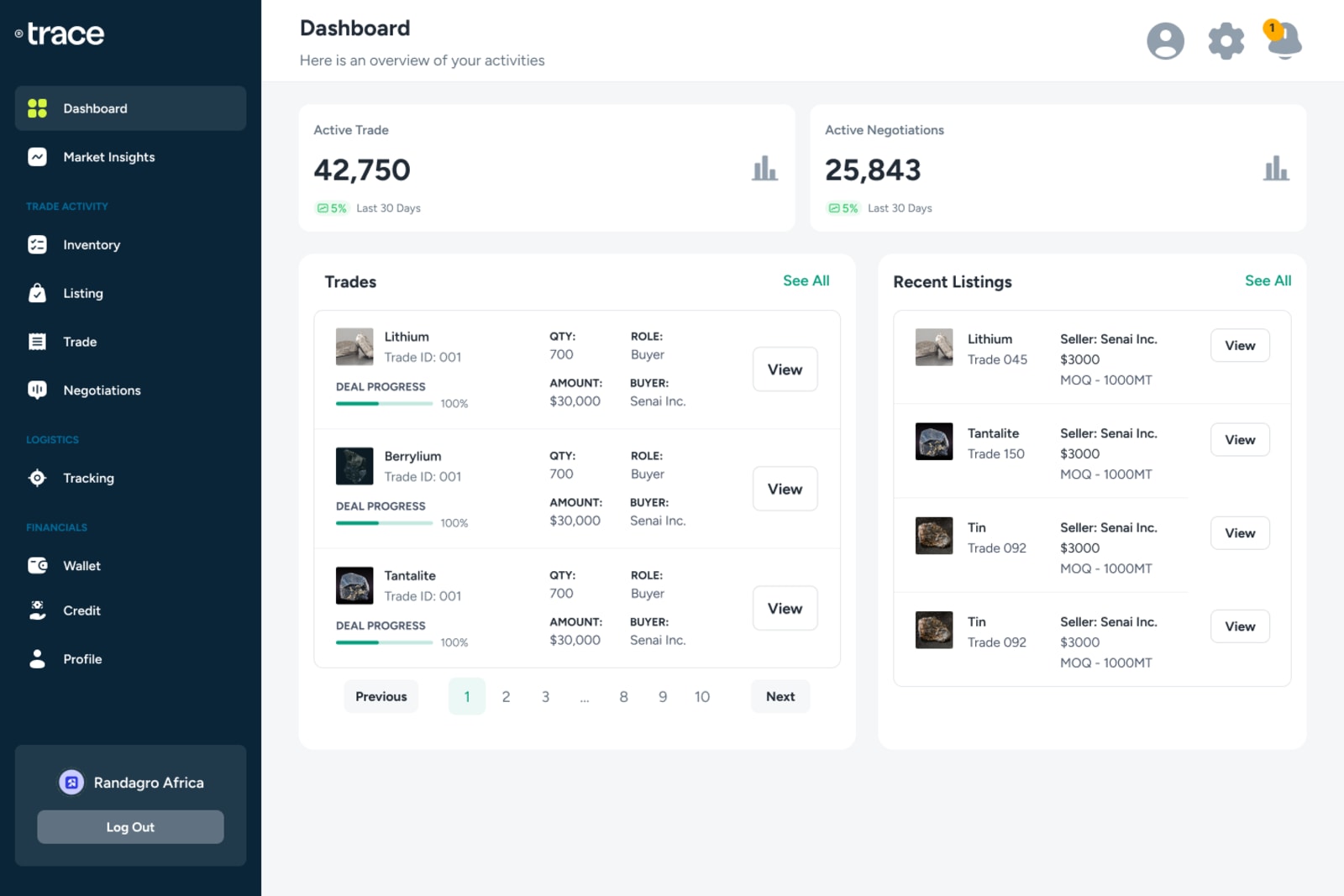
Trace is a B2B commodity trading platform for cross-border deals in minerals and agricultural products. Sellers list stock, negotiate terms and dispatch shipments. Buyers discover listings, counter terms, track deliveries and manage payment milestones. The same trade looks different from each side, so the product has to stay honest for both.
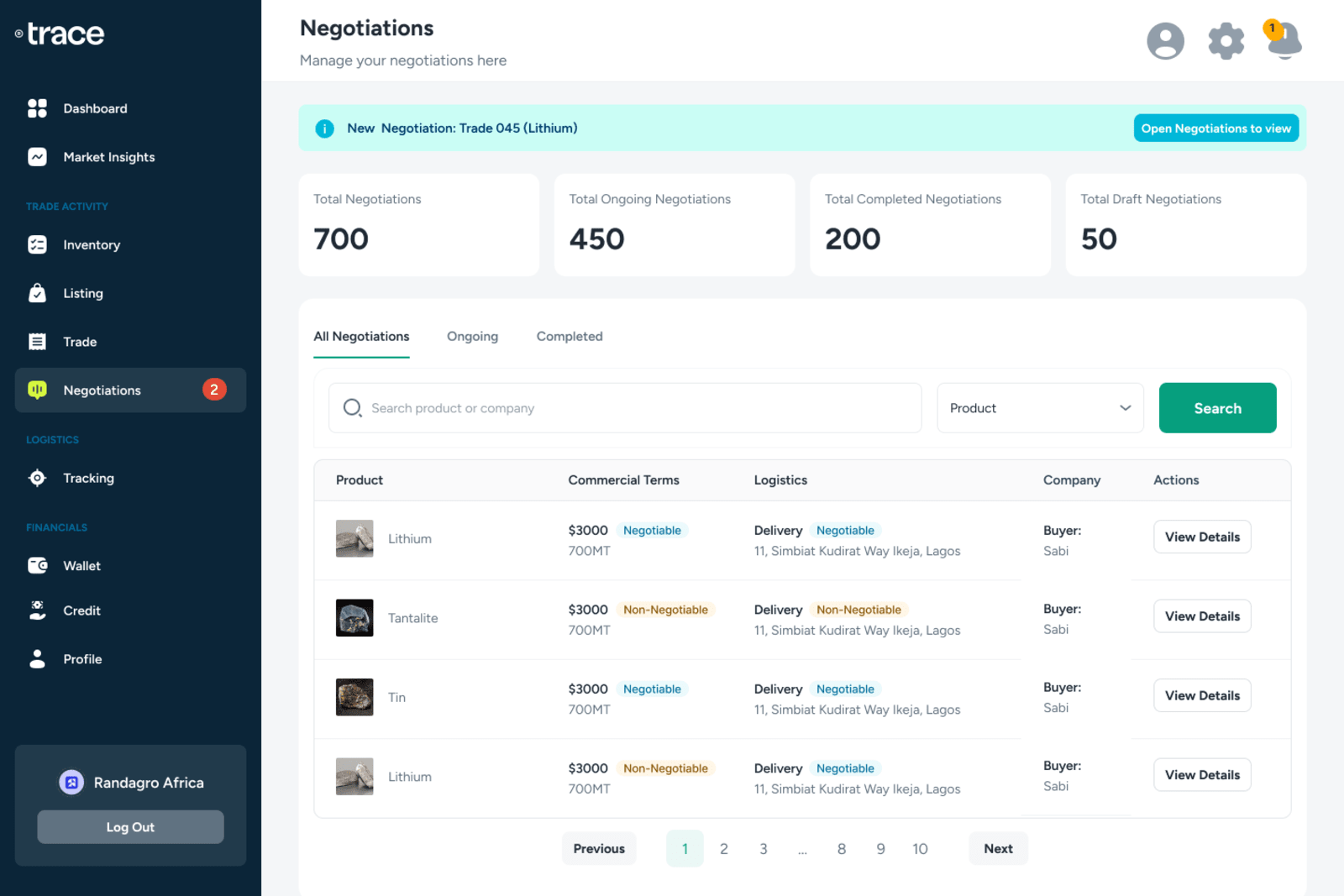
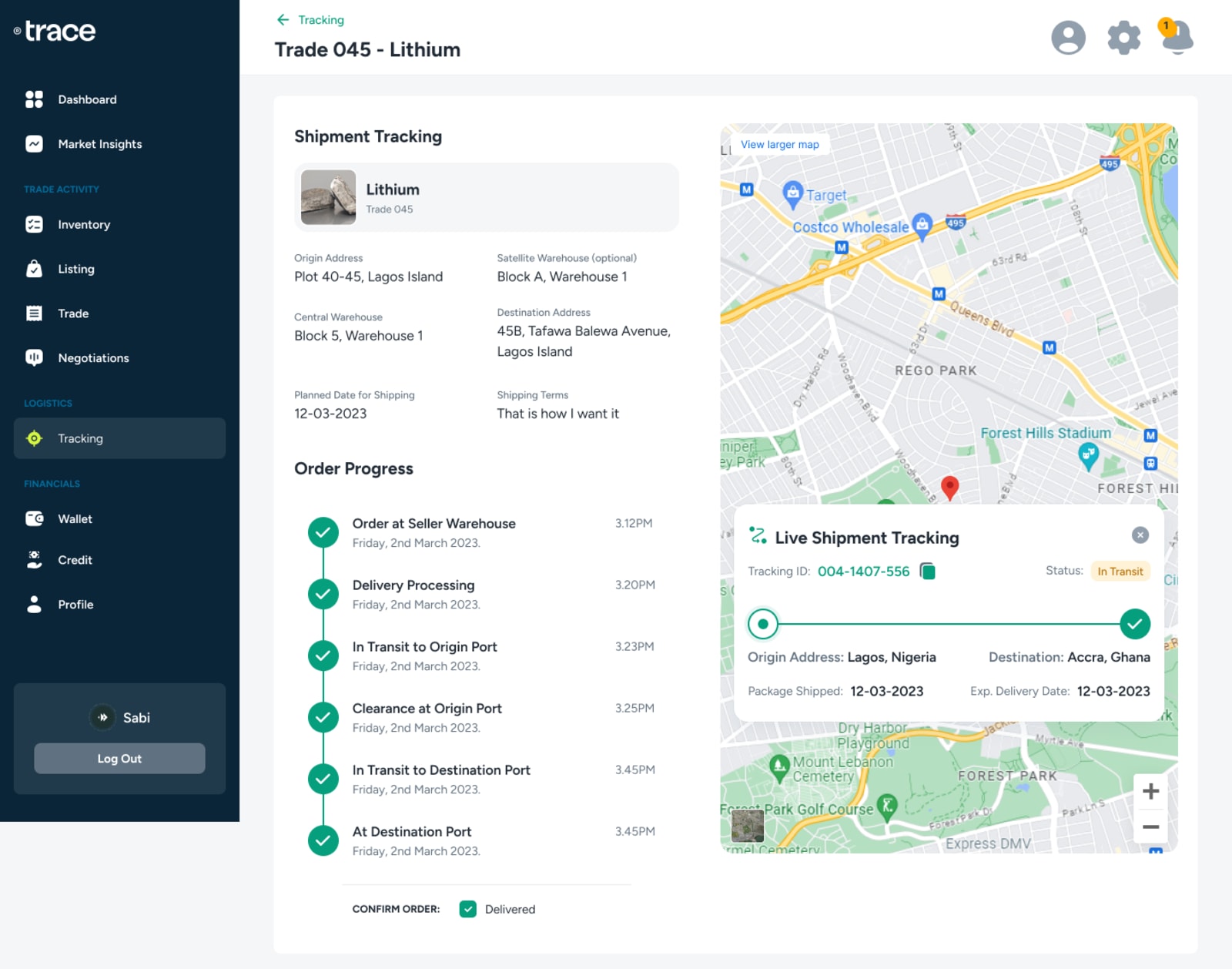
- core modules in the trust sequence
- 7core modules in the trust sequence
- roles on every deal: seller and buyer
- 2roles on every deal: seller and buyer
- tabs on every agreed trade: deal slip, finance, tracking, traceability
- 4tabs on every agreed trade: deal slip, finance, tracking, traceability
What did you do on Trace?
Thought for 3s
I was Senior Product Designer at Sabi Africa. I designed the full UI and flows for the seller and buyer sides and the admin portal: KYB, inventory, the listing wizard, negotiations, trade execution, tracking and traceability. I designed this product; I did not build the engineering.
- Trust gatesKYB onboarding and product verification before anyone can trade.
- Trade coreInventory, listing wizard, versioned negotiations and the deal slip.
- ExecutionPayment milestones, shipment batches and miner traceability on the trade.
What was broken about commodity trading without Trace?
Thought for 4s
High-value cross-border deals still ran on WhatsApp, PDF contracts and manual transfers. There was no shared way to negotiate terms, no structured shipment trail, no place to prove ethical sourcing, and little audit trail when a deal went wrong. Trust lived in relationships until the relationship failed.
Then · Before
Informal agreements, scattered documents, phone calls for status, and no shared source of truth when quality, quantity or payment slipped.
Now · With Trace
One sequence: verify the company, verify the product, list, negotiate a versioned deal slip, then pay, track and trace on the same trade.
What idea shaped the whole product?
Thought for 2s
A commodity trade isn't one click. It's a sequence of trust events. Trace maps that sequence into modules: verify who you trade with, verify the product, list, negotiate, execute, track, then trace materials to their source. The architecture enforces the order, because that's how trust actually builds in this market.
KYB for the company before it can trade
["KYB for the company before it can trade","Register stock; quality partners approve it","Public listing or a direct buyer invite","Versioned deal slip both parties share","Milestones, shipments, miner records"]“Every module is a stage in the trust chain, not a separate product bolted on later.”
Design principle on Trace
How does account verification work?
Thought for 3s
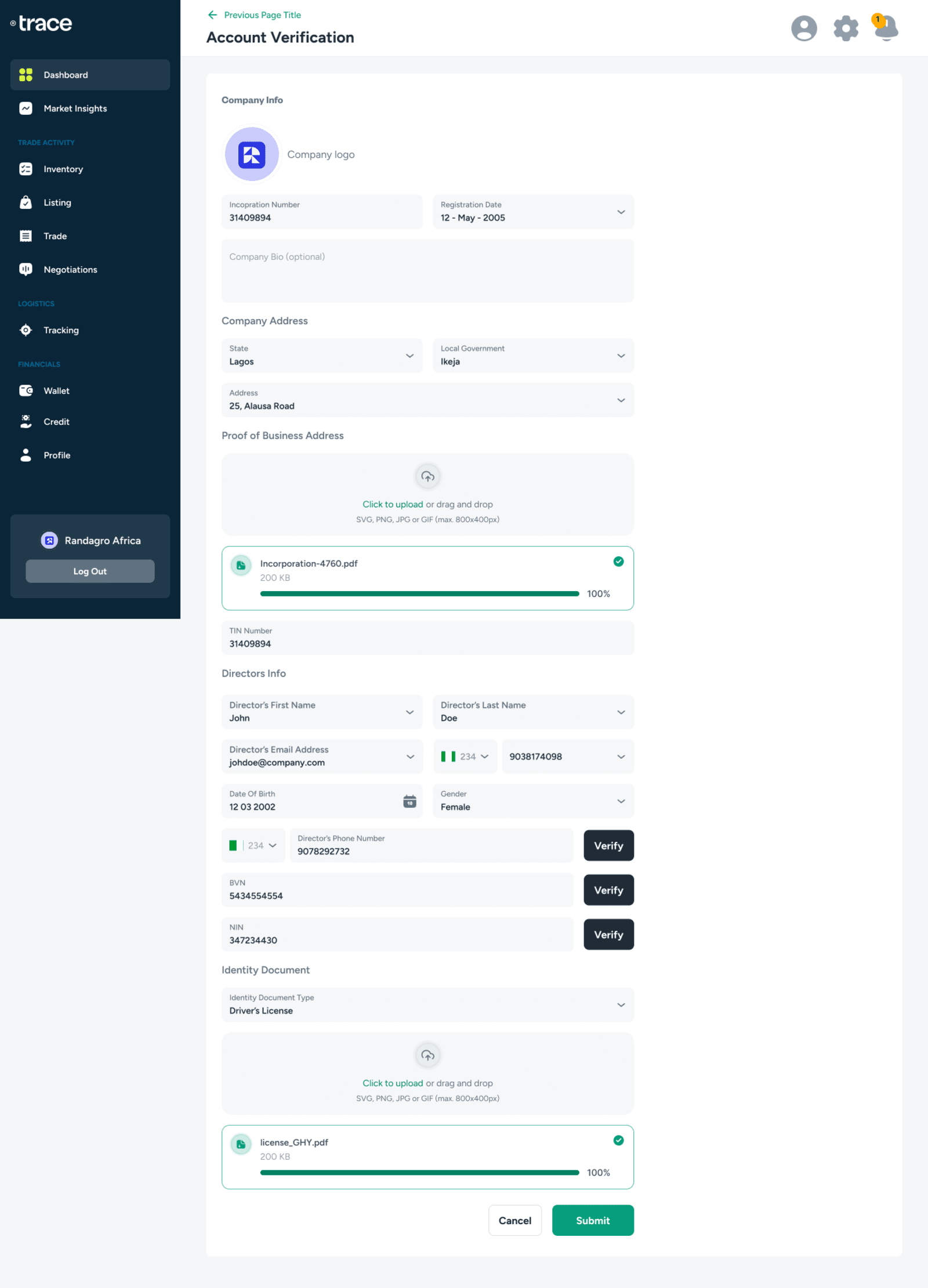
Before a company can trade, it completes Know Your Business. The form collects company details and director details in parallel, with phone OTP per director. Trace reviews the submission. Unverified companies can see the product, but they cannot list, negotiate or trade. KYB is a gate, not a decorative step.
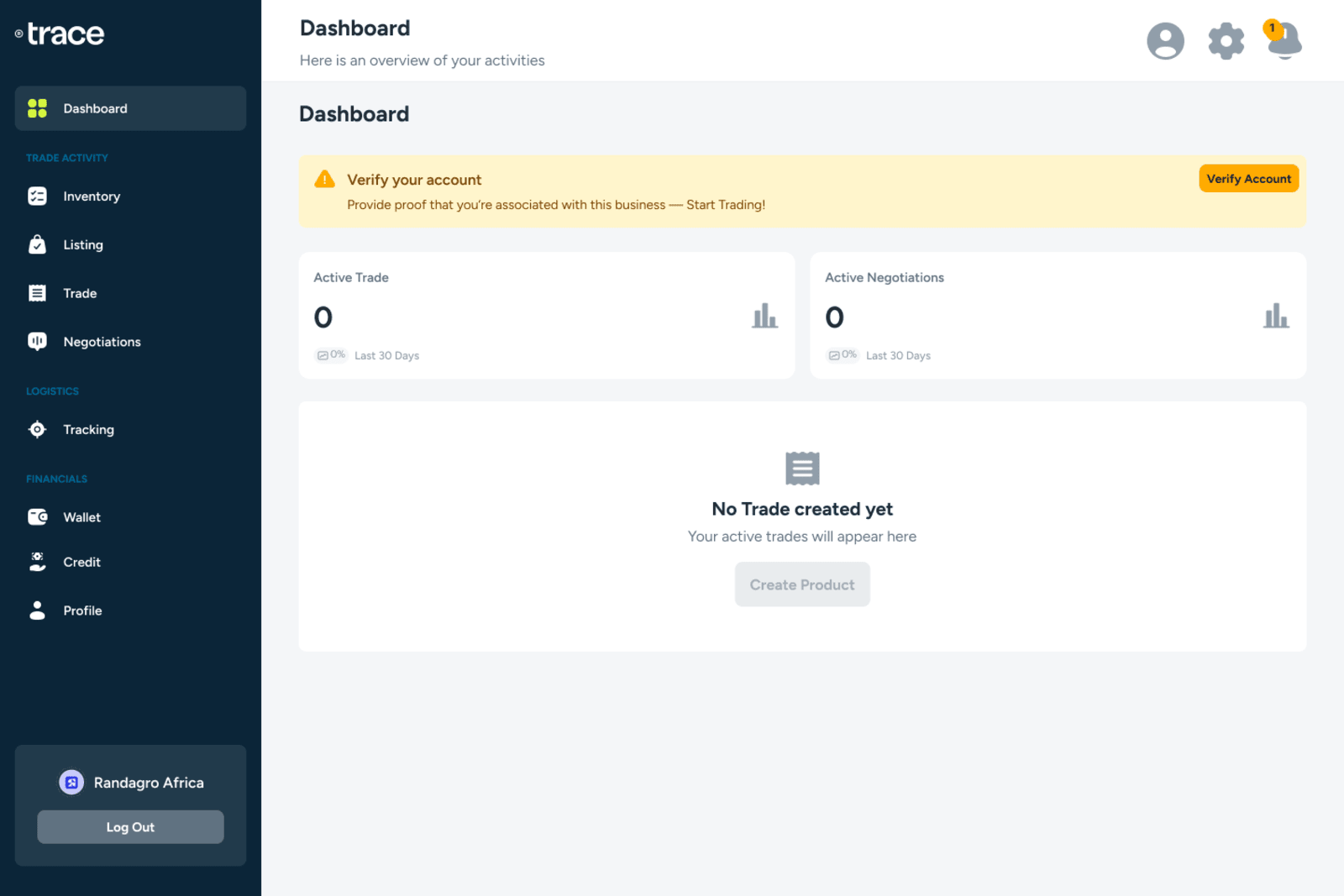
The verification banner stays until KYB is approved.
Explain more
Company Info covers incorporation number, TIN, address, logo and registration date. Directors Info covers personal details, BVN, NIN and identity documents, each with its own phone verification before submit.
How do sellers get products ready to trade?
Thought for 4s
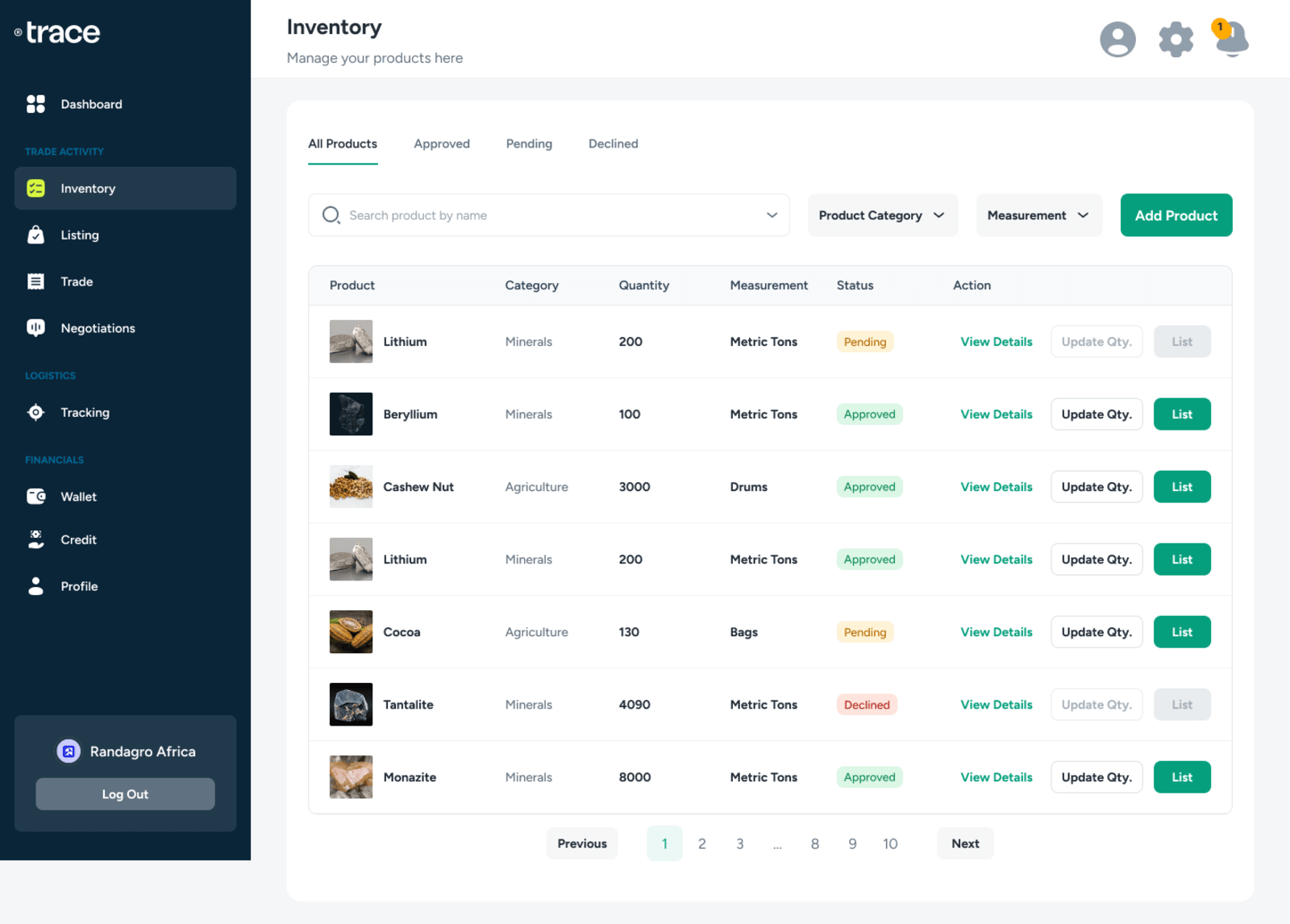
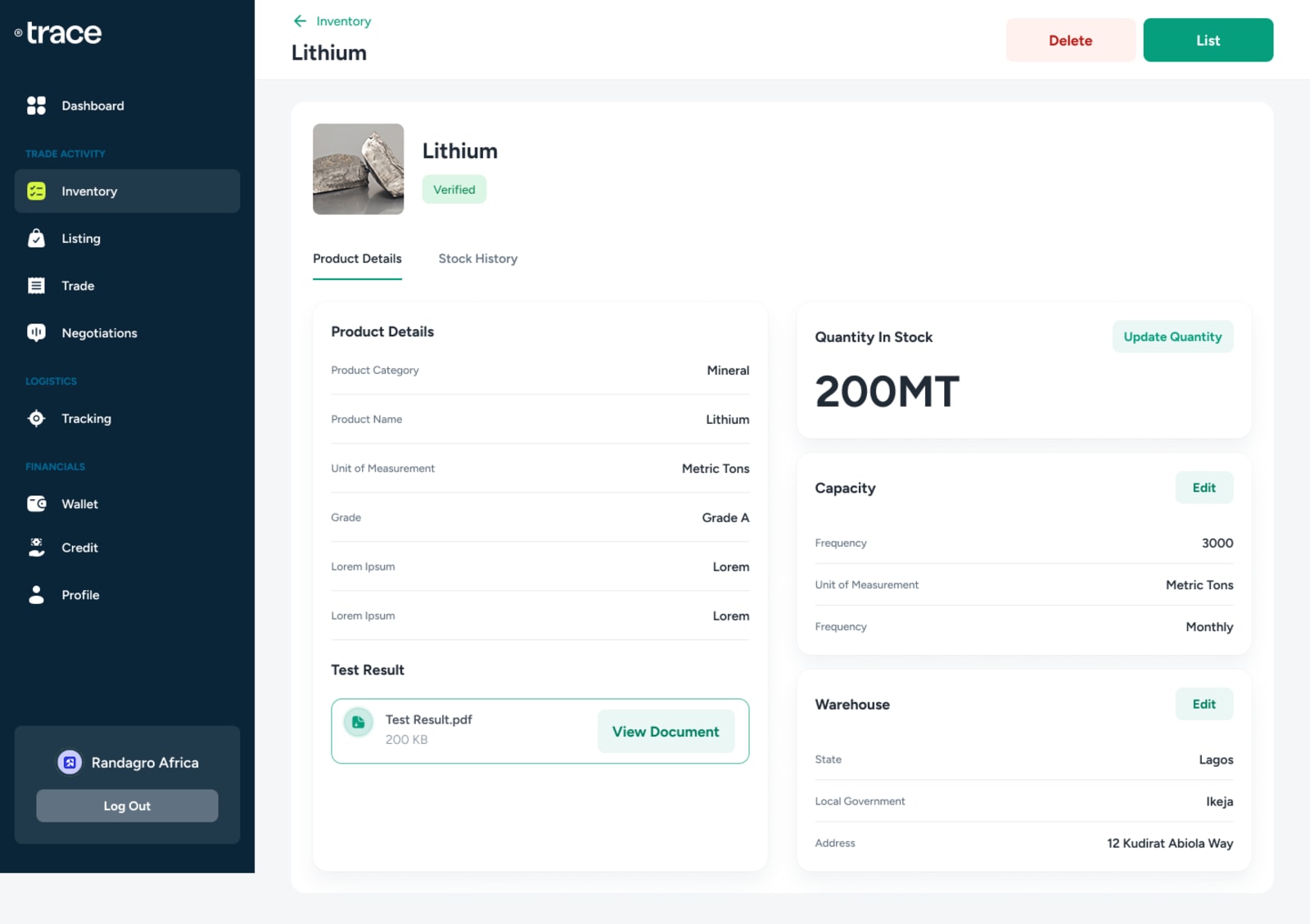
Inventory is where sellers register what they intend to sell. They pick from Trace's catalogue (agricultural or minerals), set stock, capacity, warehouse and measurement frequency, then wait for physical quality verification. Until a product is Approved, it can't be listed. Pending and Declined keep the rest of the pipeline honest.
Who checks the product is what the seller says?
Thought for 2s
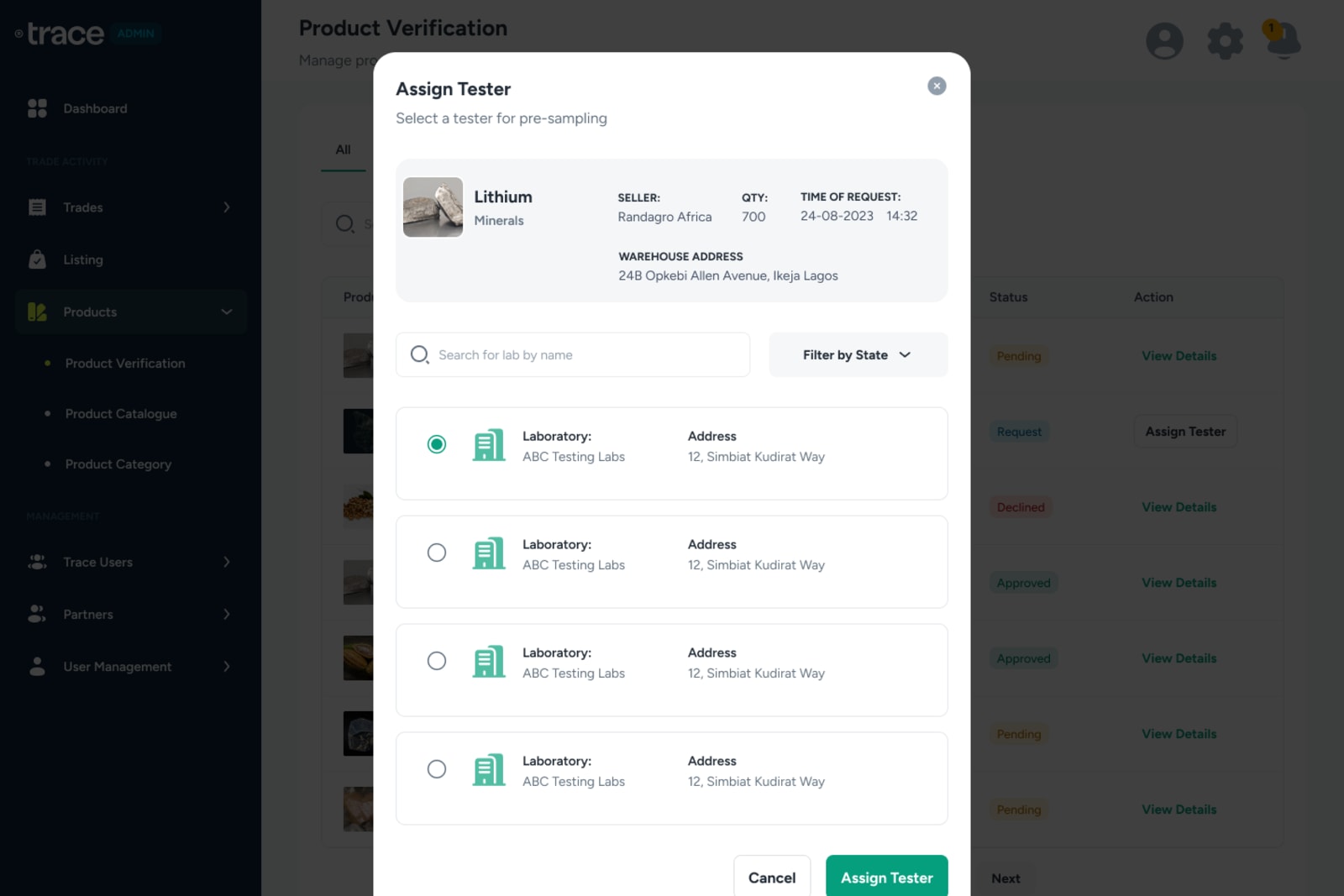
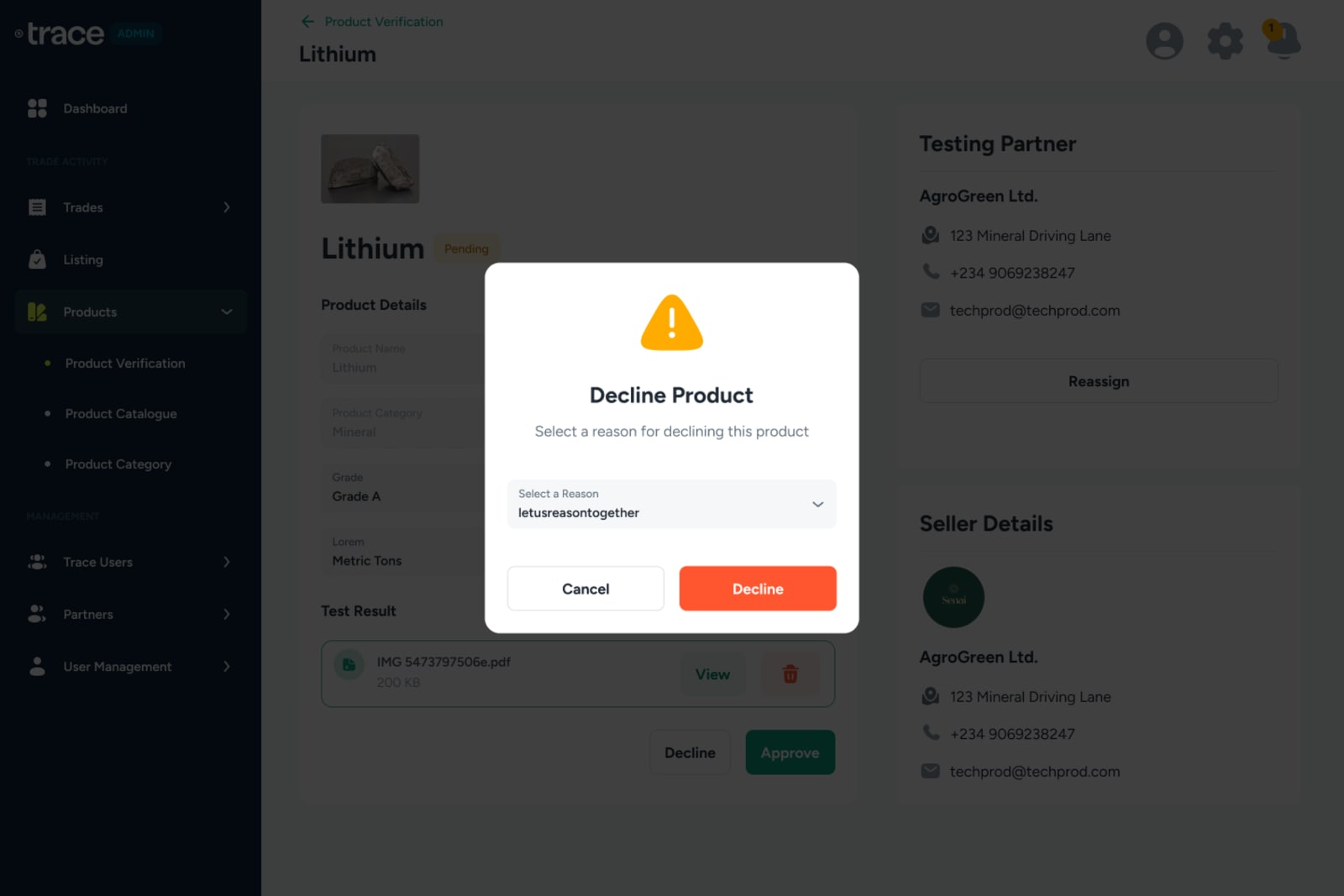
A lab does, before anything is listed. When a seller adds a product, the admin assigns a testing lab for pre-sampling, filtered by state, with the seller, quantity and warehouse address in view. The test result comes back to the product, and the admin approves it or declines it with a reason. Only approved products reach a listing.
How does creating a listing work?
Thought for 3s
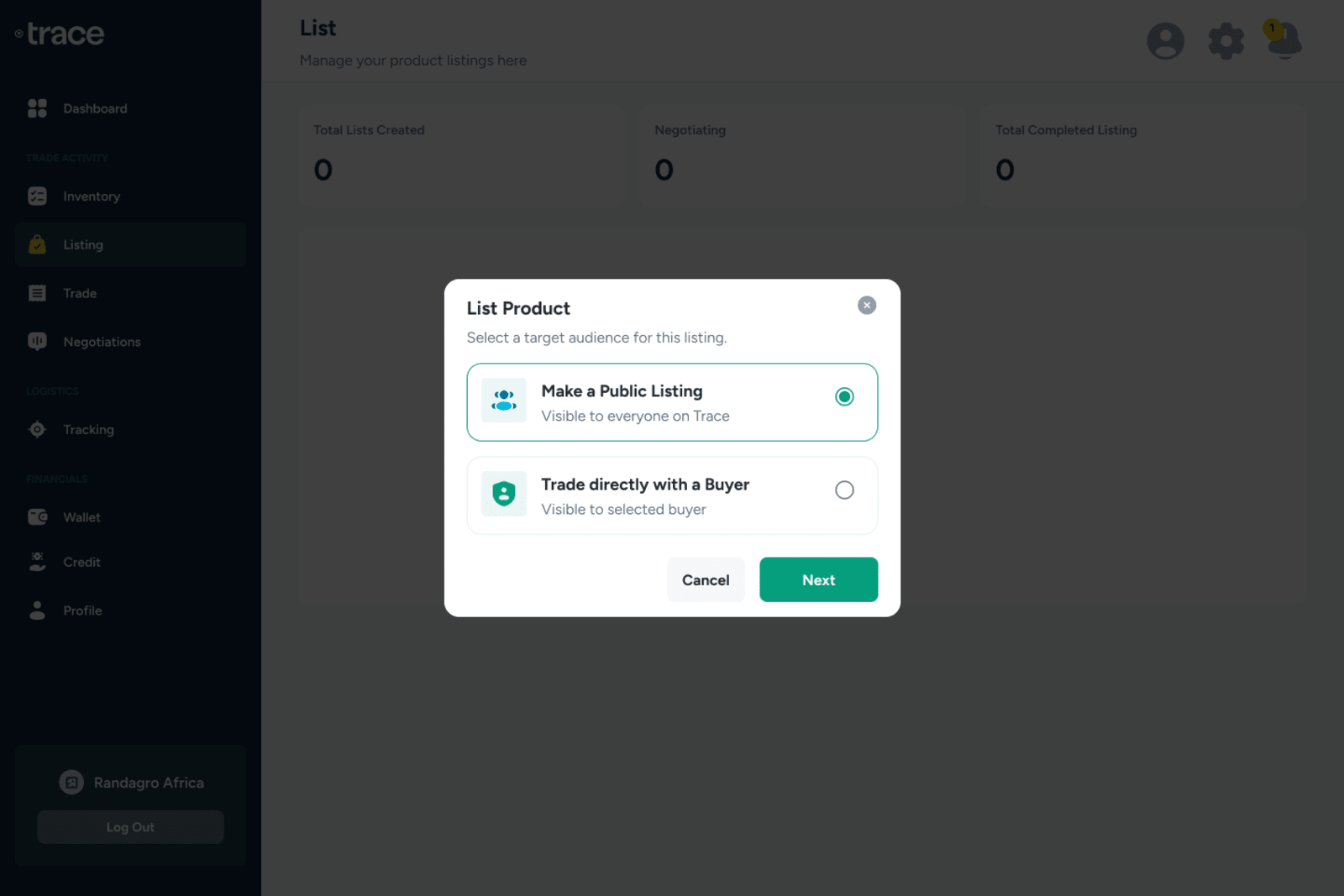
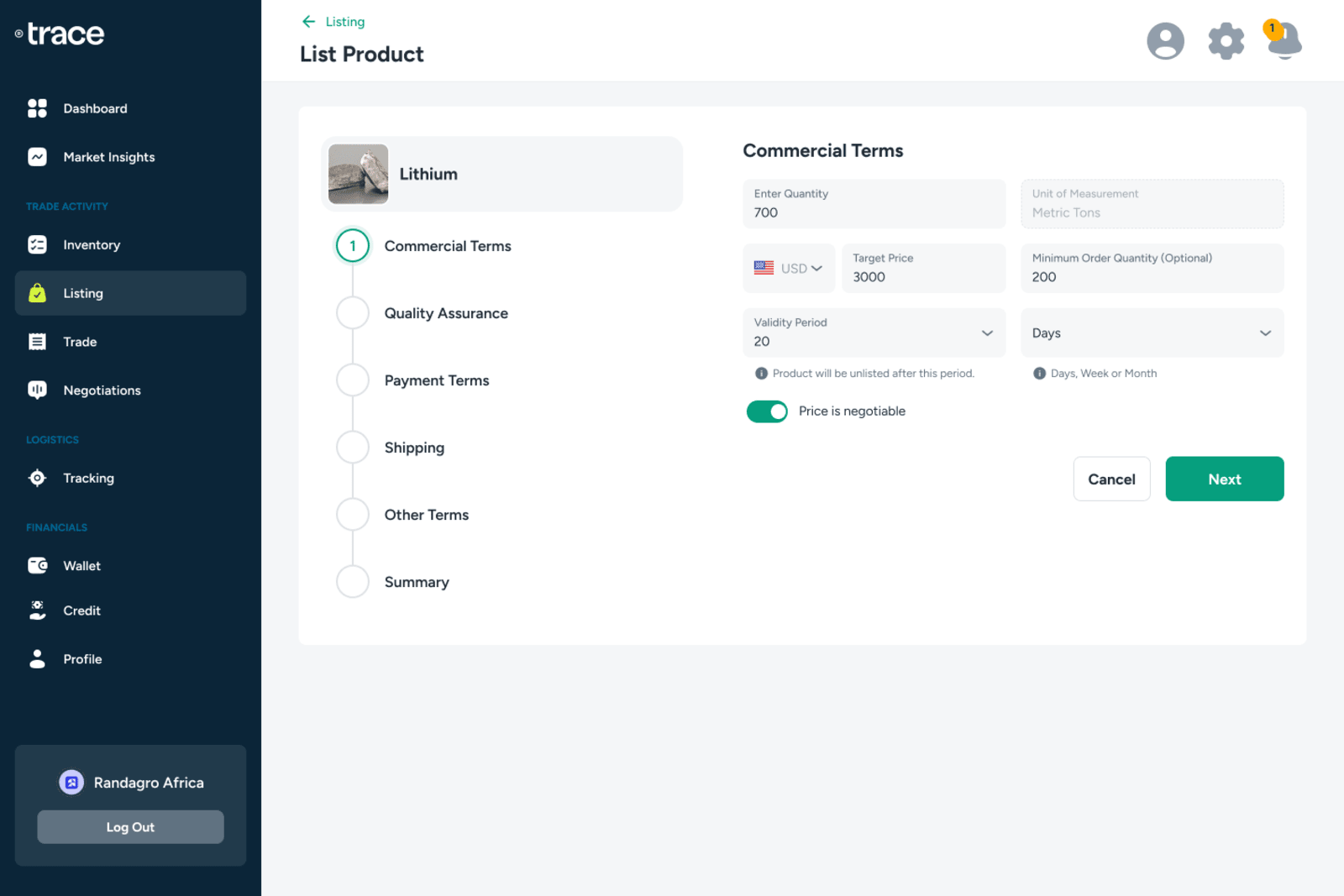
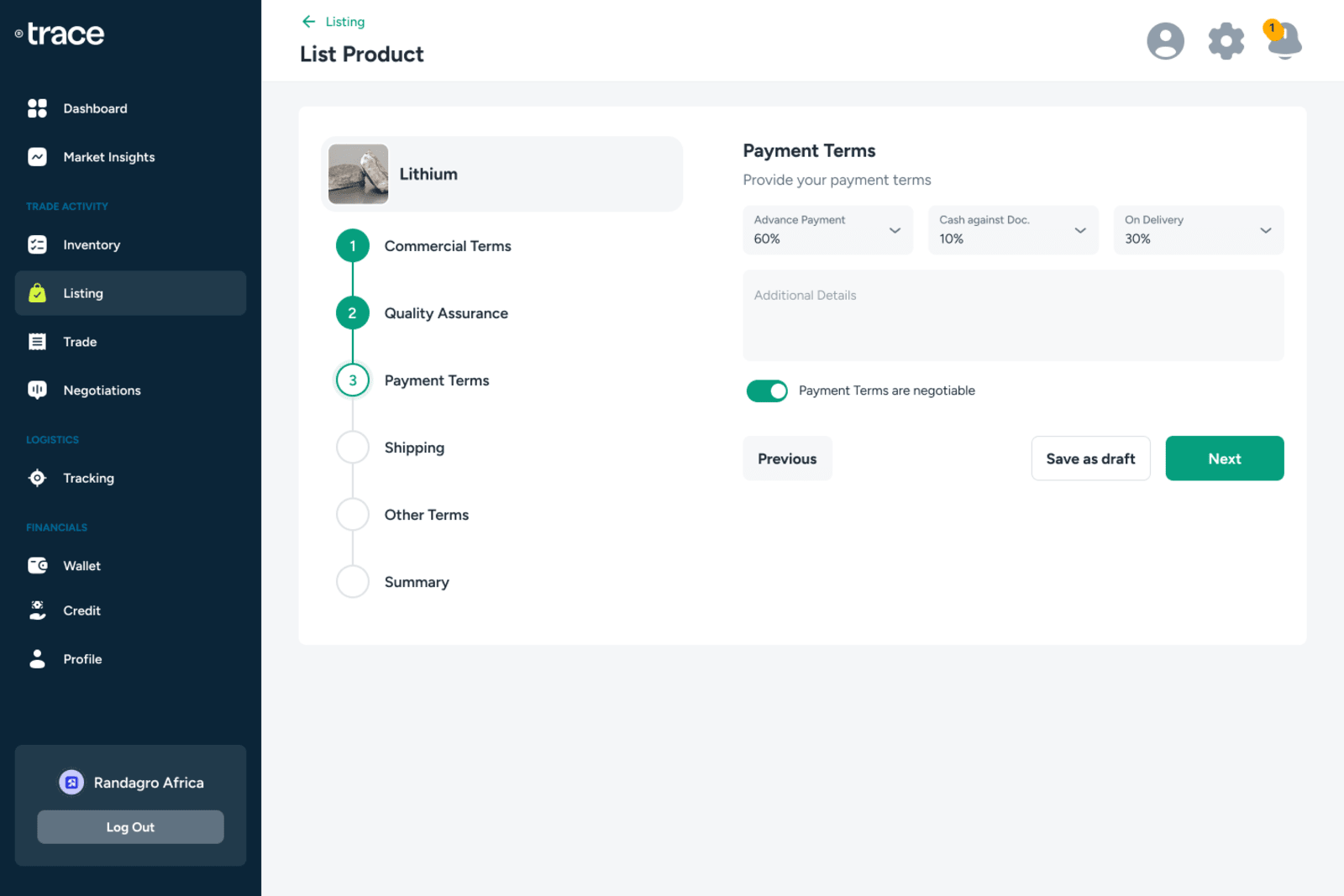
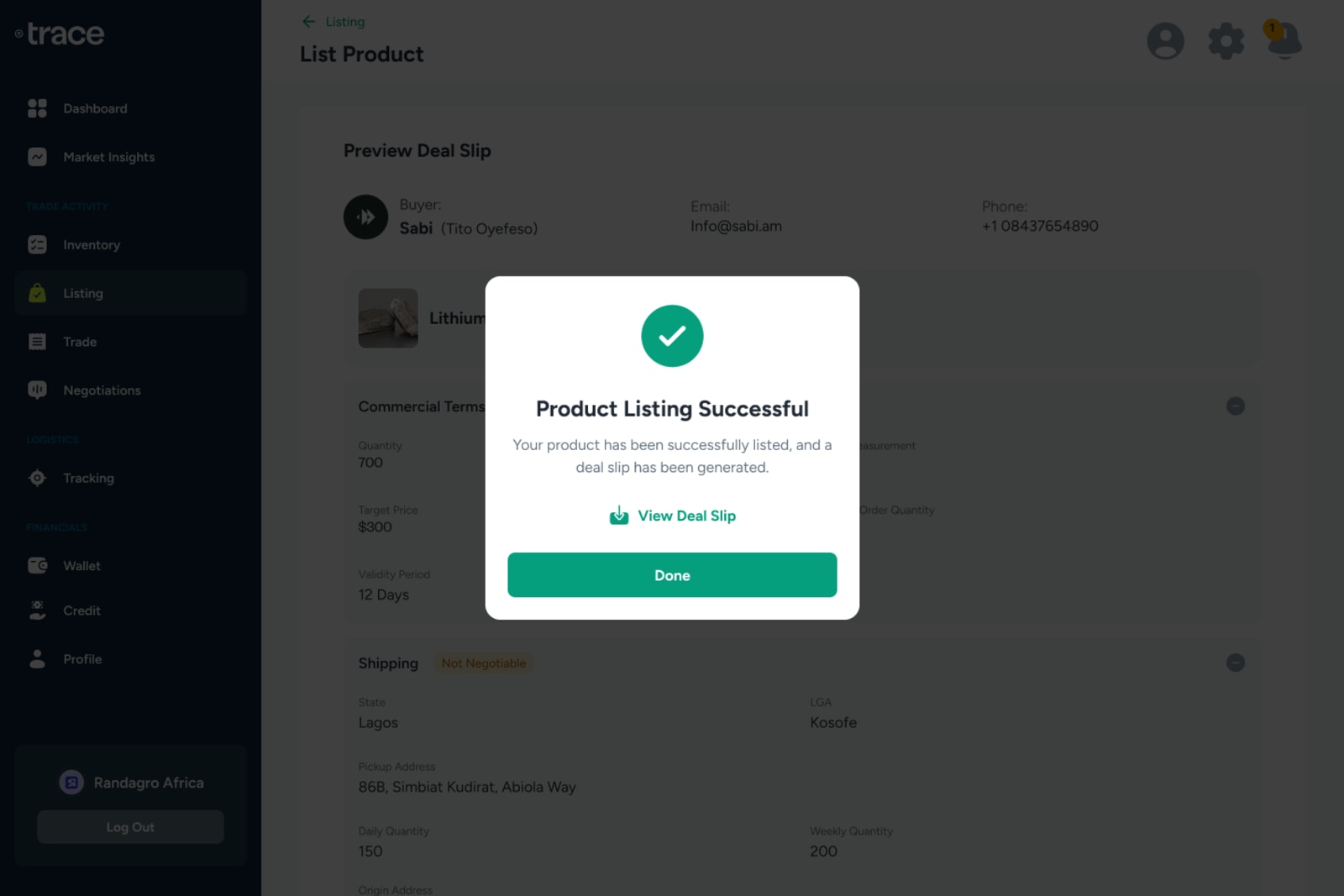
Listing is the seller's main move. The wizard opens with two paths: a public listing or a direct trade with one buyer. Both paths then share commercial terms, quality assurance, payment, shipping, other terms, and a summary that generates the deal slip, the formal contract the buyer sees.
What if a buyer wants something nobody has listed?
Thought for 4s
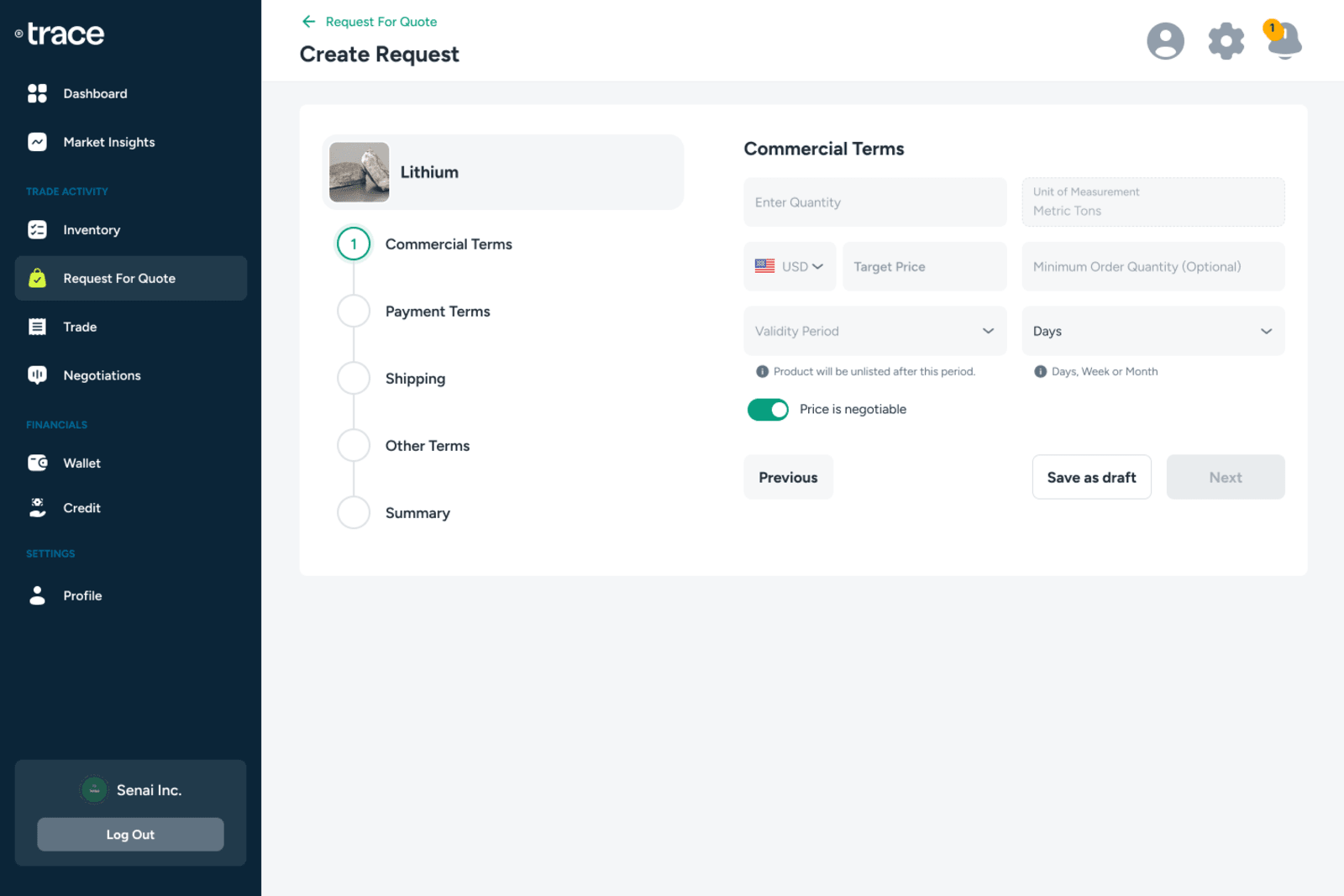
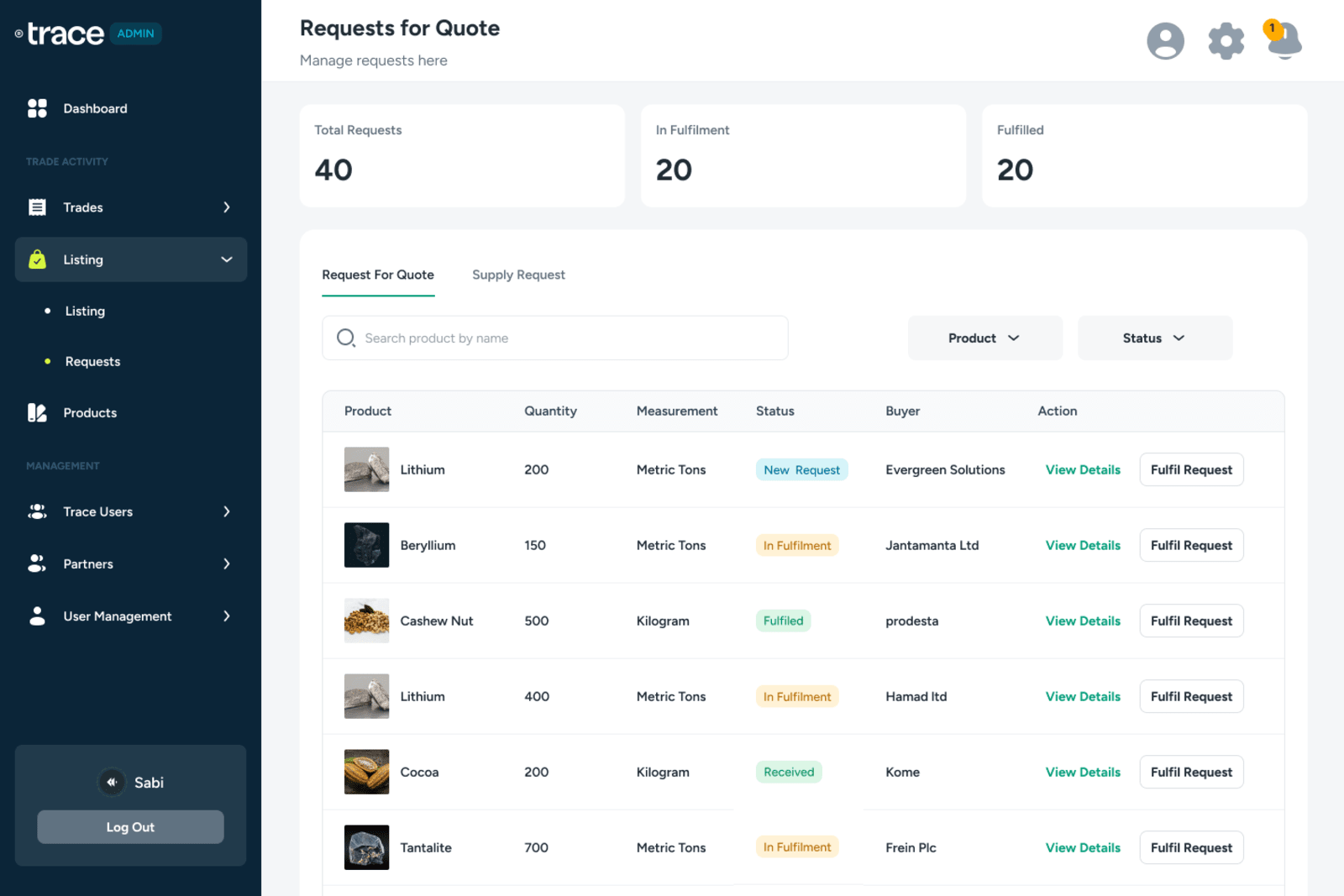
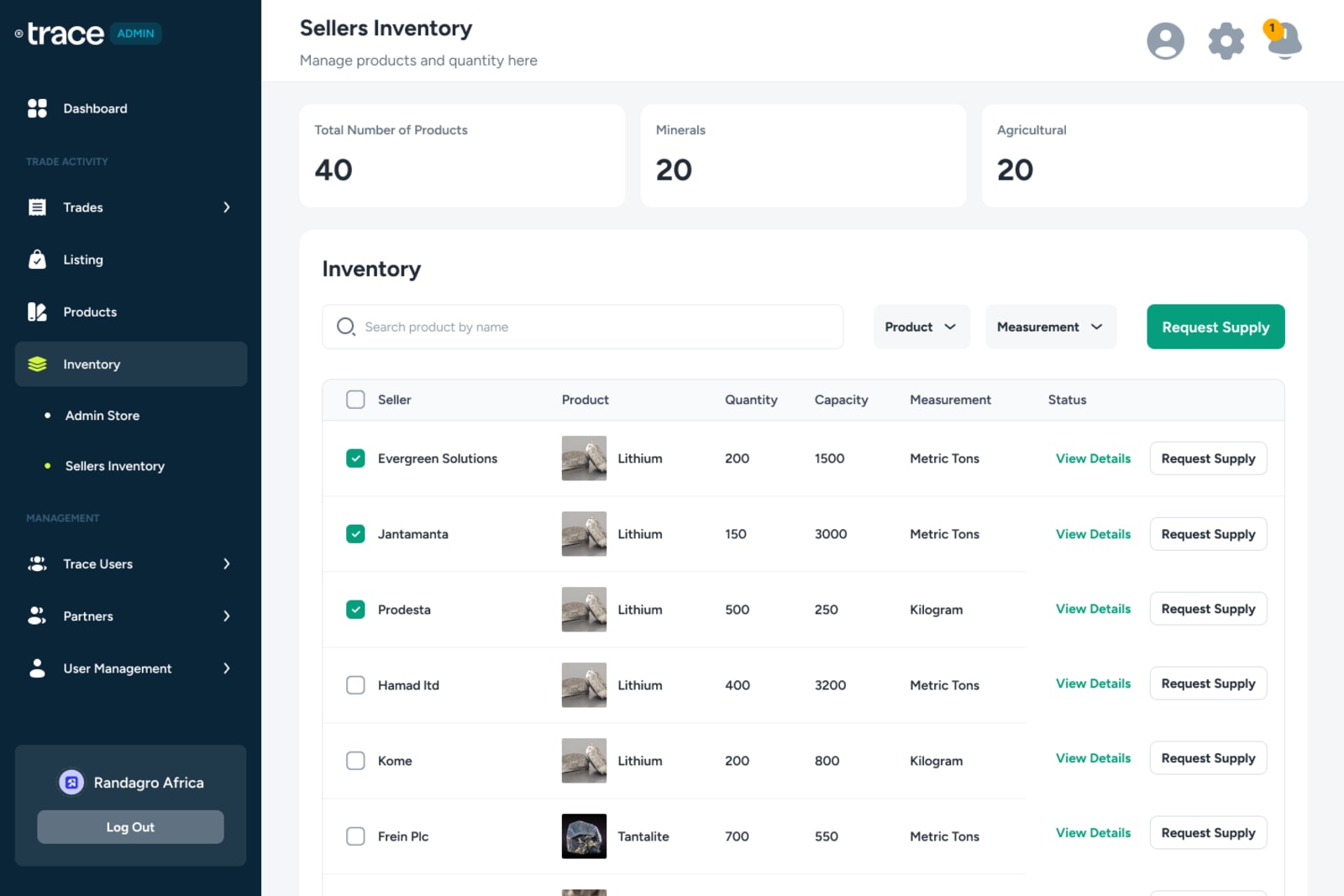
They request a quote. The buyer sets the commercial, payment and shipping terms they want, and the request moves from new request to in fulfilment to fulfilled. On the admin side, Trace can then request supply from several sellers at once, straight from their inventory, splitting the quantity across them. Demand no longer waits for a listing to appear.

How do negotiations work without losing the trail?
Thought for 2s
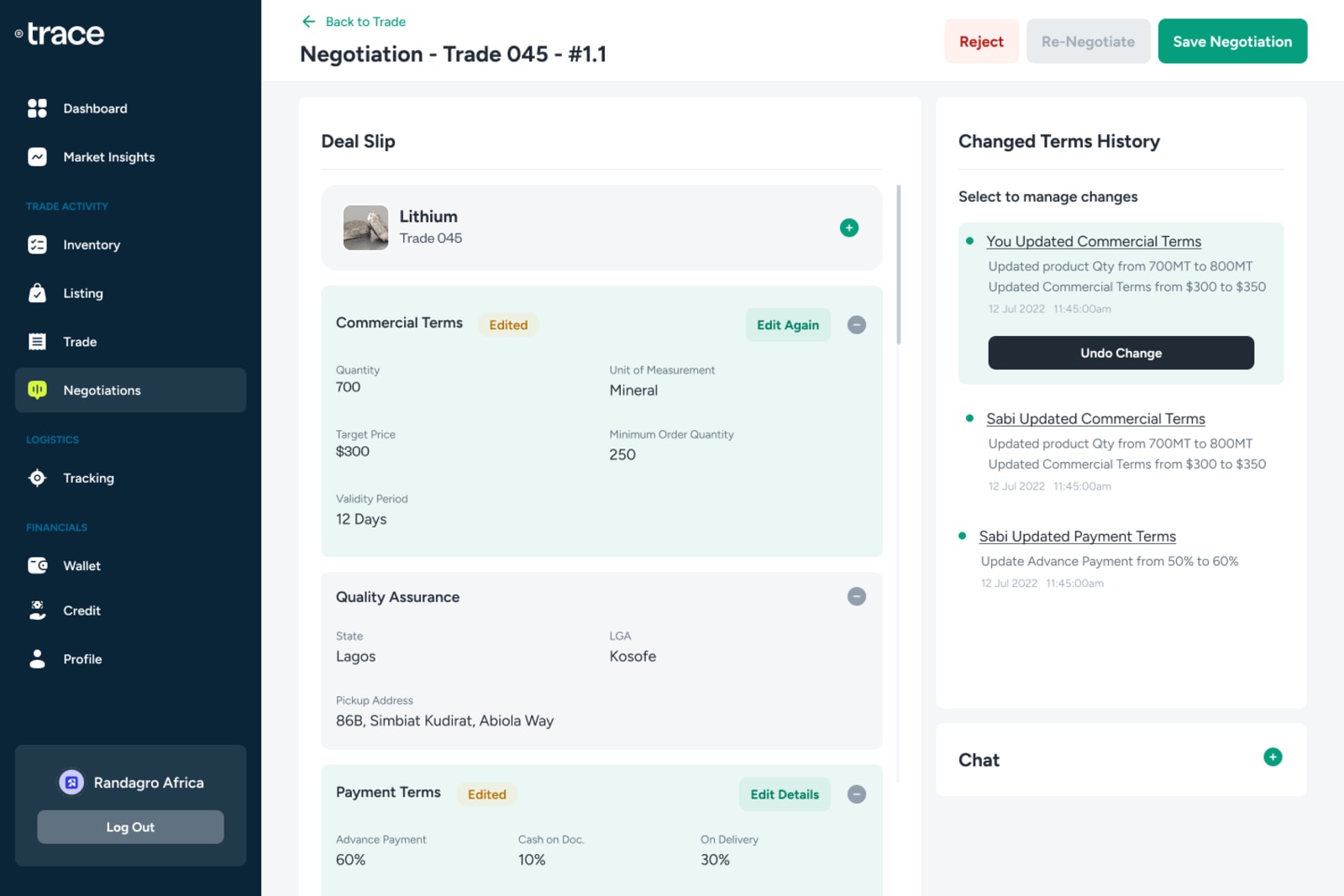
Negotiations are a living deal slip. Either party can propose changes. Every change lands in a Changed Terms panel with who changed what and when. Rounds increment the version (for example Trade 045 #1.0 → #1.1). Accept, counter or undo. The agreed version becomes the binding contract.
Explain more
In high-value commodity deals the sequence of proposals matters legally. Versioning, attribution and undo turn the UI into a negotiating record both sides can revisit.
How do you design one deal for both buyer and seller?
Thought for 3s
The deal slip is identical for both parties. What changes is the action bar and the attribution in Changed Terms. The seller is accepting or countering. The buyer is proposing against the seller's original terms. Same document, different framing. That keeps trust: neither side is looking at a private rewrite of the contract.
- One source of truthBoth parties always see the same deal slip.
- Variable framingActions and attribution flip with the role; the document does not.
- Full trailVersion history keeps the path from first offer to final submission.
What happens after a deal is agreed?
Thought for 4s
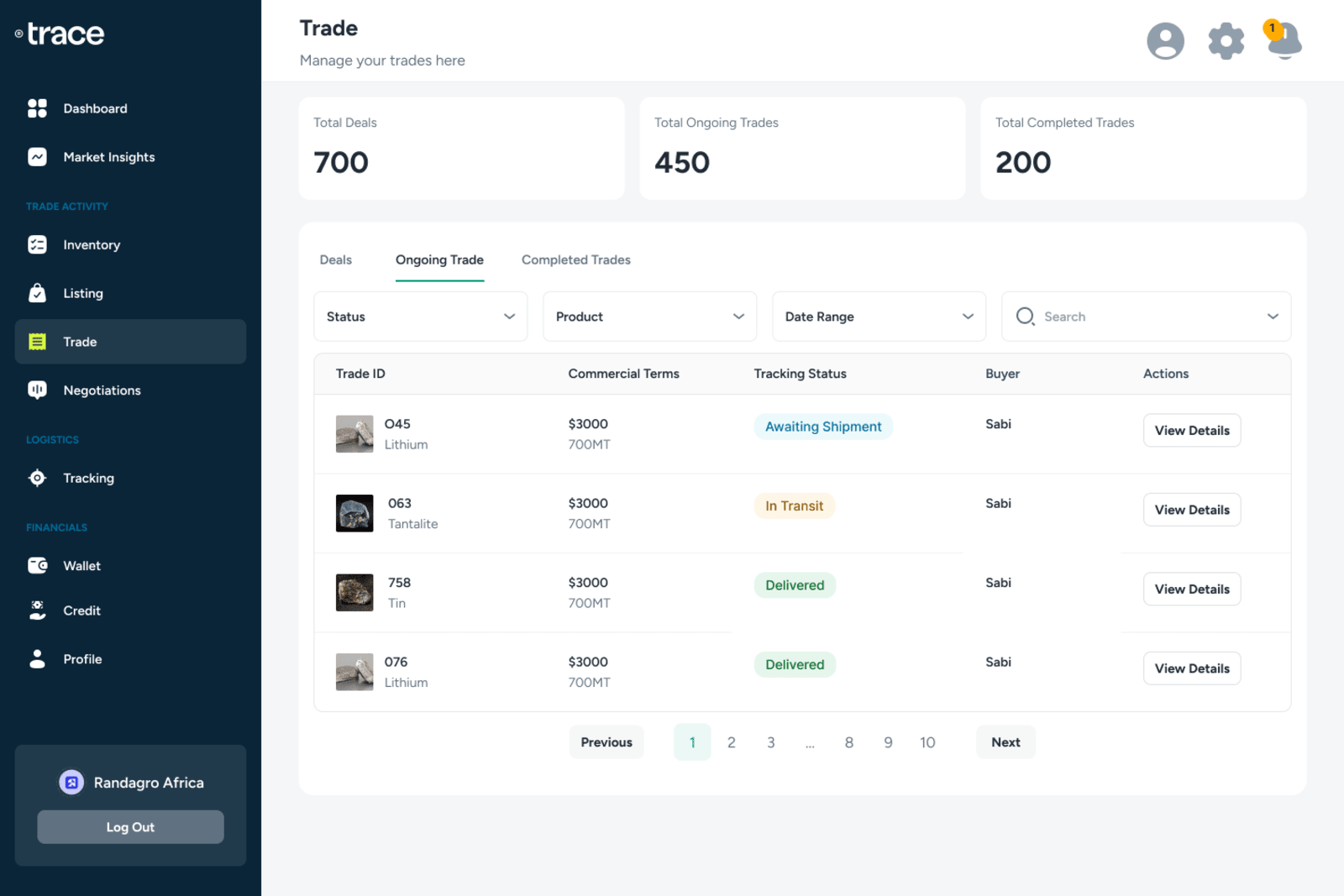
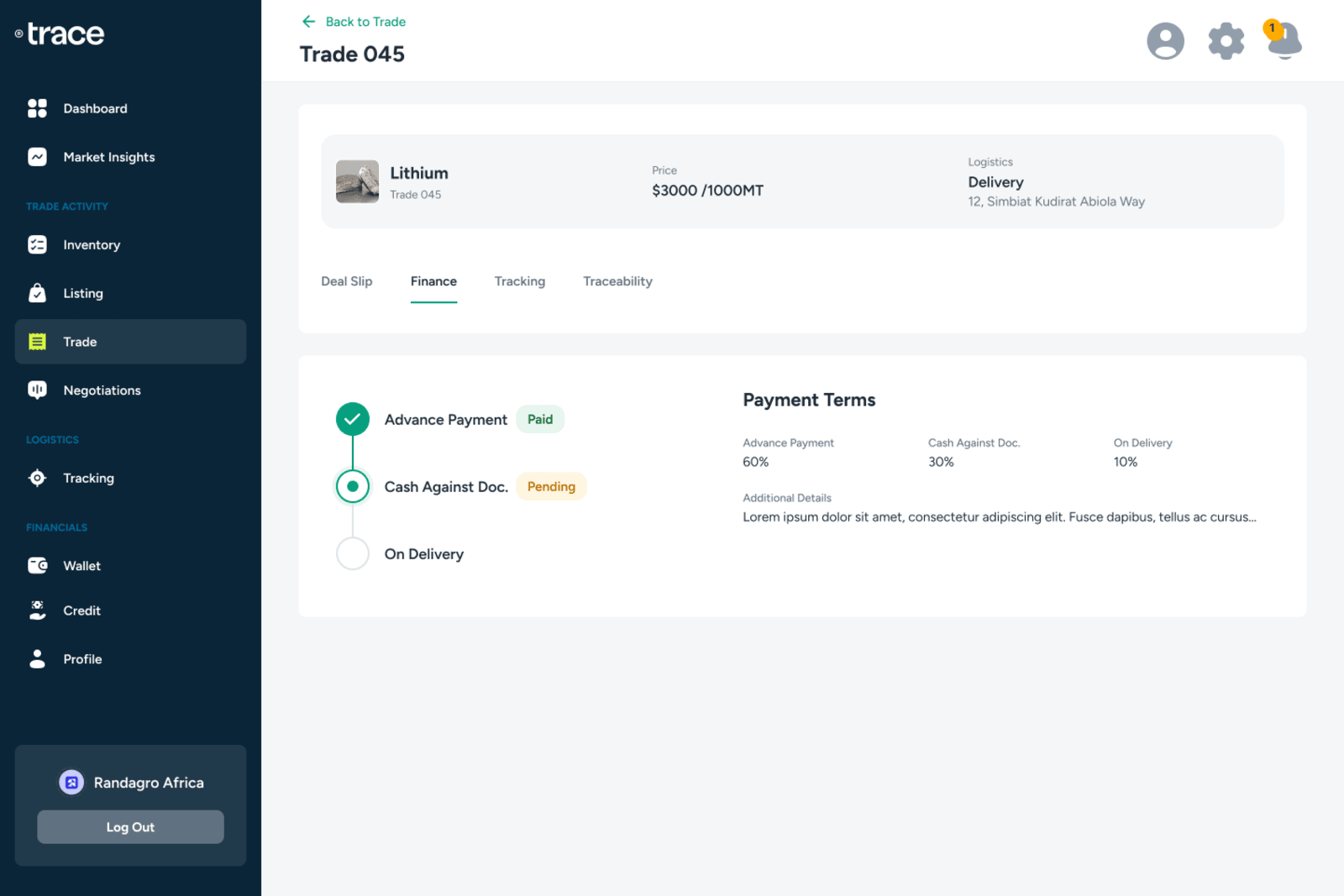
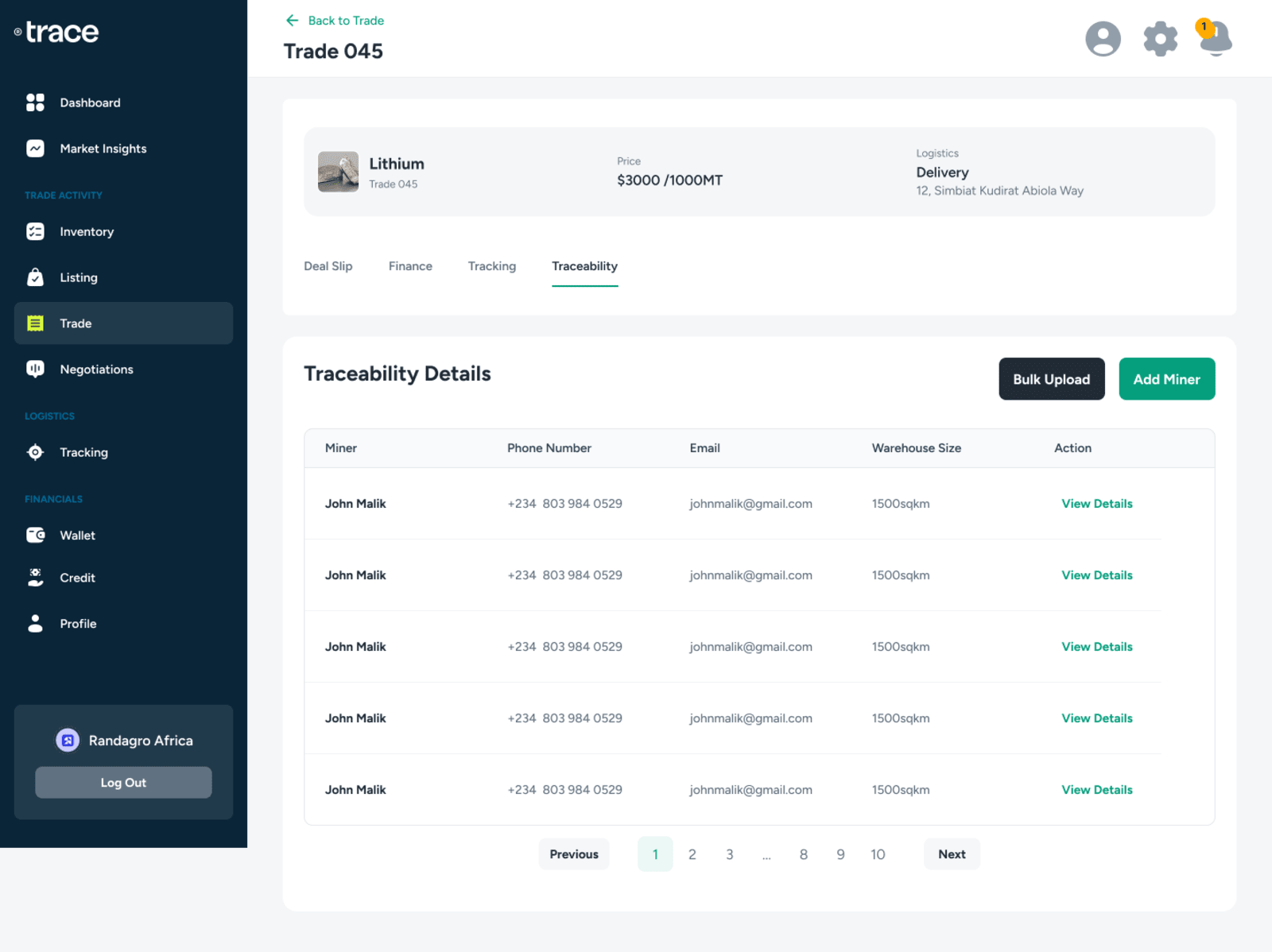
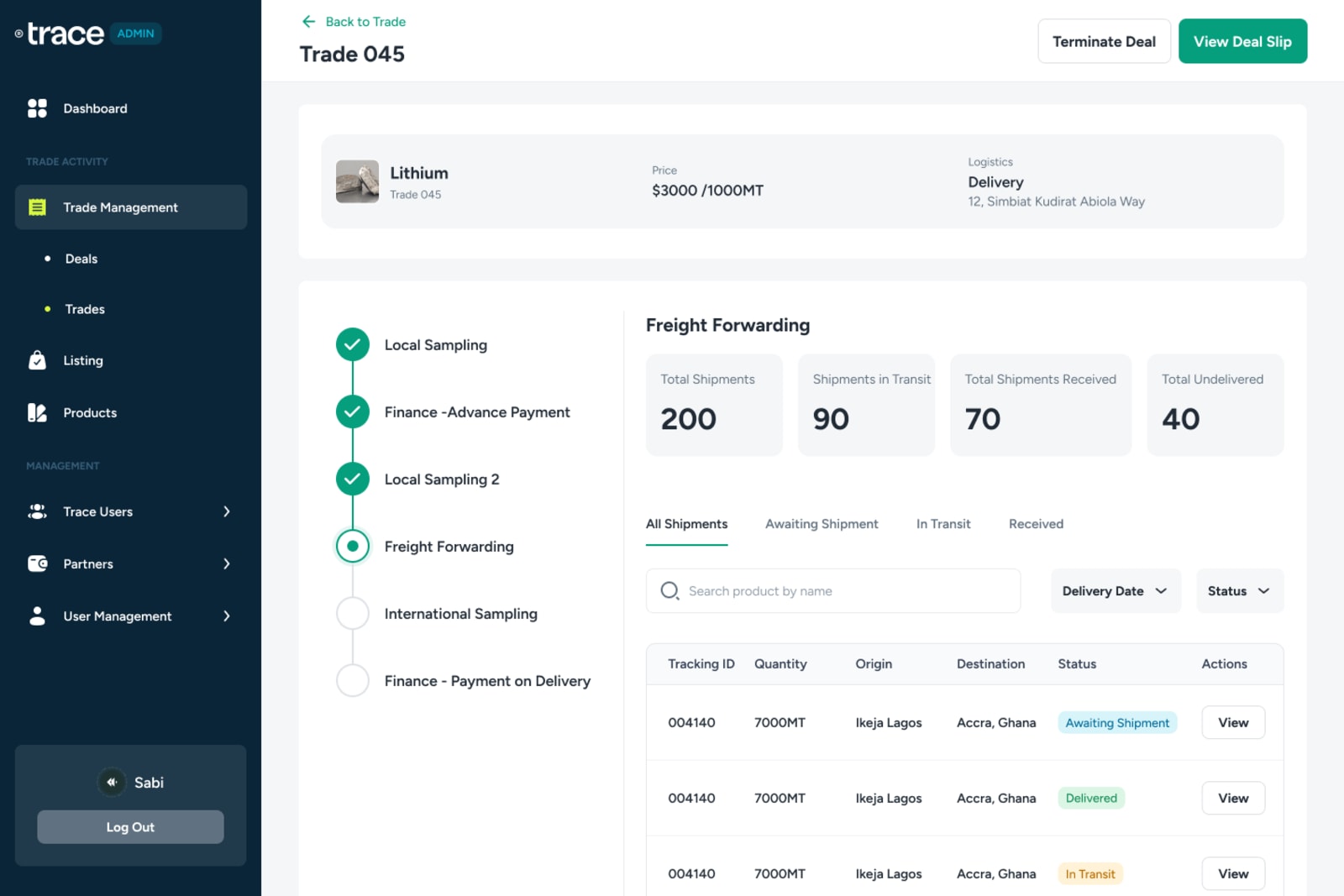
The trade screen has four tabs: Deal Slip, Finance, Tracking and Traceability. Finance tracks the staged payments with live status. Tracking is where the seller opens shipment batches with tracking IDs. Traceability logs the miners who extracted the material, so the supply chain stays attached to the trade itself.
Explain more
Payment milestones (advance, cash against documents, on delivery) are structural: each has a live status, so terms aren't only a line in a PDF. Traceability sits on the trade so compliance work isn't a separate module people skip.
Does every trade follow the same steps?
Thought for 2s
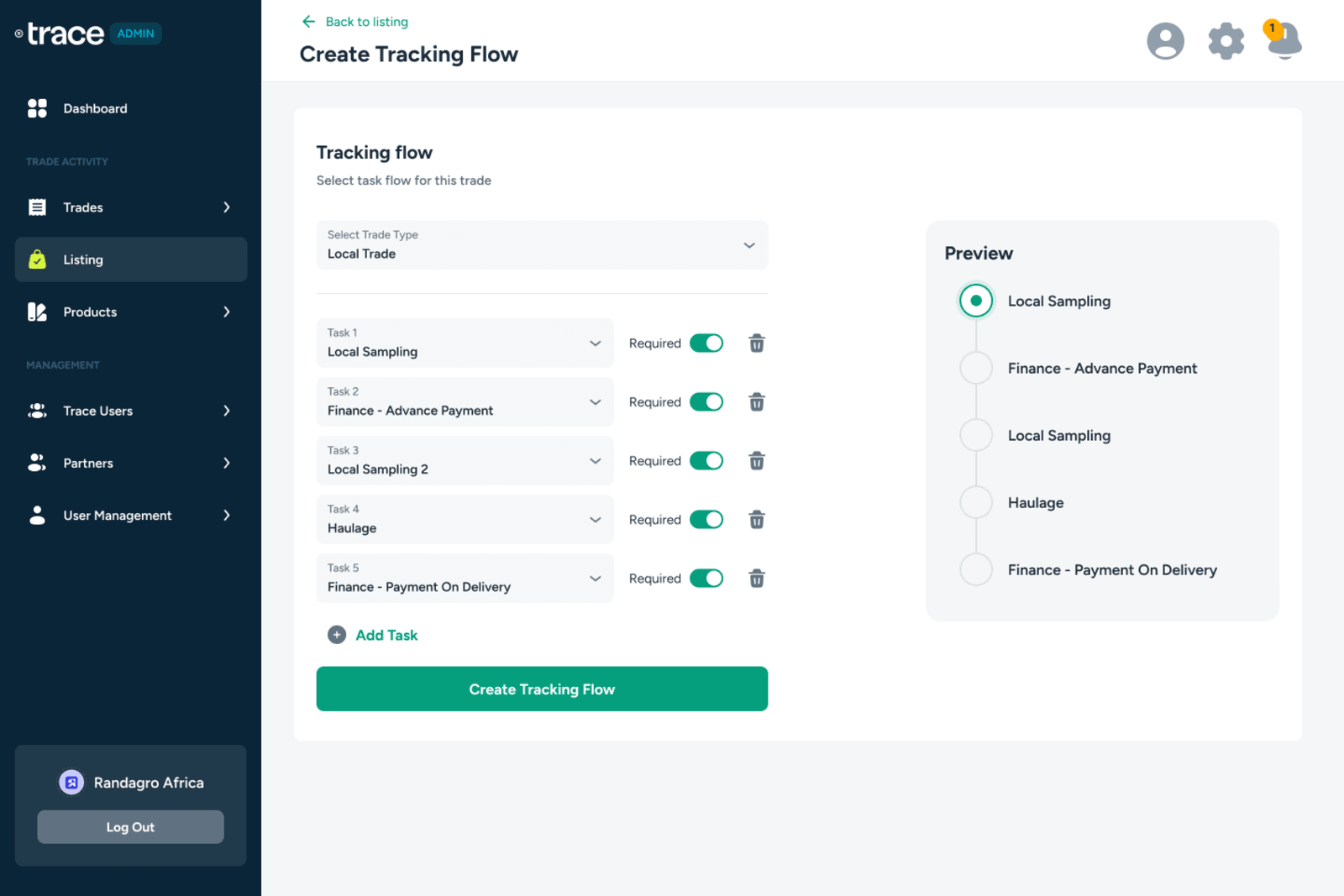
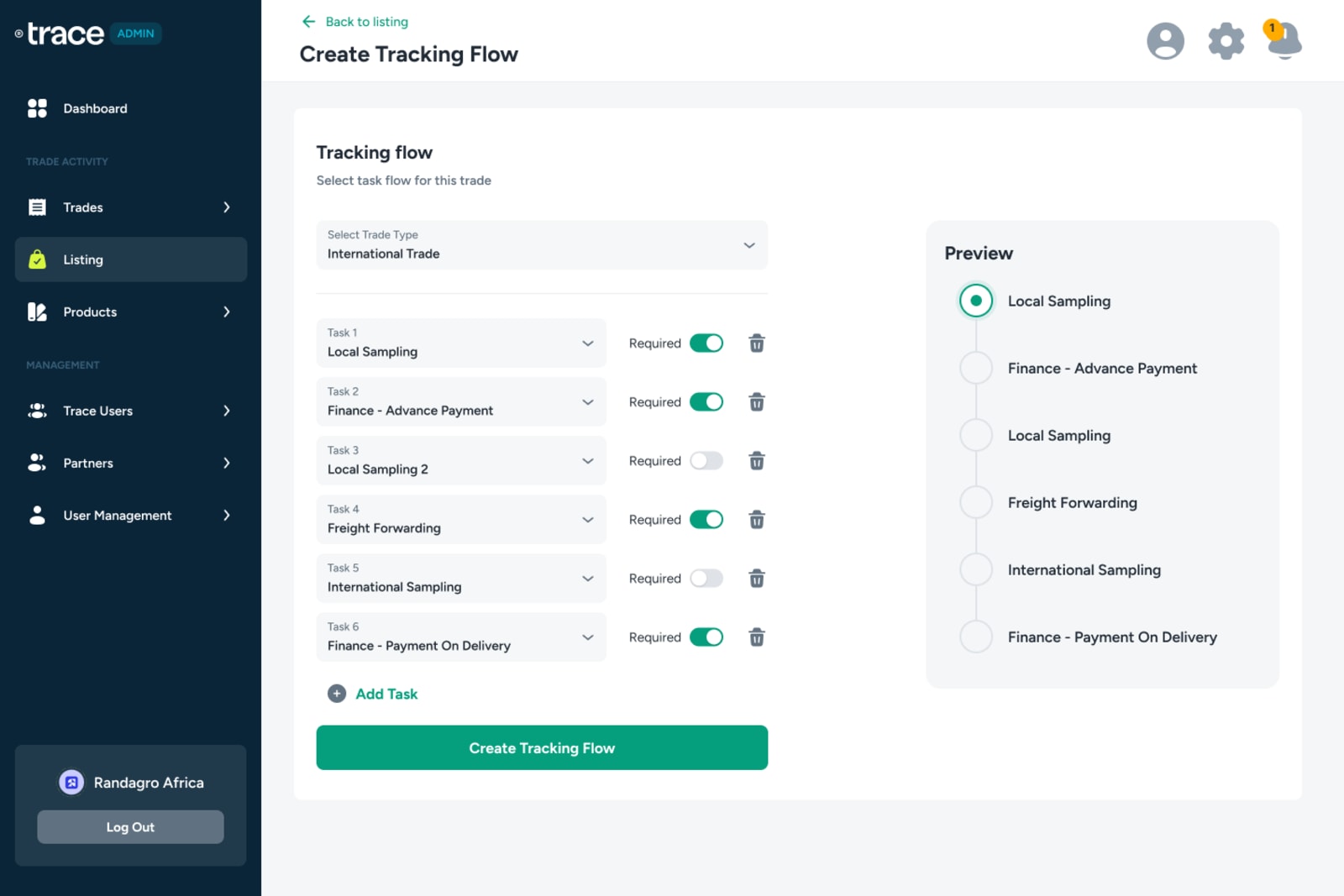
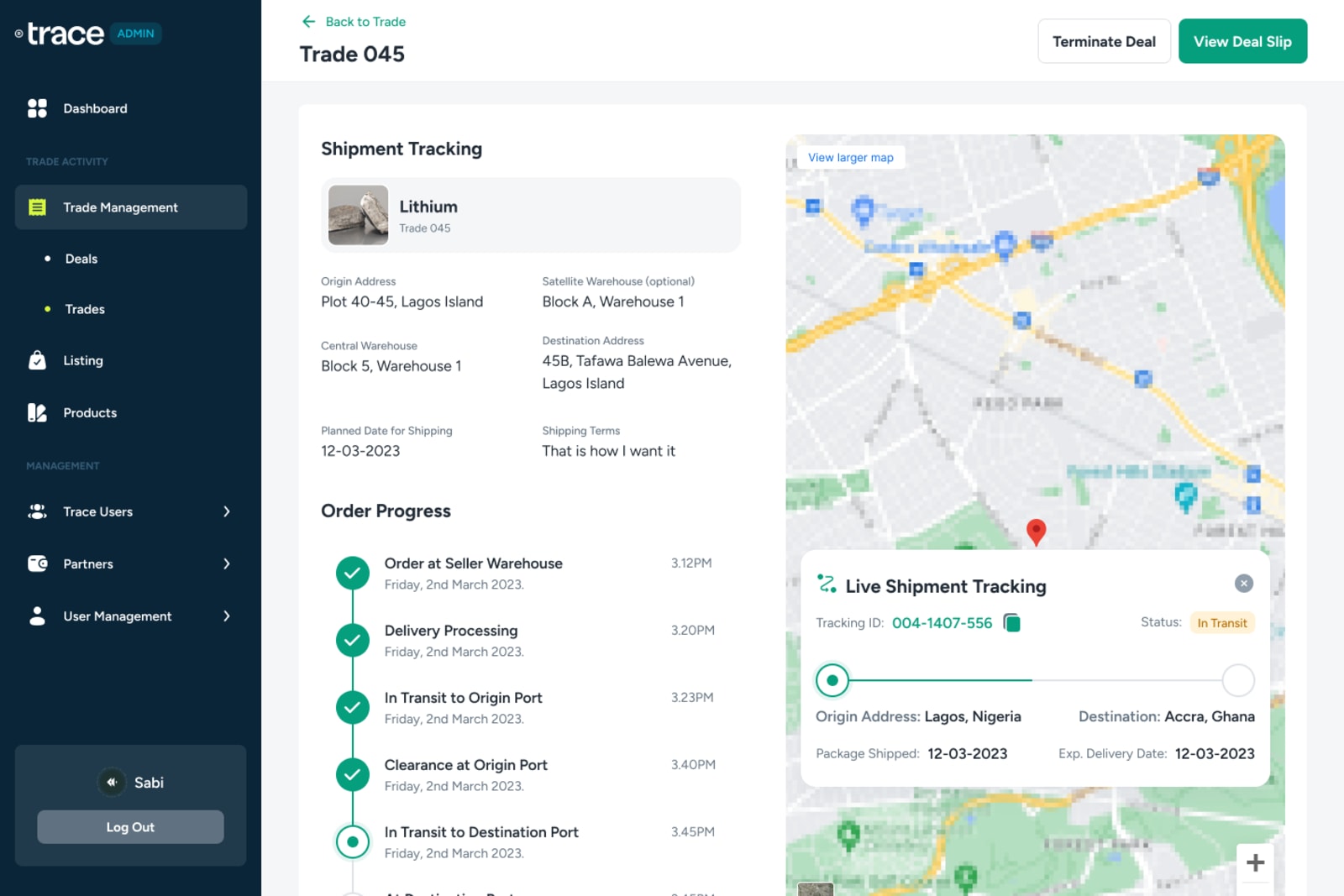
No, and the product doesn't pretend they do. For each trade the admin builds a tracking flow from tasks, each marked required or optional. A local trade runs local sampling, advance payment, a second sampling, haulage and payment on delivery. An international trade swaps haulage for freight forwarding and international sampling. Both sides then watch the trade move through exactly those steps, with live shipment tracking.
What happens to the paperwork, and when things go wrong?
Thought for 3s
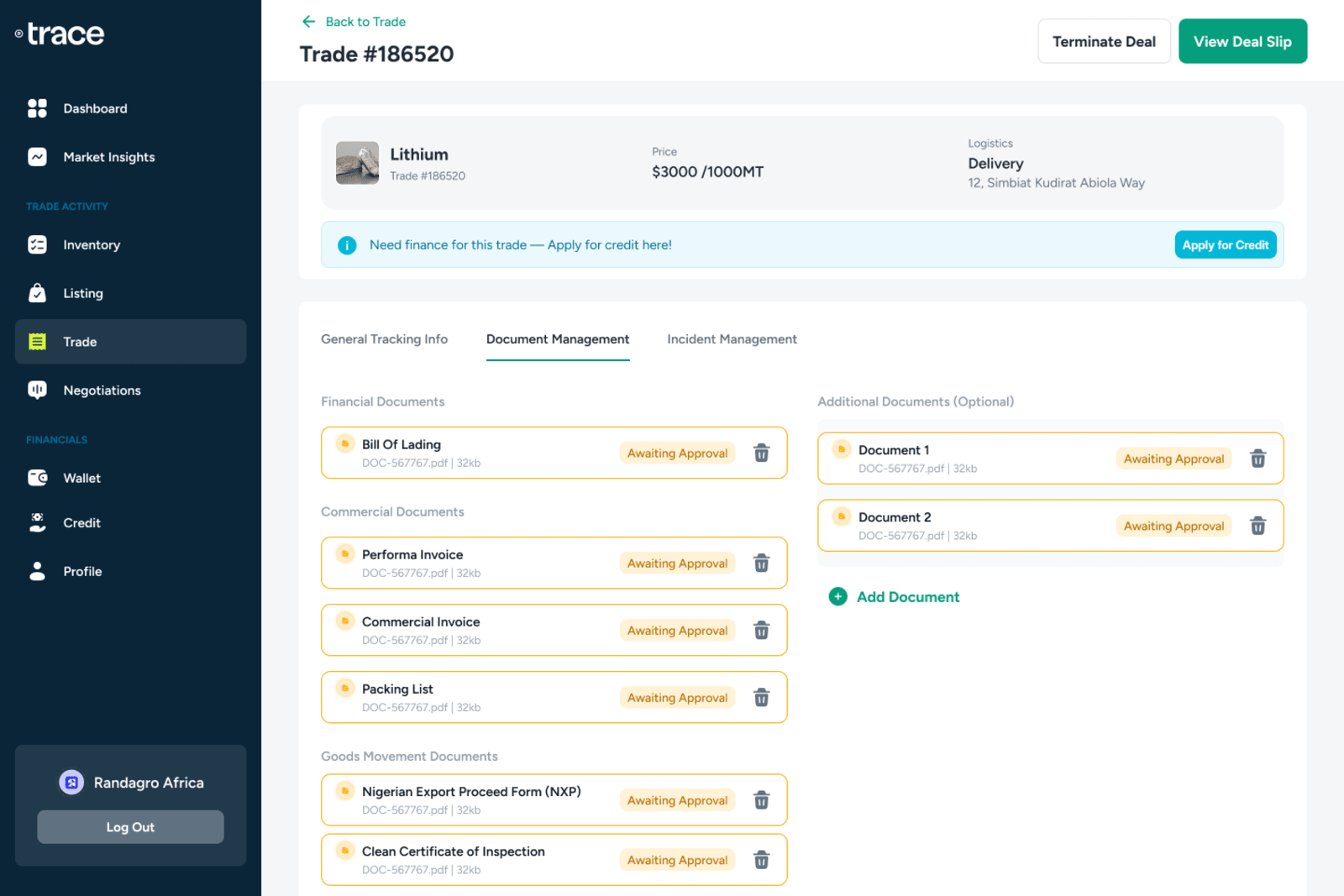
Both live on the trade. Document management groups what a shipment needs, financial, commercial and goods-movement documents such as the bill of lading, proforma and commercial invoices, packing list and export forms, and shipments can't be created until they're uploaded. Each document shows awaiting approval until it's checked. When something slips, either side reports an incident against the tracking ID, with a resolve-by date and a new delivery date, so a delay is on the record, not in a phone call.


How do companies pay, and finance a trade?
Thought for 4s
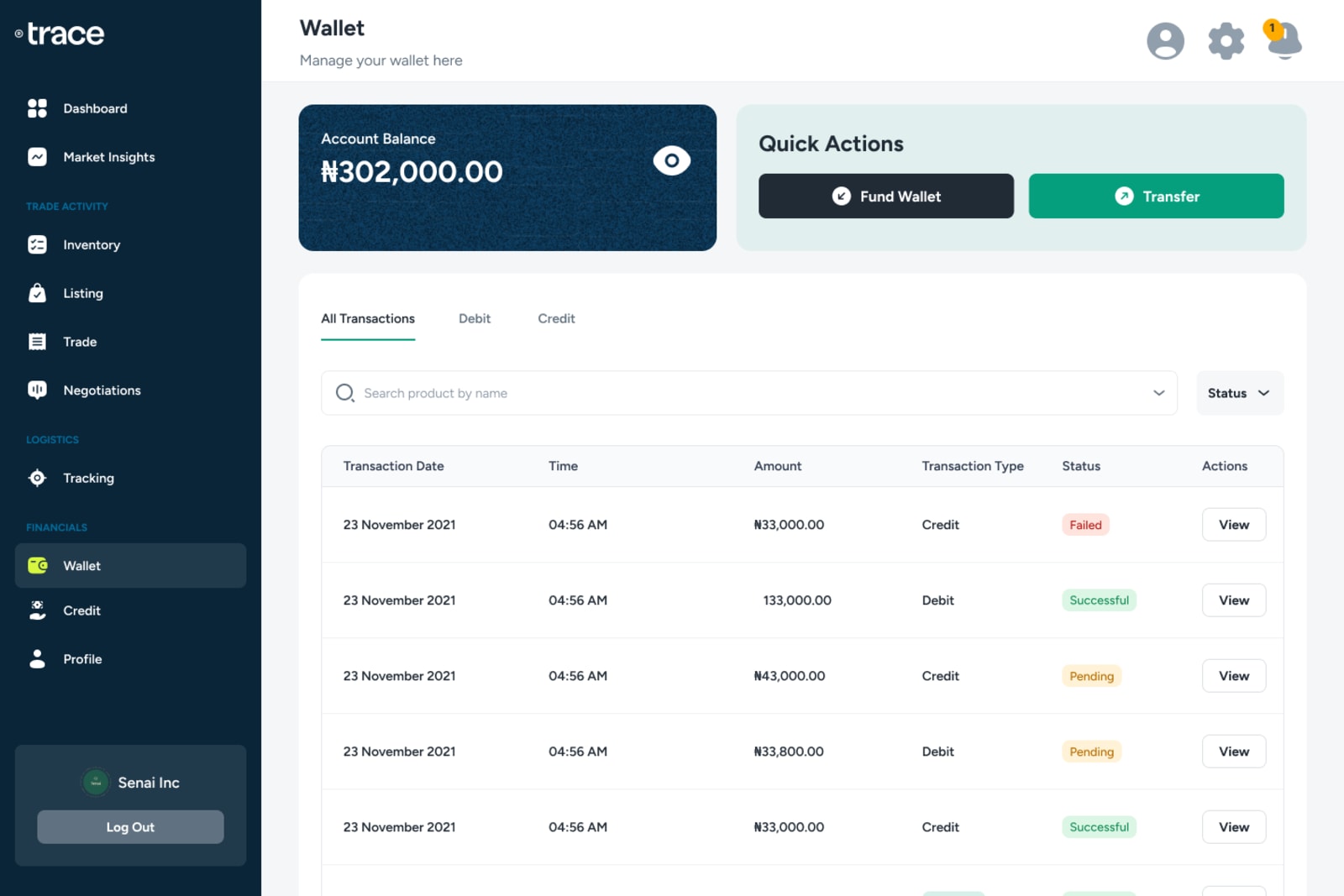
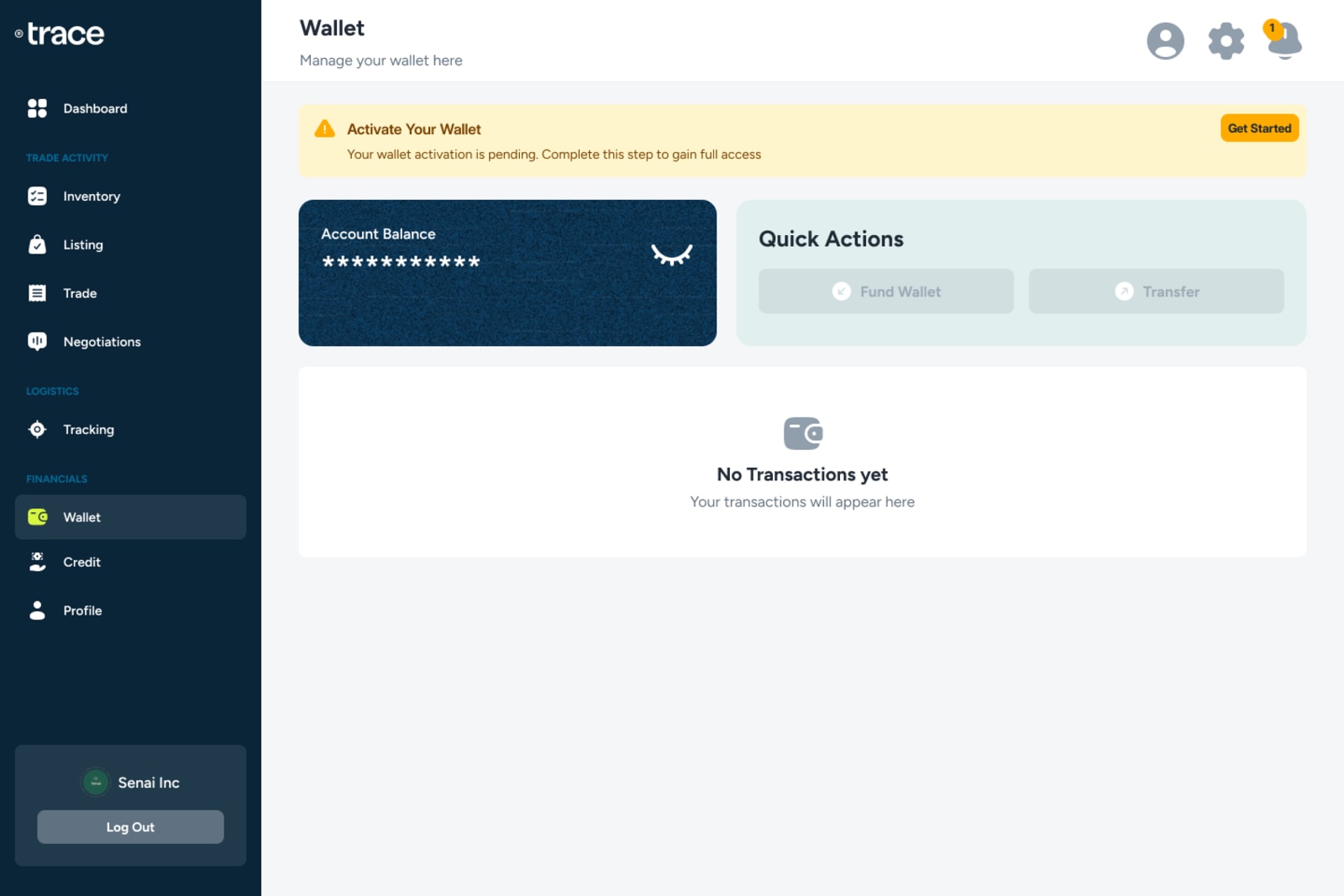
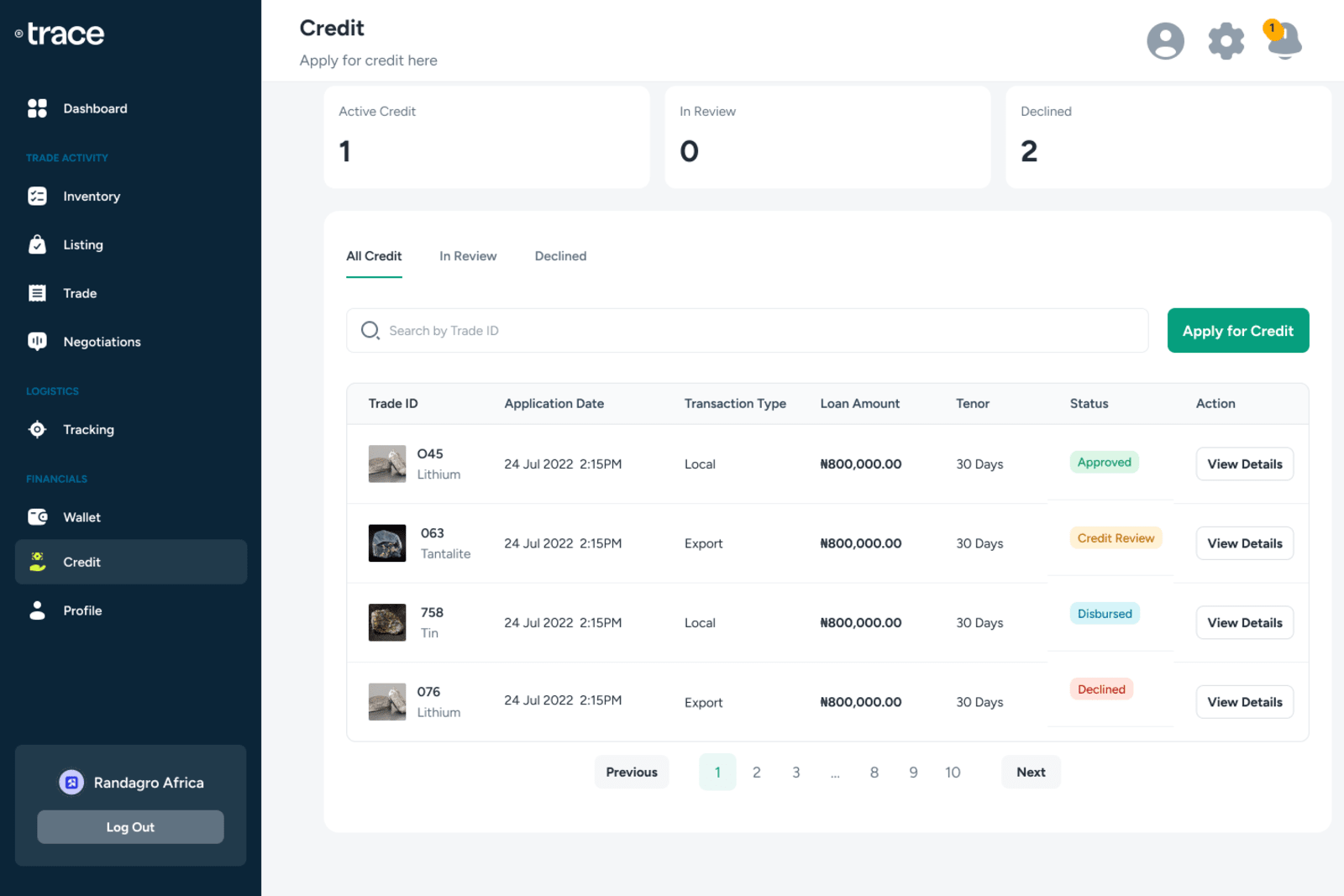
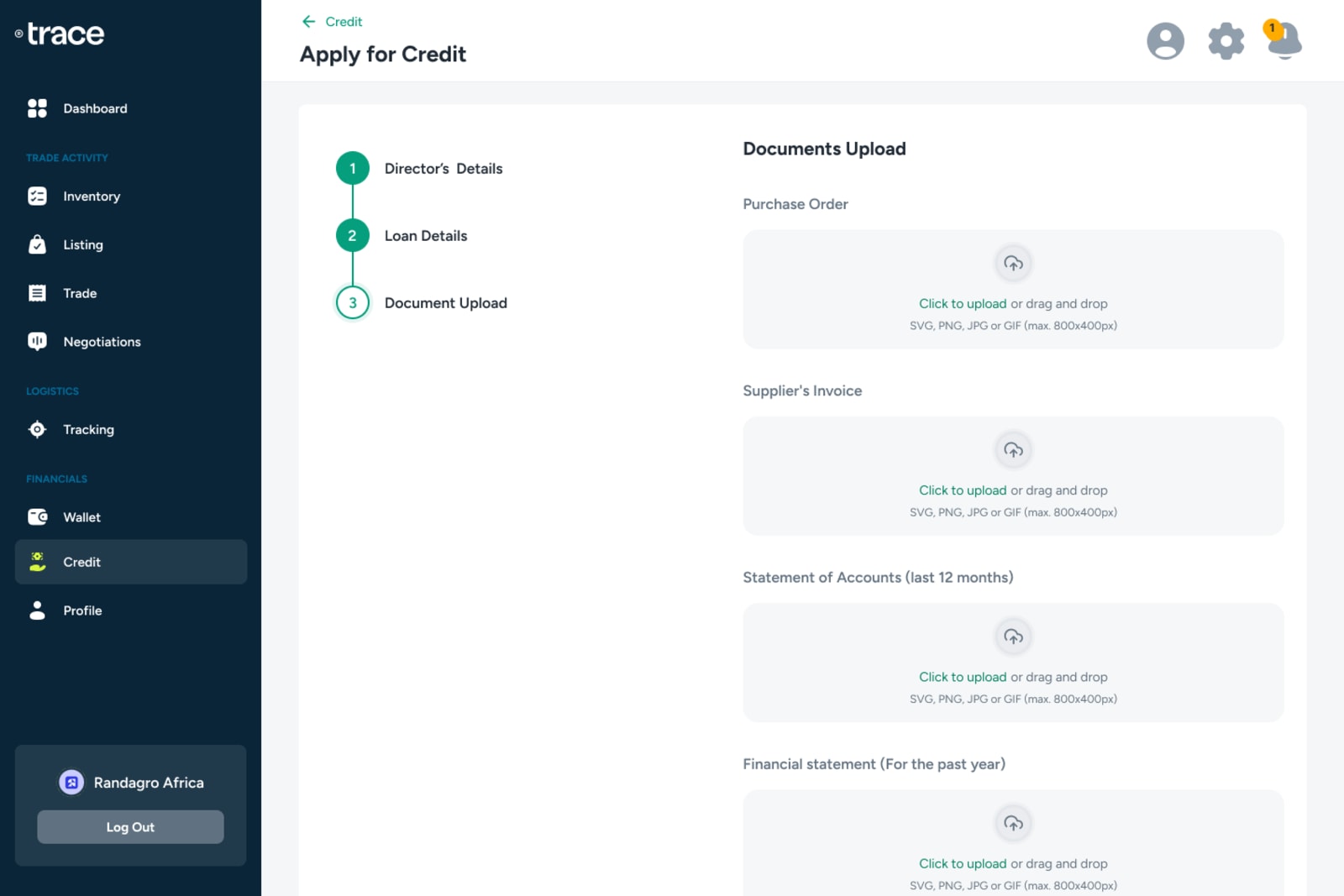
Trace has a wallet for funding and transfers, activated only after the company's details are verified. And because these trades are large, there's trade credit: a company applies against a specific trade with its director and loan details and the supporting documents, purchase order, supplier's invoice, statements and financial statements, then tracks each application as in review, approved, disbursed or declined. The trade screen nudges toward it: need finance for this trade? Apply for credit.
How far back does traceability go?
Thought for 2s
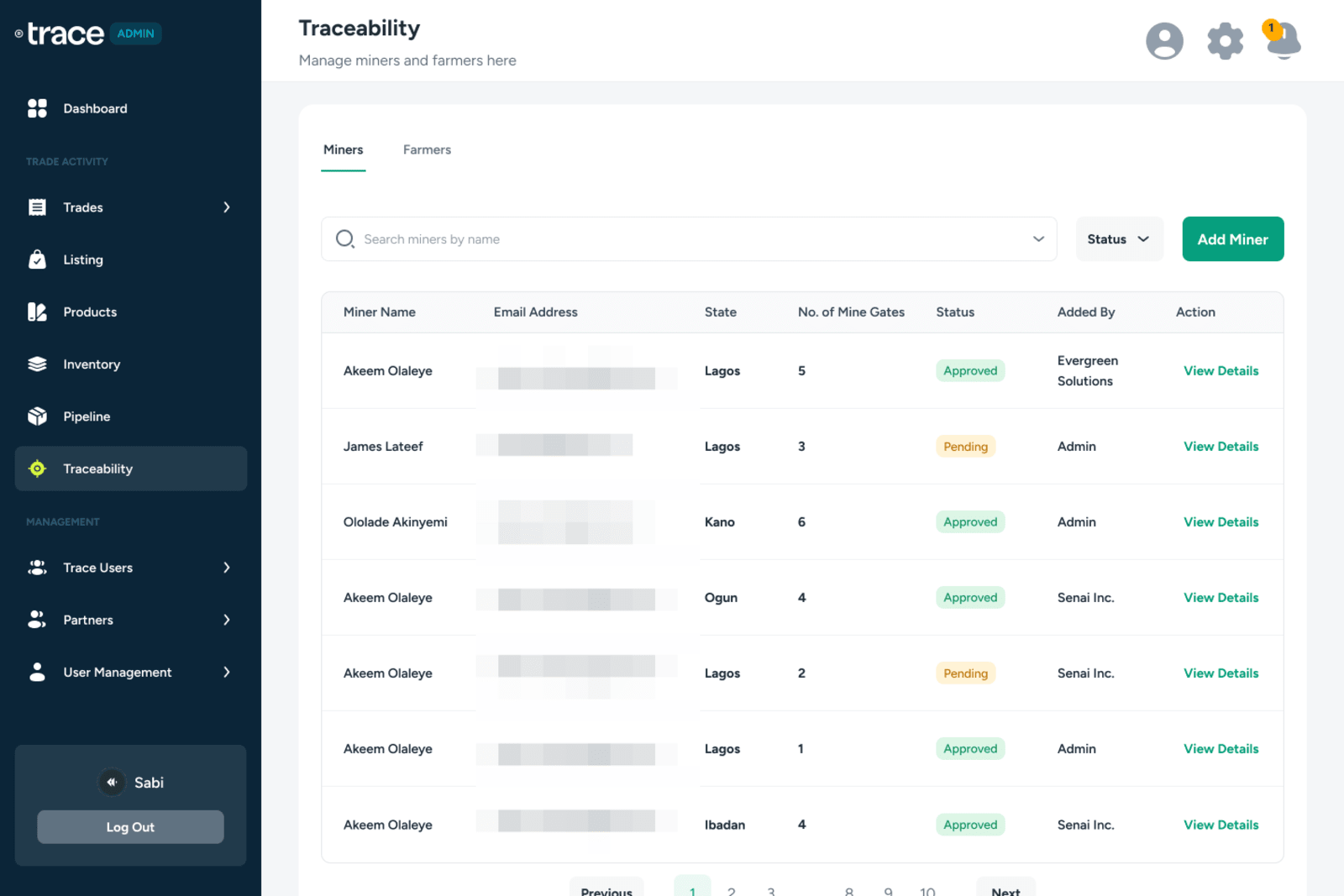
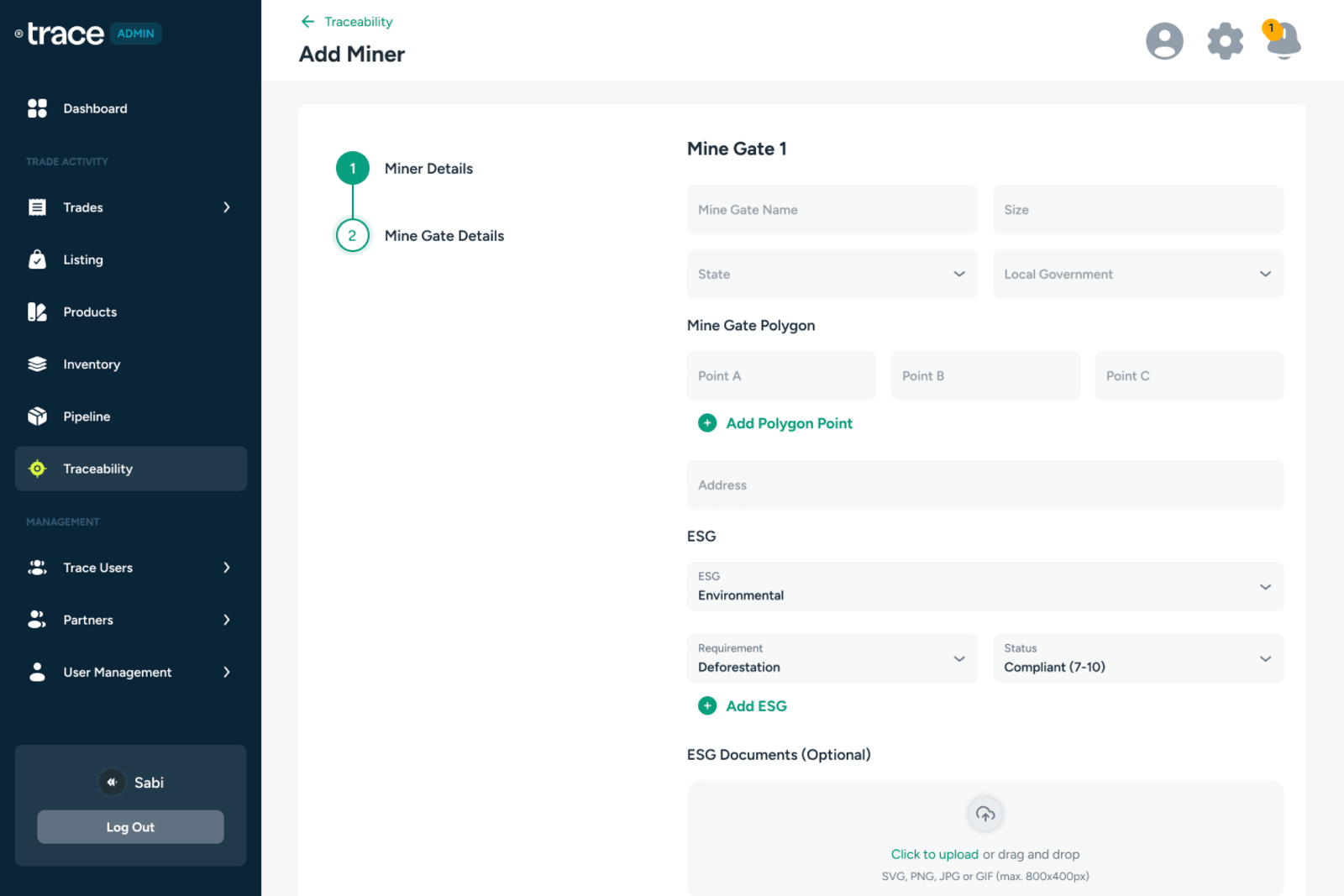
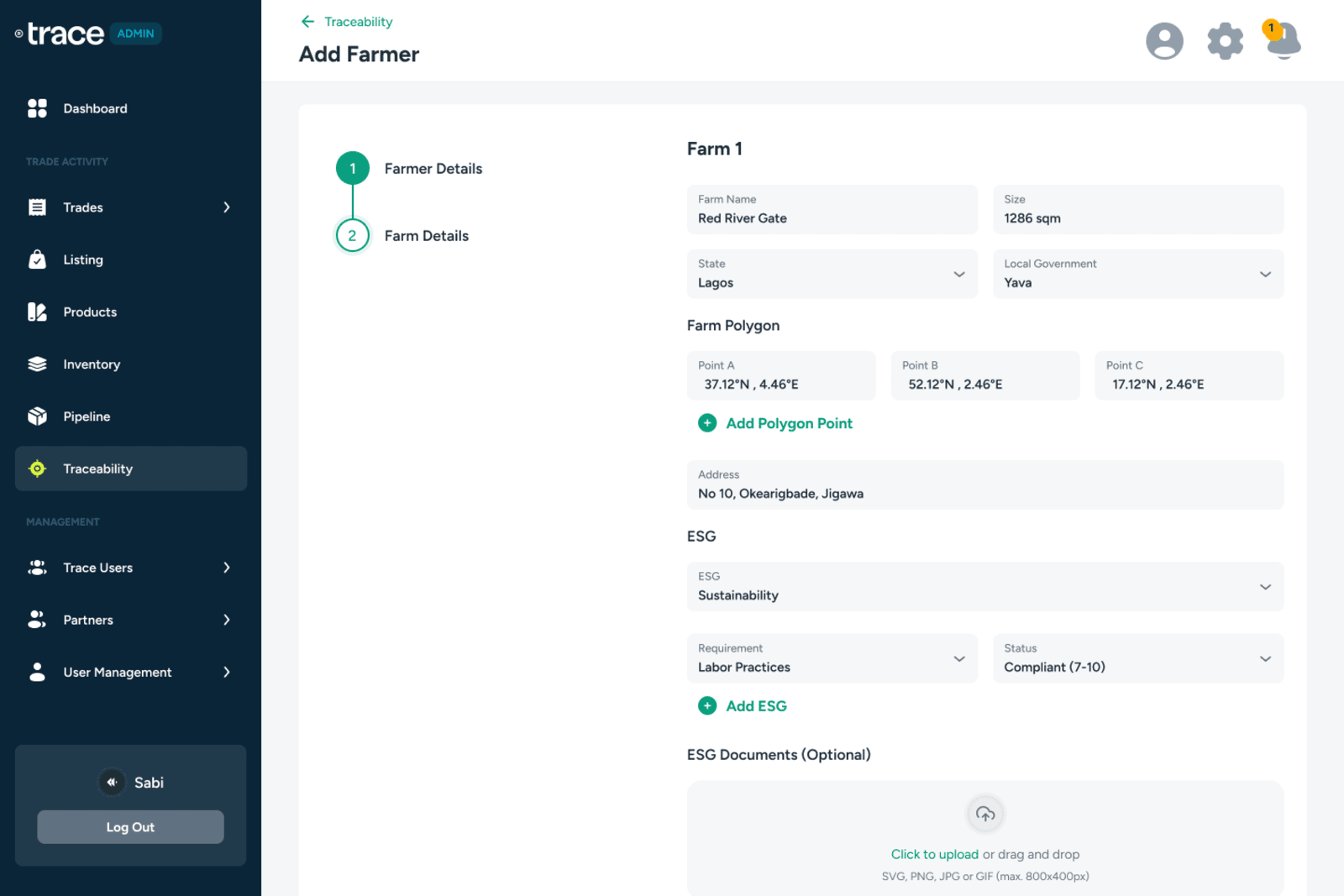
To the ground it came out of. Traceability covers miners for minerals and farmers for agricultural goods. Adding one records the site itself: a mine gate or farm drawn as a polygon of coordinates, and ESG requirements with a compliance status, such as deforestation for a mine or labour practices for a farm, with supporting documents. Sellers and the admin both maintain these records.

Who runs Trace behind the scenes?
Thought for 3s
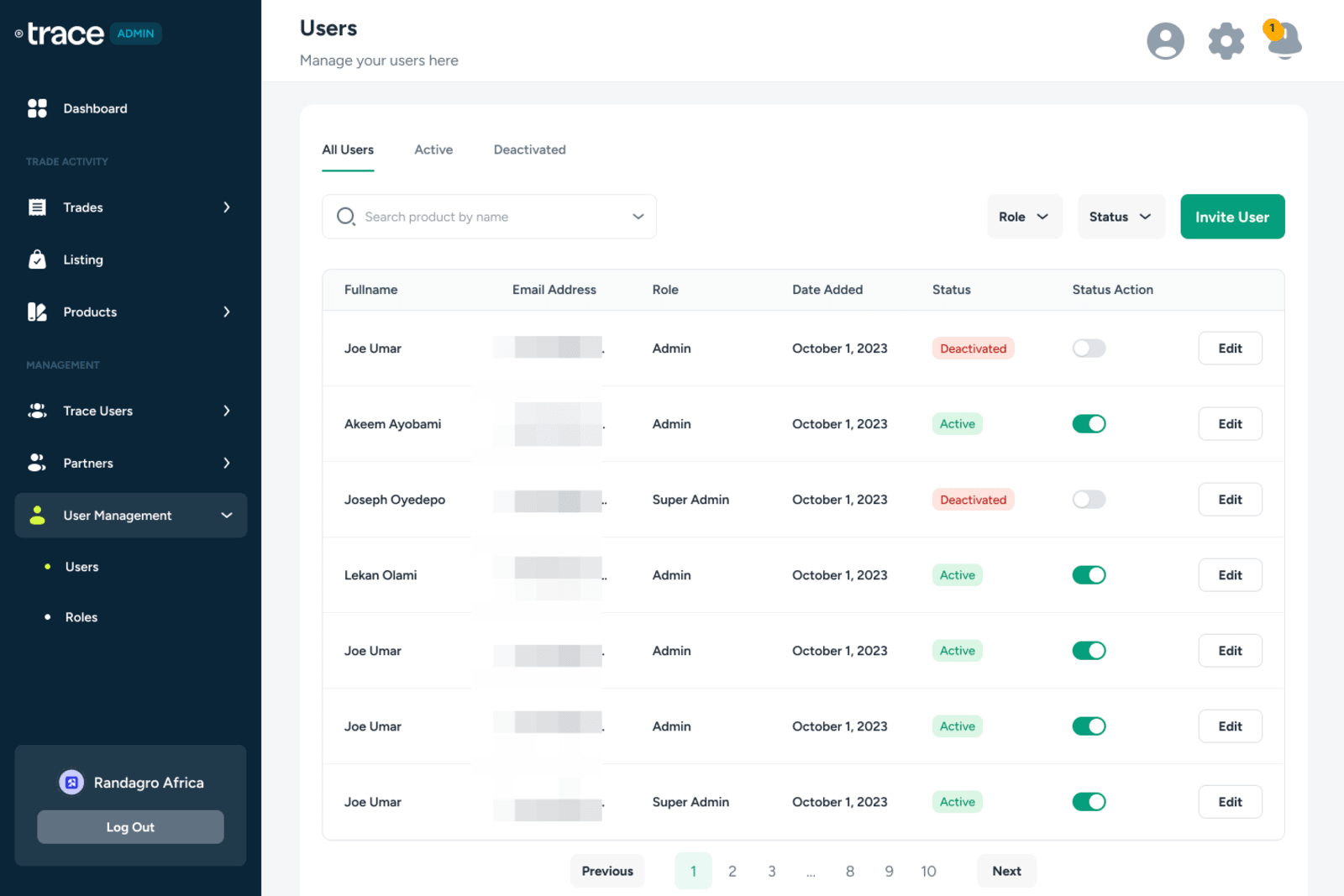
An admin portal that mirrors the client app. Admins verify companies and products, negotiate on listings, and can act as a buyer or a seller themselves. Access is role-based: roles from super admin to read-only guest, each with create, read, update and delete permissions per area, from partners and trade users to products, listings and trades. Users are invited into a role and can be deactivated without being deleted.


Did Trace ship?
Thought for 4s
Trace is design-complete and documented for development handoff. The modules covered include account creation, KYB, inventory and quality checks, listing, request for quote, negotiations, trade execution with configurable trade flows, documents and incidents, wallet and credit, miner and farmer traceability, and the admin portal with roles and permissions. The app lives at trace.sabi.am behind auth.
- Commodities in scopeMinerals such as lithium, tantalite, tin and beryllium; agricultural goods such as cashew and cocoa.
- Markets in mindCommodity traders in Nigeria and across West Africa, with room to add categories and geographies.
- Surfaces designedSeller, buyer and admin desktop flows across the full trust sequence.
What did Trace teach you?
Thought for 2s
Designing for two opposing parties on one document is the hard case. The fix is one source of truth with variable framing, not two UIs. Versioned negotiation looked over-built until you remember these deals are legally thick. And trust architecture (KYB, verification states, milestones, miner records) is design work, not decoration.
- Same document, two framingsBuyers and sellers need accuracy from both sides without splitting the contract.
- Undo is a legal toolOn deals this size, revertible attributed changes are the negotiating record.
- Trust is a product surfaceGates and statuses create trust between strangers trading across borders.
- Compliance in the workflowTraceability only works if it sits where traders already work.
Thinking
The scripted part of this conversation carries the verified facts. Live answers only use what's on this site.